Owaisi Slams Modi Govt Over Census Delay, NFHS Data Gaps
Synopsis
AIMIM president Asaduddin Owaisi on June 5, 2026 accused the Modi government of delaying the long-overdue Census of India and dropping sanitation and cooking-fuel indicators from the NFHS to shield flagship schemes from scrutiny, warning that stale data undermines delimitation, food security and welfare delivery.
Key Takeaways
AIMIM president Asaduddin Owaisi on June 5, 2026 accused the Modi government of risking census integrity to avoid political embarrassment.
The 15th Census , due in 2021 , remains unscheduled — the longest post-independence gap — with no official date announced as of mid-2026.
Owaisi alleged the latest NFHS has dropped questions on open defecation and cooking fuel use, removing independent checks on Swachh Bharat and Ujjwala outcomes.
Census data underpins delimitation of Lok Sabha seats, food security entitlements under the National Food Security Act , and finance commission transfers.
The 84th Constitutional Amendment links the next delimitation exercise to the first census after 2026 , raising the electoral stakes of further delay.
Opposition parties and civil society groups warn that stale 2011 census data is leaving millions of beneficiaries undercounted in welfare programmes.
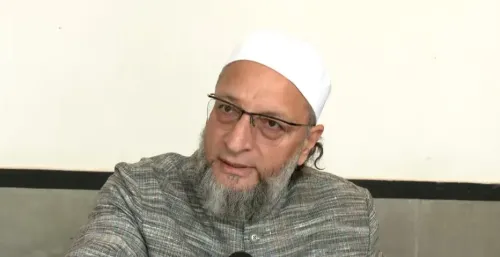
AIMIM president Asaduddin Owaisi on Friday, June 5, 2026, accused the Narendra Modi government of compromising the integrity of the Census of India to avoid political embarrassment, and flagged that the latest National Family Health Survey (NFHS) has dropped questions on open defecation and cooking fuel use.
Context
Invoking the well-known aphorism — 'There are three kinds of lies: lies, damned lies, and statistics' — Owaisi argued that the government is manipulating the data ecosystem rather than being held accountable by it. He stated that census data is 'essential for delimitation, development schemes and food security,' and that the Modi government is 'putting the integrity of census at risk just so that it's not embarrassed.'
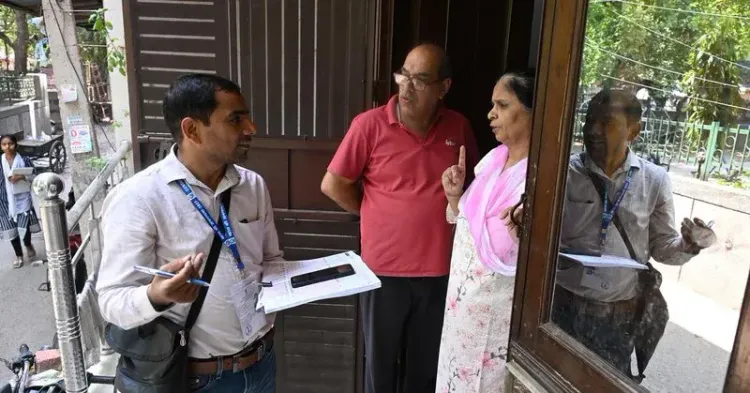
The 15th Census of India, originally scheduled for 2021, was postponed citing the COVID-19 pandemic. As of mid-2026, no fresh date has been officially announced, making it the longest gap in India's post-independence census history.
Policy Backdrop
The census delay carries significant constitutional consequences. The 84th Constitutional Amendment (2002) froze the delimitation of Lok Sabha seats on the basis of the 1971 census until 2026 — meaning the first census conducted after 2026 will trigger a redrawing of parliamentary constituencies. States with slower population growth fear losing seats, while faster-growing states stand to gain, making the timing of the census politically charged.
On the NFHS front, both NFHS-4 (2015-16) and NFHS-5 (2019-21) included questions on open defecation and cooking fuel access — metrics directly tied to the government's flagship Swachh Bharat Mission and Pradhan Mantri Ujjwala Yojana. Owaisi's post alleges these indicators have been dropped from the latest survey round, removing a key independent check on the reported outcomes of those schemes.
Stakeholders and Impact
The absence of updated census data has real-world consequences for welfare delivery. Food security entitlements under the National Food Security Act, MGNREGS allocations, and state-wise fund transfers under finance commission formulas all rely on population figures. Stale 2011 census data means millions of beneficiaries in high-growth states may be undercounted.
State governments — particularly those in southern India — have raised concerns that a fresh census followed by delimitation could reduce their representation in Parliament relative to more populous northern states. Opposition parties, including AIMIM, argue the delay protects the ruling coalition's electoral arithmetic at the cost of accurate governance data.
Civil society organisations and public health researchers have also flagged the removal of sanitation and clean-cooking indicators from the NFHS questionnaire, warning it will make independent programme evaluation harder.
What's Next
Any official notification announcing the 16th Census schedule will be closely watched, as will the final questionnaire for NFHS-6 to confirm which indicators have been retained or dropped. Parliamentary standing committees and, potentially, the Supreme Court of India could be approached to enforce timelines under census legislation.
With the 2026 delimitation deadline now passed without a fresh census, the constitutional and electoral implications will intensify pressure on the government to act — and on opposition parties to sustain scrutiny over data transparency.
Point of View
Meaning the political cost of inaction is becoming impossible to defer. By invoking the 'lies, damned lies, and statistics' maxim, Owaisi frames the issue not as administrative delay but as deliberate opacity, a framing that is difficult for the government to rebut without publishing a firm census schedule. The broader pattern — where flagship scheme indicators quietly disappear from independent surveys — is a growing vulnerability for any administration that built its political identity on measurable welfare delivery.
NationPress
21 Oct 2026
Frequently Asked Questions
Why has India's 2021 census not been conducted yet?
The 15th Census of India was postponed in 2020 citing the COVID-19 pandemic, and as of mid-2026 the government has not announced a new schedule, making it the longest gap in India's post-independence census history.
How does the census delay affect delimitation of Lok Sabha seats?
The 84th Constitutional Amendment (2002) froze Lok Sabha seat delimitation until after the first census conducted post- 2026 ; without a fresh census, the redrawing of parliamentary constituencies cannot begin, leaving representation based on 1971 population figures.
What did Owaisi say about the National Family Health Survey?
Owaisi alleged that the latest NFHS has dropped questions on open defecation and cooking fuel use, which were previously tracked to assess the impact of Swachh Bharat Mission and Pradhan Mantri Ujjwala Yojana .
Why does census data matter for food security in India?
Welfare entitlements under the National Food Security Act , including subsidised grain for hundreds of millions of beneficiaries, are calculated using census population figures; outdated 2011 data risks undercounting eligible households in high-growth states.
What is AIMIM's position on the census delay?
AIMIM and its president Asaduddin Owaisi argue the delay is politically motivated, protecting states with slower population growth — and the ruling coalition's seat count — at the expense of accurate data for governance and welfare delivery.