Owaisi Contrasts UAPA Detentions With Sergio Gor Intervention

Synopsis
AIMIM president Asaduddin Owaisi on 25 September 2026 highlighted a glaring double standard under UAPA, contrasting the nine-to-ten-year pre-trial jailing of ordinary Indians with what he described as Sergio Gor's apparent influence over who gets charge-sheeted under the same law.
Key Takeaways
Asaduddin Owaisi posted on 25 September 2026 alleging that Sergio Gor can influence who is charge-sheeted under UAPA.
He stated that ordinary Indian citizens languish in jail for 9 to 10 years under UAPA because they have no such advocate.
UAPA allows detention for up to 180 days without a charge-sheet, and bail conditions post-filing are exceptionally stringent.
The 2019 UAPA amendments expanded the law to allow designation of individuals as terrorists without a court conviction.
Opposition figures, including Owaisi, have consistently raised the disproportionate impact of UAPA on minorities and dissenters in Parliament.
Several UAPA bail matters are pending before India's higher courts, keeping the law's due-process provisions under judicial scrutiny.
Two rules, one law — that is the pointed charge AIMIM president Asaduddin Owaisi levelled on Friday, 25 September 2026, drawing a stark contrast between the decade-long pre-trial detention ordinary Indian citizens endure under the Unlawful Activities (Prevention) Act (UAPA) and what he framed as preferential intervention secured by Sergio Gor, a figure in American political circles.
Owaisi wrote: 'Sergio Gor decides who should be charge-sheeted under UAPA. Indian citizens can languish in jail for 9 to 10 years under UAPA as they don't have Sergio Gor to …… JAI HIND.' The ellipsis was deliberate — a rhetorical pause that says everything the sentence does not finish.
What UAPA's Bail Provisions Actually Do to an Accused
The UAPA, as amended in 2008 after the Mumbai attacks and again in 2019, introduced bail conditions so stringent that courts have routinely noted they amount to a near-presumption of guilt. Accused individuals can be held for up to 180 days without a charge-sheet, and even after one is filed, bail is typically denied unless the court is satisfied that the charges are 'prima facie' false — a threshold defence lawyers say is nearly impossible to clear mid-trial.
The result, documented in parliamentary records and civil liberties reports, is exactly what Owaisi describes: detentions stretching nine to ten years before any verdict. A significant proportion of those accused are from minority communities and marginalised groups, a pattern that opposition MPs — including Owaisi — have raised repeatedly in the Lok Sabha.
The Sergio Gor Reference and What It Implies
The research available does not allow NationPress to independently verify Sergio Gor's specific role in any UAPA matter in 2026. What is clear is the political logic of the comparison: Owaisi is arguing that access to powerful external advocates — foreign or domestic — can tilt outcomes under a law that is supposed to apply equally to all citizens. The implication is not subtle. If a name dropped in the right place can determine whether a charge-sheet is filed, the law has ceased to be a safeguard and become a lever.
For the Hyderabad MP, whose party has consistently opposed the UAPA's expansion and its application against activists and dissenters, the tweet is also a reminder of a structural asymmetry: those with political capital or international connections can navigate India's national-security architecture; those without it cannot.
A Recurring Fight in Parliament and Courts
The debate over UAPA misuse is not new, but it has sharpened since the 2019 amendments allowed the government to designate individuals — not just organisations — as terrorists without a court conviction. Civil liberties groups have challenged that provision in the Supreme Court. Opposition parties have tabled questions on charge-sheeting rates, acquittal ratios, and the demographic profile of the accused. The answers, when forthcoming, have fuelled precisely the kind of critique Owaisi is making.
The closing 'JAI HIND' is a patriotic sign-off — but read in context it carries an edge. It is a reminder that the people rotting in undertrial detention are, in Owaisi's framing, as Indian as anyone else, and entitled to the same constitutional protections.
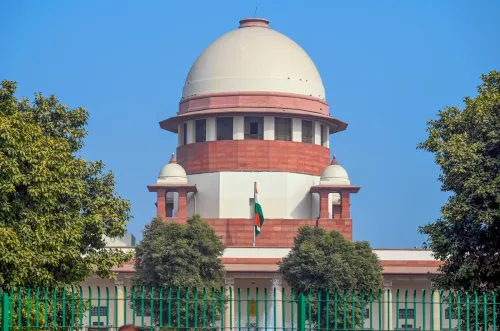
India's supreme court is set to hear several high-profile UAPA bail matters in the coming months. The question Owaisi is asking — whether the law is applied equally — will be waiting in every courtroom that takes one up.
Point of View
He is raising a sovereignty-and-equality argument simultaneously, which is rhetorically potent. The ellipsis in the tweet is doing real political work: it invites the reader to complete the sentence, making the accusation stickier than any direct charge. With Supreme Court bail hearings on UAPA cases on the horizon, this kind of political pressure tends to shape the broader public framing even if it does not directly influence judicial outcomes.
NationPress
25 Sept 2026
Frequently Asked Questions
What is UAPA and why are bail conditions so difficult to meet?
The Unlawful Activities (Prevention) Act is India's primary anti-terror law. Amendments in 2008 and 2019 introduced a near-reversal of the standard bail presumption: courts can only grant bail if satisfied that the charges are 'prima facie' false, a threshold that is extremely difficult to clear mid-trial, leading to years of pre-trial detention.
What did Asaduddin Owaisi say about Sergio Gor and UAPA?
Owaisi posted on 25 September 2026 that Sergio Gor decides who should be charge-sheeted under UAPA, while ordinary Indian citizens without such connections can spend nine to ten years in jail awaiting trial under the same law.
How long can someone be held without a charge-sheet under UAPA?
Under UAPA, the state can detain an accused for up to 180 days before filing a charge-sheet, compared to 60 to 90 days under the ordinary criminal procedure code. Even after a charge-sheet is filed, bail remains exceptionally hard to obtain.
What did the 2019 UAPA amendment change?
The 2019 amendment empowered the government to designate individual persons — not just organisations — as terrorists. Previously only groups could be banned; the amendment significantly expanded the law's reach and was challenged before the Supreme Court.
Has UAPA misuse been raised in the Indian Parliament before?
Yes. Opposition MPs, including Owaisi, have repeatedly raised questions in the Lok Sabha about charge-sheeting rates, long undertrial detentions, acquittal ratios, and the demographic profile of those accused under UAPA, arguing the law is disproportionately used against minorities and dissenters.