Owaisi Warns UP Muslims to Spot Those Against Their Political Voice
Synopsis
AIMIM president Asaduddin Owaisi posted a pointed Hindi message on 19 October 2026 urging Muslims in Uttar Pradesh to identify forces opposed to their independent political voice, signalling a sharper push for the party's presence in India's most electorally consequential state.
Key Takeaways
AIMIM president Asaduddin Owaisi posted a pointed Hindi message on 19 October 2026 urging UP Muslims to identify opponents of their independent political voice.
The post, accompanied by a video, targets an unnamed set of actors within the political ecosystem rather than the BJP.
Uttar Pradesh has India's largest Muslim voter concentration and is contested by SP, BSP, Congress, and now AIMIM for minority votes.
AIMIM fielded candidates in the 2022 UP Assembly elections to build an independent Muslim political platform in the state.
The framing signals AIMIM's ongoing effort to position itself as the authentic vehicle for Muslim political agency in northern India.
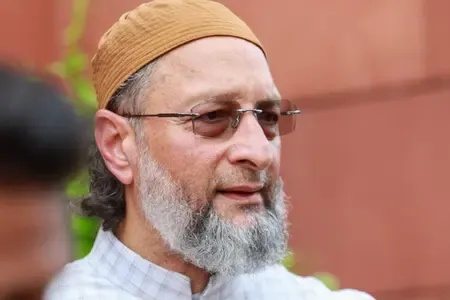
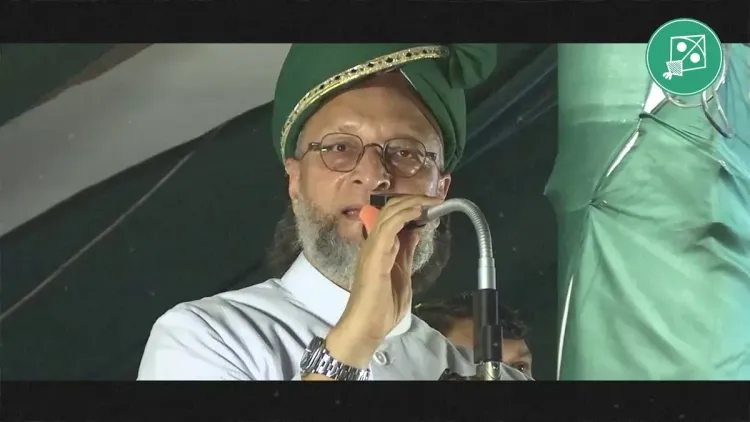
A pointed challenge landed on Indian political timelines on Monday, 19 October 2026, when AIMIM president Asaduddin Owaisi posted a blunt, eight-word warning aimed squarely at Muslim voters across Uttar Pradesh — urging them to identify those who do not want them to have an independent political voice in the state's electoral arena.
Posting in Hindi, Owaisi wrote: 'ऐसे लोगों को पहचानिए, जो नहीं चाहते कि उत्तर प्रदेश में मुसलमानों की अपनी सियासी आवाज़ हो.' Translated: 'Identify those people who do not want Muslims in Uttar Pradesh to have their own political voice.' No names were attached. None were needed — the political temperature in India's most populous state did the rest.
Why Uttar Pradesh Is the Battleground That Never Sleeps
Uttar Pradesh is home to India's single largest concentration of Muslim voters — a bloc that every major political formation from the Samajwadi Party to the Bahujan Samaj Party to the Congress has historically sought to consolidate under its own umbrella. For Owaisi and AIMIM, that consolidation is precisely the problem: when Muslim votes are absorbed into broader coalition mathematics, Muslim-specific political agency — the right to elect representatives who are accountable first to that constituency — gets bargained away.
AIMIM contested seats in the 2022 Uttar Pradesh Assembly elections, staking out a claim to an independent platform for Muslim political representation in a state where the party's base was negligible. The results were modest, but the footprint was deliberate — a signal that the party intended to stay and grow rather than treat UP as a one-cycle experiment.
The Implicit Target: Coalition Gatekeepers
Owaisi's post carries a specific rhetorical architecture. By asking voters to 'identify' unnamed opponents of Muslim political agency, he frames the threat as internal to the ecosystem — not the Bharatiya Janata Party, but parties that present themselves as Muslim-friendly allies while, in his telling, actually discouraging independent Muslim political organisation. It is a familiar AIMIM argument, sharpened here to a single sentence.
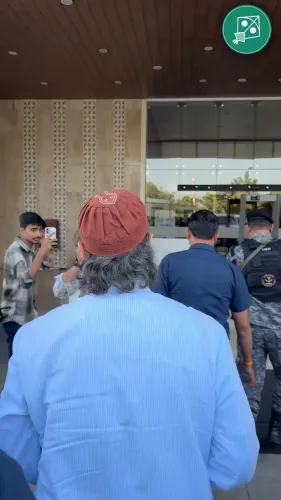
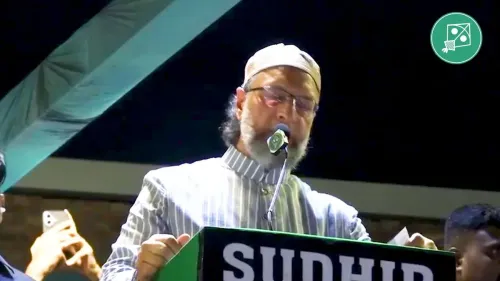
The post accompanies a video — the contents of which were not independently available — suggesting this is part of a larger outreach or campaign communication, not a spontaneous remark. That production element alone signals a deliberate, coordinated messaging push.
What UP's Electoral Calendar Makes of This
With Uttar Pradesh perpetually on the edge of some electoral cycle — by-elections, local body polls, or the countdown to the next assembly contest — Owaisi's warning arrives at a moment when parties are already quietly calculating their Muslim-voter strategies. AIMIM's ability to peel even a fraction of that vote away from the SP-BSP-Congress orbit carries outsized consequence, making every statement from Owaisi on this topic a signal worth reading carefully.
The party that can persuade UP's Muslim voters that independent representation is more valuable than coalition leverage will have changed the state's political geometry. Owaisi is betting — loudly, publicly — that the argument is winnable.
Point of View
And this kind of direct digital outreach is how that argument is seeded in the electorate. Whether it translates to seats depends on whether UP's Muslim voters see independent representation as viable — but the messaging architecture is sharper than anything AIMIM was deploying even two years ago.
NationPress
19 Oct 2026
Frequently Asked Questions
What did Asaduddin Owaisi post about Uttar Pradesh Muslims?
On 19 October 2026, Owaisi posted in Hindi urging Muslims in Uttar Pradesh to identify those who do not want them to have their own independent political voice in the state.
Why is AIMIM focused on Uttar Pradesh?
Uttar Pradesh has India's largest Muslim voter population and AIMIM is seeking to build an independent Muslim political platform there, challenging the dominance of parties like SP, BSP, and Congress over minority votes.
Did AIMIM contest the 2022 UP elections?
Yes. AIMIM fielded candidates in the 2022 Uttar Pradesh Assembly elections as part of its strategy to establish an independent Muslim political presence in northern India.
Who is Owaisi referring to as 'those people' in his post?
Owaisi did not name any specific individual or party. The post's language implies political actors who benefit from Muslim voters remaining tied to larger coalition partners rather than developing an independent electoral platform.
What is AIMIM's broader strategy in north India?
AIMIM has been incrementally contesting seats in states beyond its Telangana base to position itself as a dedicated voice for Muslim political interests, arguing that absorption into broader coalitions dilutes Muslim political agency.