Jal Shakti Minister Paatil greets Tapi Pragatya Divas
Synopsis
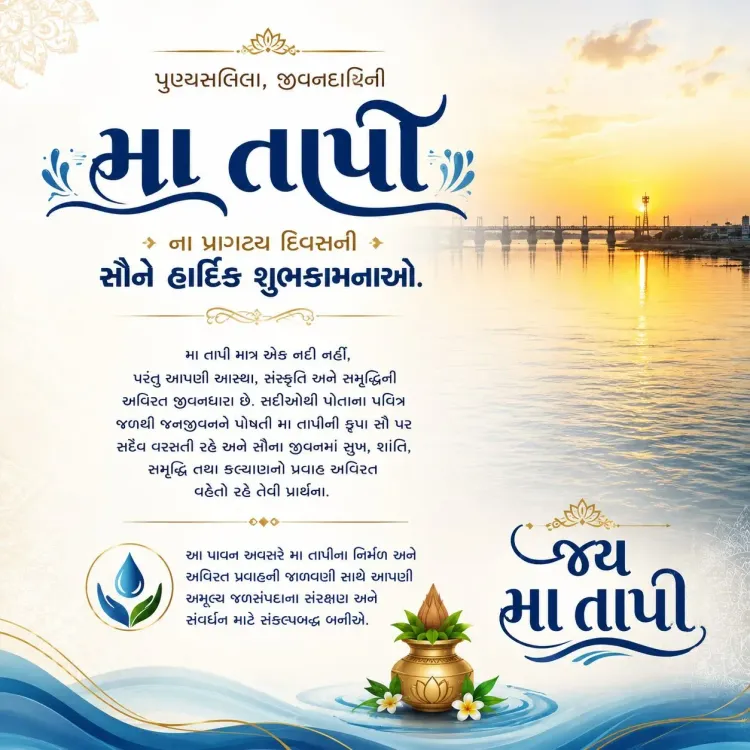
Union Jal Shakti Minister C. R. Paatil marked Tapi Pragatya Divas on 20 July 2026 with a Gujarati message venerating the Tapi River as a lifeline of faith and prosperity, and called on citizens to commit to preserving its clean, uninterrupted flow.
Key Takeaways
Paatil , Union Minister of Jal Shakti, posted greetings on Tapi Pragatya Divas on 20 July 2026 .
He described the Tapi River as 'not merely a river' but an unceasing lifeline of faith, culture, and prosperity.
Paatil called for a collective resolve to maintain the river's clean, uninterrupted flow and conserve India's water heritage.
The Tapi River flows through Madhya Pradesh , Maharashtra , and Gujarat , supporting millions of farmers and urban residents including in Surat .
The message aligns with the Jal Shakti Ministry's mandate on river conservation and integrated basin management.
Observers will watch for formal policy announcements on Tapi basin pollution control or inter-state water-sharing in coming months.
Union Jal Shakti Minister C. R. Paatil on Monday, 20 July 2026 extended greetings on the occasion of Tapi Pragatya Divas — the day marking the appearance of the Tapi River — and renewed a public pledge to protect and conserve the river's waters and the broader water heritage of the region.
Writing in Gujarati on X, Paatil described the Tapi as far more than a river. 'મા તાપી માત્ર એક નદી નહીં, પરંતુ આપણી આસ્થા, સંસ્કૃતિ અને સમૃદ્ધિની અવિરત જીવનધારા છે' ('Mother Tapi is not merely a river, but an unceasing lifeline of our faith, culture, and prosperity'), he wrote. He prayed that the river's grace continue to nourish all lives and that happiness, peace, prosperity, and welfare flow uninterrupted in everyone's life.
Context
The Tapi River, also known as the Tapti, is one of the major west-flowing rivers of peninsular India. Originating in the Satpura Range of Madhya Pradesh, it flows westward through Maharashtra and Gujarat before draining into the Gulf of Khambhat near Surat. The river is a primary source of water for millions of people in the Tapi basin, including farmers, urban residents, and tribal communities.
Tapi Pragatya Divas is observed with devotional fervour in Gujarat and parts of Maharashtra, where the river is venerated as 'Punya Salila' (the sacred-watered) and 'Jeevan Dayini' (the life-giver) — epithets Paatil invoked in his message. The occasion draws pilgrims and communities to the river's banks for prayer and ritual.
Policy Backdrop
Paatil's call to action — 'સંકલ્પબદ્ધ બનીએ' ('let us resolve') — for preserving the Tapi's clean and uninterrupted flow aligns directly with the mandate of the Jal Shakti Ministry, which oversees river conservation, water resource development, and integrated basin management across India.
The ministry has extended the model of the flagship Namami Gange programme, launched in 2014 to rejuvenate the Ganga, to other river systems through integrated basin management approaches. Rivers in western and central India, including those in the Tapi basin, fall within the broader ambit of national water conservation policy. As a former Gujarat BJP state president and a politician with deep roots in the state, Paatil's messaging on the Tapi carries both cultural and administrative weight.
Stakeholders and Impact
The Tapi basin supports a substantial agricultural economy, with farmers across Gujarat and Maharashtra dependent on the river for irrigation. Urban centres including Surat — one of India's fastest-growing cities — rely on the Tapi for municipal water supply. Tribal and rural communities along the river's course in all three states are among the most directly affected stakeholders in any conservation or management decision.
Indian ministers routinely combine devotional language with conservation pledges on river festival occasions, a pattern that reflects the political and cultural linkage between heritage symbolism and water policy. Such messages simultaneously address religious sentiment and reinforce government priorities around water security.
What's Next
Paatil's public pledge to safeguard the Tapi's waters on this symbolic occasion may be a precursor to formal policy announcements. Observers will watch for any central or state government moves on Tapi basin pollution control projects, riverfront development, or inter-state water-sharing discussions involving Madhya Pradesh, Maharashtra, and Gujarat in the coming months. The Jal Shakti Ministry's engagement with rivers beyond the Ganga basin will be a key indicator of how broadly the integrated conservation model is being applied.
Point of View
Invoking the Tapi carries both electoral and administrative logic. The pledge to preserve the river's 'clean and uninterrupted flow' echoes the language of Namami Gange and hints at possible future policy moves in the Tapi basin. Whether this translates into concrete funding or inter-state coordination will determine its lasting significance beyond the ritual calendar.
NationPress
20 Oct 2026
Frequently Asked Questions
What is Tapi Pragatya Divas?
Tapi Pragatya Divas is a day observed to mark the appearance or origin of the Tapi River, venerated in Gujarat and parts of Maharashtra as 'Punya Salila' (the sacred-watered) and 'Jeevan Dayini' (the life-giver). Communities gather at the river's banks for prayer and devotional rituals on this occasion.
Who is C. R. Paatil and why did he post about the Tapi River?
C. R. Paatil is the Union Minister of Jal Shakti and a senior BJP leader and former Gujarat state party president. He posted greetings on Tapi Pragatya Divas on 20 July 2026, combining cultural reverence for the river with a pledge to conserve India's water heritage — a message that aligns with both his Gujarati roots and his ministerial mandate.
Which states does the Tapi River flow through?
The Tapi River originates in the Satpura Range of Madhya Pradesh and flows westward through Maharashtra and Gujarat before draining into the Gulf of Khambhat near Surat. It is a critical water source for agriculture and urban supply across all three states.
What is the Jal Shakti Ministry's role in river conservation?
The Jal Shakti Ministry is the central government body responsible for water resource development, river conservation, and integrated basin management. It oversees programmes modelled on the Namami Gange initiative and extends conservation frameworks to rivers across India, including those in western and central India.
What policy actions could follow Paatil's Tapi River conservation pledge?
While no specific scheme was announced, observers are watching for central or state government moves on Tapi basin pollution control projects, riverfront development, or inter-state water-sharing discussions among Madhya Pradesh, Maharashtra, and Gujarat in the coming months.