Jal Shakti Minister Paatil hails Surat family's 886 borewell revival
Synopsis
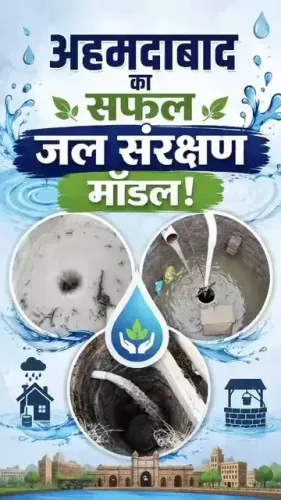
Jal Shakti Minister C. R. Paatil has highlighted how Surat's Shaunak Parekh and the Mahendra Brothers family revived 886 defunct borewells across Navsari and other regions through rainwater harvesting, calling it a model of PM Modi's Catch the Rain campaign meeting genuine community action.
Key Takeaways
886 defunct borewells have reportedly been revived through rainwater harvesting and groundwater recharge efforts led by Shaunak Parekh and the Mahendra Brothers family of Surat .
The work spans Navsari district in Gujarat and several other parts of the country.
Union Jal Shakti Minister C.
Paatil cited the initiative on 29 July 2026 as a model of PM Modi's Catch the Rain campaign being executed through citizen participation.
The Jal Shakti Abhiyan , launched in 2019 , provides the broader policy framework encouraging community-led water conservation across India.
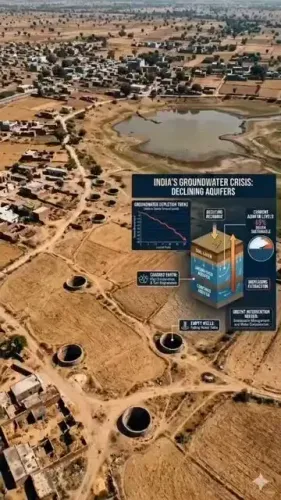
Gujarat's periodic drought conditions make groundwater recharge especially critical for farmers dependent on borewells for irrigation and drinking water.
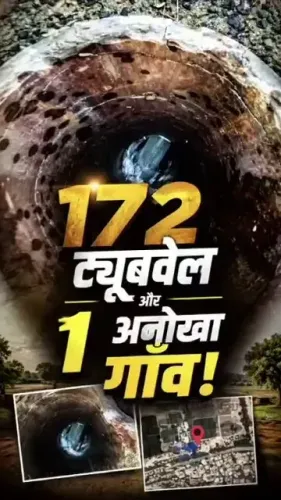
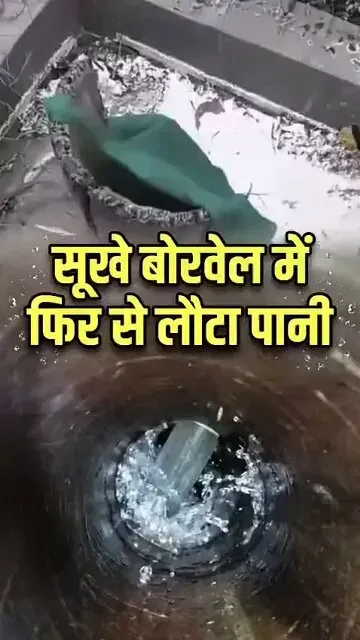
When water returns to a dry borewell, a farmer's hope comes back with it. Union Jal Shakti Minister C. R. Paatil on Wednesday, 29 July 2026 spotlighted a striking grassroots success: a Surat-based family has reportedly revived 886 defunct borewells across Navsari and other parts of the country through rainwater harvesting and groundwater recharge — turning a central government campaign into a living, breathing movement.
886 borewells, one family's mission
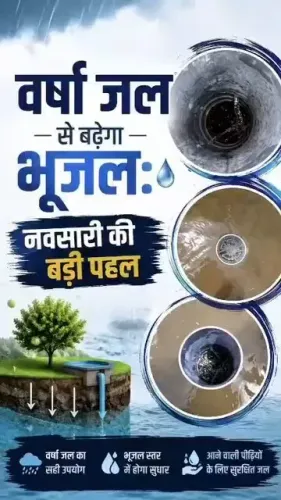
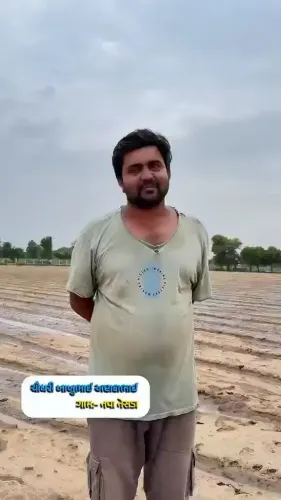
Shaunak Parekh and his family, members of the well-known Mahendra Brothers business family of Surat, are at the centre of Paatil's praise. The minister credited their sustained efforts in water conservation — spanning Navsari district and several other regions — with restoring water flow to borewells that had long run dry. The method: systematic rainwater collection and subsurface recharge that replenishes the aquifer before water can be drawn back out.
Paatil framed the work as a direct translation of Prime Minister Narendra Modi's 'Catch the Rain' campaign into ground-level action, writing that when a dry borewell flows again, 'kisaan ki ummeedein bhi phir se jeevant ho uthti hain' — 'a farmer's hopes, too, come alive once more.'
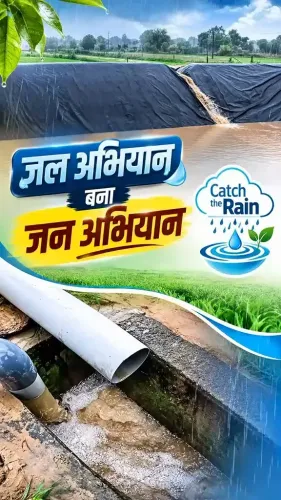
Catch the Rain and the Jal Shakti Abhiyan behind it
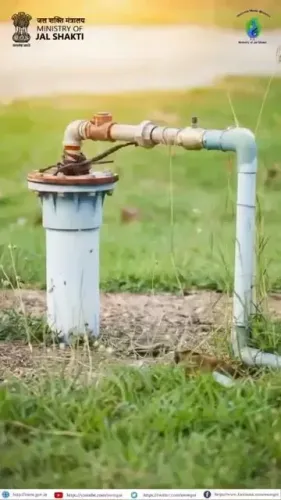
The Catch the Rain campaign, championed by PM Modi, urges citizens and institutions to harvest rainwater before it runs off — a deceptively simple idea with large consequences for a water-stressed country. It sits within the broader Jal Shakti Abhiyan, launched in 2019, which mobilises community participation across states to check, recharge, and conserve groundwater.
Gujarat is a natural focal point for this effort. The state's agricultural economy is periodically hammered by drought, making groundwater not a convenience but a lifeline. Districts like Navsari — fertile but vulnerable — illustrate exactly why aquifer health determines whether a farming season succeeds or fails.
When private initiative meets public resolve
What Paatil's post underlines is a model the government has long sought to replicate: private families and local communities picking up where state capacity ends. His message is explicit — 'sarkar ke sankalp ke saath jab samaj ki sahbhagita judti hai' ('when society's participation joins the government's resolve'), water conservation moves from a campaign to a jan-andolan, a people's movement.
For rural households and farmers who depend on borewells for drinking water and irrigation, 886 revived water sources — if the figure holds — is not a statistic. It is 886 reasons to plant, to stay, to plan for the next season.
The Parekh family's work now stands as a case study the government will likely point to as it pushes the Catch the Rain framework into its next phase — proof that the gap between policy intent and field reality can, sometimes, be closed by one determined family with a pump and a plan.
Point of View
And it elevates a private-sector family as a model for the government's preferred 'Jan Bhagidari' (people's participation) doctrine. The 886-borewell figure, drawn entirely from ministerial attribution, will need independent verification — but the political utility of the narrative is clear regardless. For the BJP, stories of private citizens amplifying central schemes are electoral gold in agrarian Gujarat, where water anxiety runs deep ahead of any election cycle. The broader signal: the Jal Shakti Ministry is actively curating citizen success stories to build momentum for the Catch the Rain framework's next phase.
NationPress
13 Sept 2026
Frequently Asked Questions
What is the Catch the Rain campaign?
'Catch the Rain' is a central government campaign championed by Prime Minister Narendra Modi that encourages individuals, communities, and institutions to harvest rainwater before it runs off, helping recharge groundwater and reduce dependence on depleting aquifers.
Who is Shaunak Parekh and what did he do for water conservation?
Shaunak Parekh is a member of the Surat-based Mahendra Brothers business family. According to Union Minister C. R. Paatil , he and his family have led sustained rainwater harvesting and groundwater recharge efforts across Navsari and other regions, reportedly reviving 886 defunct borewells .
How many borewells were revived in Navsari Gujarat?
Union Jal Shakti Minister C. R. Paatil stated that 886 previously defunct borewells have been revived through the water conservation work of the Parekh family across Navsari and other parts of India. The figure is based on ministerial attribution.
What is the Jal Shakti Abhiyan?
The Jal Shakti Abhiyan is a central government initiative launched in 2019 to promote water conservation and groundwater recharge through community participation across Indian states. It forms the policy backbone for campaigns like Catch the Rain .
Why is groundwater recharge important in Gujarat?
Gujarat faces periodic drought conditions that put severe stress on its agricultural economy. Farmers in districts like Navsari depend on borewells for both irrigation and drinking water, making aquifer recharge through rainwater harvesting a critical survival strategy.