Jal Shakti Minister Paatil calls students 'Custodians of Water'
Synopsis
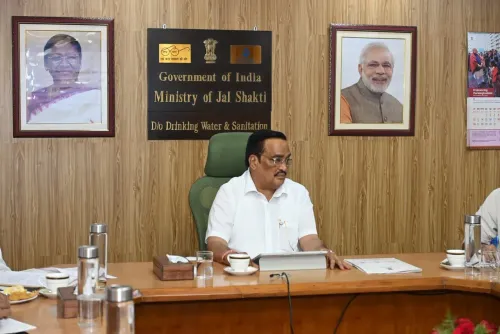
Union Jal Shakti Minister C. R. Paatil on 29 September 2026 called for school students to visit Jal Jeevan Mission water-supply infrastructure and quality-testing labs, framing young Indians as future 'Custodians of Water' and urging water conservation to become a national community pledge.
Key Takeaways
Paatil , Union Minister of Jal Shakti, on 29 September 2026 advocated structured exposure visits for school students to Jal Jeevan Mission infrastructure.
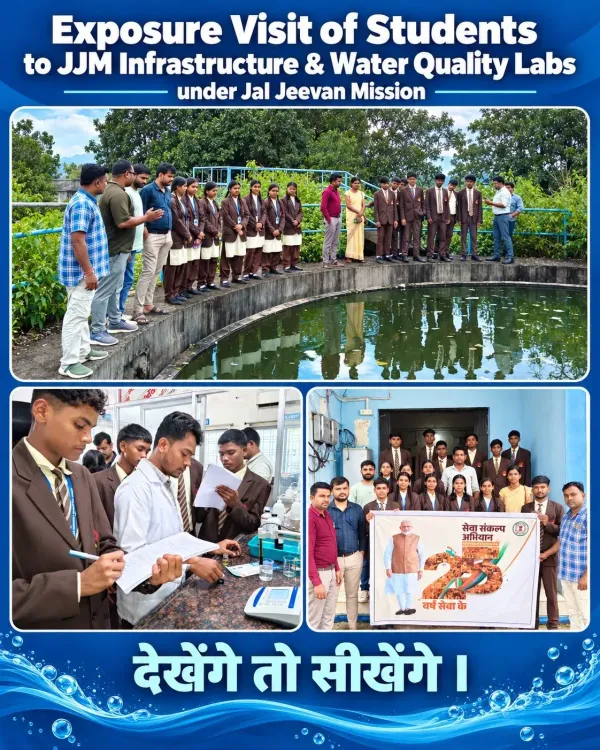
Students would observe the full water journey — sourcing, purification, quality-testing and distribution — at JJM facilities and water-quality laboratories.
The minister coined the goal of making children 'Custodians of Water' ( jal ke sajag sanrakshak ) in their homes, schools and villages.
Jal Jeevan Mission was launched in 2019 by Prime Minister Narendra Modi to provide functional tap connections to every rural household in India.
The push reflects JJM's evolving focus from infrastructure construction toward community-led behavioural change and long-term sustainability of water assets.
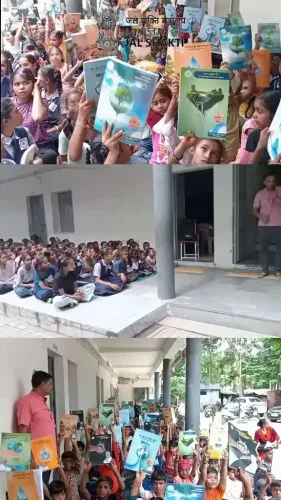
Every drop of water that travels from a source to a tap passes through a story most children never get to see — until now. On Tuesday, 29 September 2026, Union Jal Shakti Minister C. R. Paatil called on India to make that journey visible, urging that school students be taken on exposure visits to Jal Jeevan Mission water-supply infrastructure and water-quality testing laboratories as a concrete step toward building the next generation of water stewards.
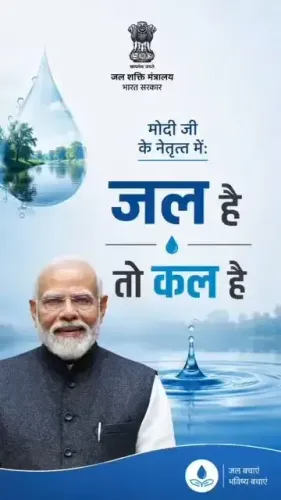
Posting on X in Hindi, Minister Paatil framed the initiative in a vivid phrase: 'देखेंगे तो सीखेंगे, सीखेंगे तो सहेजेंगे' — 'If they see, they will learn; if they learn, they will conserve.' He credited Prime Minister Narendra Modi's vision behind the 'Har Ghar Jal' (Tap Water to Every Home) pledge, describing community participation and shared responsibility as the twin engines now driving the mission forward.
From source to tap: what students would witness
The minister's pitch is precise. Students would observe the full arc of a water unit — sourcing, purification, quality-testing, and distribution — turning an abstract public utility into a lived, scientific experience. The logic: a child who watches a water-treatment process first-hand is far more likely to understand why a leaking pipe or a contaminated source is not someone else's problem.
Paatil described these exposure visits as a powerful bridge that connects 'curiosity with scientific thinking and knowledge with responsibility.' Children who today understand the value of every drop, he wrote, will tomorrow become 'Custodians of Water' — jal ke sajag sanrakshak — in their homes, schools, and villages.
Why JJM's next challenge is behavioural, not just infrastructural
Jal Jeevan Mission, launched by Prime Minister Modi in 2019, set out to deliver functional household tap connections to every rural home in India — one of the most ambitious drinking-water programmes in the world. The harder, quieter challenge that follows physical construction is sustaining those assets: keeping pipes intact, labs operational, and communities invested in protecting infrastructure they did not build themselves.
That is exactly where Minister Paatil's student-engagement push fits into the larger policy picture. When children return from a water-testing lab having personally measured chlorine levels or watched filtration in action, the mission stops being a government scheme and starts being a neighbourhood fact. The community participation angle — janbhagidari — has been a recurring emphasis in JJM's communication since its rollout, and integrating schools adds a generational dimension that adult awareness campaigns alone cannot reach.
Scaling a call into a movement
Paatil closed his post with a direct appeal: connect the future generation with Jal Jeevan Mission and make water conservation, drinking-water quality, and care of community water infrastructure a collective national pledge — jan-jan ka sankalp. With the hashtags #JalJeevanMission, #HarGharJal, and #जलसंरक्षण, the post signals a push to amplify the idea well beyond official channels.
Whether state governments and school administrations convert this ministerial nudge into structured field programmes will determine the real reach of the idea. But the framing itself is notable: the minister of the country's flagship water mission is publicly redefining its success metric — from pipes laid to mindsets shaped.
Point of View
The Centre is attempting to pre-empt the post-construction decay that has plagued earlier rural water schemes. The 'exposure visit' model borrows from science-education frameworks and, if adopted at scale by state governments, could meaningfully reduce dependence on government maintenance alone. The initiative also fits neatly into the BJP's broader narrative of citizen co-ownership of welfare infrastructure, reinforcing the janbhagidari (people's participation) theme ahead of state-level political cycles.
NationPress
29 Sept 2026
Frequently Asked Questions
What is Jal Jeevan Mission and when was it launched?
Jal Jeevan Mission is a flagship central government scheme launched by Prime Minister Narendra Modi in 2019 to provide functional household tap connections supplying safe drinking water to every rural home in India.
What did C. R. Paatil announce about students and Jal Jeevan Mission?
Union Jal Shakti Minister C. R. Paatil called on 29 September 2026 for school students to be taken on exposure visits to Jal Jeevan Mission water-supply infrastructure and water-quality testing laboratories so they can directly observe water purification, testing and distribution and grow up as informed water conservers.
What does 'Har Ghar Jal' mean?
'Har Ghar Jal' translates to 'Tap Water to Every Home' and is the core pledge of the Jal Jeevan Mission, aiming to eliminate dependence on hand-pumps and open water sources for rural drinking water.
Why is student involvement important for Jal Jeevan Mission's sustainability?
Physical infrastructure under JJM requires long-term community participation to remain functional. Engaging school students builds awareness of water quality and conservation from a young age, creating future community stewards who can help maintain and protect water assets beyond the government's initial investment.
Who is C. R. Paatil?
C. R. Paatil is the Union Minister of Jal Shakti in India, a senior BJP leader, and former president of the BJP's Gujarat state unit.