Jal Shakti Minister Paatil Visits India International Water Week Exhibition
Synopsis
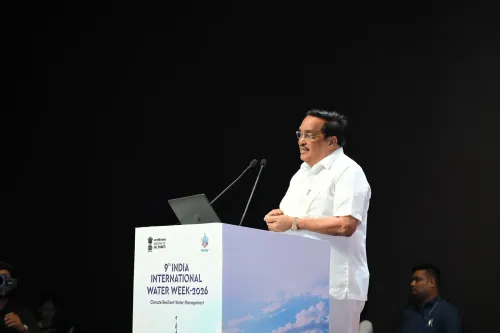
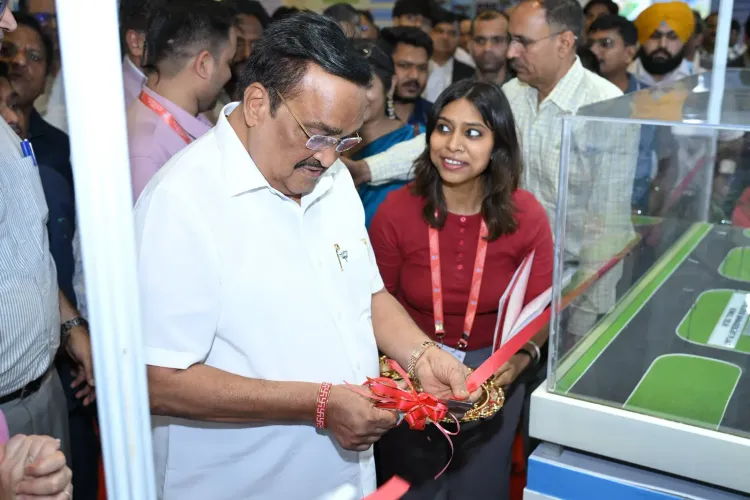
Union Jal Shakti Minister C. R. Paatil visited the India International Water Week Exhibition on 25 September 2026, highlighting it as a forum for states, nations and industries to share water-sector innovations, technology and best practices under PM Modi's conservation push.
Key Takeaways
Union Jal Shakti Minister C.
Paatil toured the India International Water Week Exhibition on 25 September 2026 .
The exhibition brought together stalls from multiple states, countries, institutions and industries showcasing water-sector innovations.
Paatil described the event as a dual platform — for exhibiting new ideas and for exchanging best practices among states and partner countries.
He linked the exhibition to PM Narendra Modi's three-pillar water agenda: new technology, people's participation ( janbhagidari ), and collaborative effort.
India's flagship water schemes include the Jal Jeevan Mission (launched 2019 ) for rural tap connections and the Namami Gange programme (since 2014 ) for Ganga rejuvenation.
The Ministry of Jal Shakti coordinates water resources, river development and Ganga rejuvenation at the national level.
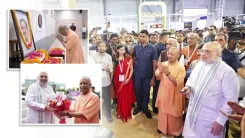
Where does a nation's water future get built? In part, on a floor like this — Union Jal Shakti Minister C. R. Paatil walked the stalls of the India International Water Week Exhibition on Friday, 25 September 2026, taking stock of new technologies, innovations and conservation practices being showcased by states, countries, institutions and industries gathered under one roof.
Paatil described the exhibition as a meaningful convergence: exhibitors got a stage to present fresh ideas and innovations, while participating states and partner countries exchanged experiences and best practices. In his words, the event became 'jal kshetra mein gyan, anubhav aur visheshagyta ko ek-doosre se saajha karne ka ek upyogi manch' — 'a useful platform for sharing knowledge, experience and expertise in the water sector with one another.'
A showcase where states and nations compared notes
The exhibition's dual character stood out: it was simultaneously an innovation showcase and a peer-learning forum. States brought their on-ground learnings — what worked in water distribution, what failed in conservation — while industries and institutions put emerging technology on display. That combination, Paatil noted, is precisely what makes such events more than a trade fair.
India's water governance landscape has grown substantially over the last decade. The Jal Jeevan Mission, launched in 2019, set out to deliver functional household tap connections to every rural home — a scheme that fundamentally reoriented how states, districts and village committees plan water infrastructure. The Namami Gange programme, running since 2014, has focused on pollution abatement and rejuvenation of the Ganga, drawing in community participation alongside engineering interventions.
Modi's three-pillar water push: technology, participation, collaboration
Paatil explicitly framed the exhibition within Prime Minister Narendra Modi's broader water agenda, pointing to three consistent drivers: new technology, janbhagidari (people's participation), and shared effort across agencies and borders. The international character of the exhibition — foreign delegations exchanging their own national best practices — extends that logic beyond India's borders.
The Ministry of Jal Shakti sits at the centre of this push, coordinating water resources, river development and the Ganga rejuvenation mandate. Exhibitions like this one allow the ministry to benchmark India's progress against global peers and identify solutions that could be adapted for Indian conditions at scale.
Water stress is not an abstract future risk for India — it is a present operational challenge in dozens of districts. Every innovation that moves from an exhibition stall to a state field programme shortens the gap between aspiration and tap.
Point of View
Participation, collaboration — he ties a ceremonial appearance to a substantive policy posture. The international dimension of the exhibition also signals India's ambition to position itself as a knowledge hub for water management in the Global South. Whether the innovations on display translate into accelerated scheme delivery on the ground remains the harder, less visible test.
NationPress
25 Sept 2026
Frequently Asked Questions
What is the India International Water Week Exhibition?
The India International Water Week Exhibition is a multi-stakeholder event that brings together Indian states, foreign countries, research institutions and water-sector industries to showcase new technologies, innovations and best practices in water conservation and management.
What did C. R. Paatil say about the exhibition?
C. R. Paatil said the exhibition served as a useful platform for sharing knowledge, experience and expertise in the water sector, allowing exhibitors to display innovations while states and partner countries exchanged their experiences and best practices.
What is India's Jal Jeevan Mission?
The Jal Jeevan Mission, launched in 2019, aims to provide functional household tap connections to every rural home in India, fundamentally reshaping water infrastructure planning at the district and village level.
What is the Namami Gange programme?
The Namami Gange programme, running since 2014, is a central government initiative focused on pollution abatement and rejuvenation of the Ganga river, combining engineering interventions with community participation.
What does the Ministry of Jal Shakti do?
The Ministry of Jal Shakti is the central ministry responsible for water resources, river development and Ganga rejuvenation in India, coordinating major schemes like Jal Jeevan Mission and Namami Gange.