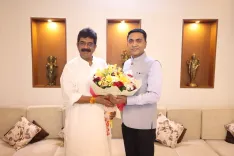
Padma Shri awardees urge organ donation push, job quota for haemophilia patients
Synopsis
Two Padma Shri awardees — organ donation crusader Nilesh Mandlewala, who has driven over 1,300 successful donations, and haemophilia survivor Dr Suresh Hanagavadi — are using their national honour as a platform: one to push for transplant facilities in under-served states by 2047, the other to demand job reservation for haemophilia patients under India's disability law.
Key Takeaways
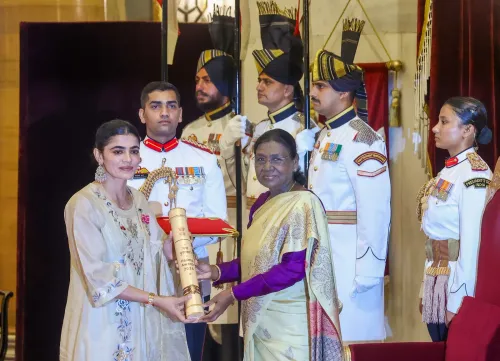
Nilesh Mandlewala (founder, 'Donate Life' ) and Dr Suresh Hanagavadi (haemophilia survivor) will receive the Padma Shri from President Droupadi Murmu at Rashtrapati Bhavan on Monday, 26 May 2025 . 'Donate Life' has facilitated more than 1,300 successful organ donations; Mandlewala's goal is zero organ-shortage deaths in India by 2047 .
Mandlewala credited the Surat police for creating Gujarat's first green corridor for organ transplant.
Dr Hanagavadi described haemophilia as a 'low-volume, high-cost' disease in which disability is common but preventable through prophylactic treatment and newer 'non-factor therapy' .
Dr Hanagavadi has appealed for job reservation for haemophilia patients under the Rights of Persons with Disabilities Act, 2016 .
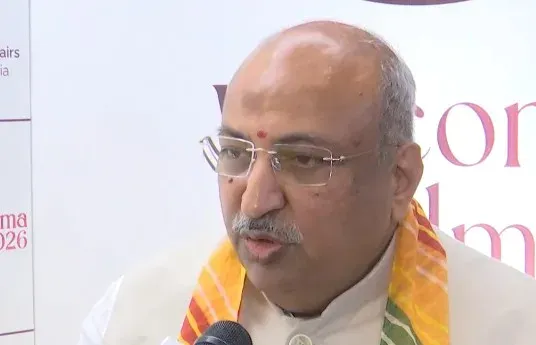
Nilesh Mandlewala, founder of 'Donate Life', and haemophilia survivor Dr Suresh Hanagavadi — both recipients of the Padma Shri — have called on the government and public to expand organ donation awareness and extend job reservation to people living with haemophilia. The two will be formally honoured by President Droupadi Murmu at a ceremony in Rashtrapati Bhavan, New Delhi, on Monday, 26 May 2025.
Mandlewala's Mission: 1,300 Donations and a 2047 Vision
Mandlewala was emphatic that the Padma Shri is not a personal milestone. 'I believe this honour belongs to all those organisations across the country and every individual involved in the noble work of organ donation, who work day and night to save precious lives. It is also an honour for those families who have donated the organs of their loved ones post their death,' he said.
The campaign was born from personal grief. Mandlewala recalled that his father's illness first drew him to the cause — and while he could not save his father, 'Donate Life' has since facilitated more than 1,300 successful organ donations. He also credited the Surat police for establishing Gujarat's first green corridor for organ transplant, a logistical breakthrough that has since been replicated elsewhere.
Looking ahead, Mandlewala has set a landmark target aligned with Prime Minister Narendra Modi's 'Viksit Bharat' vision. 'We have set a mission that in 2047, when our country celebrates 100 years of independence, no patient in India should die because of not getting an organ in time,' he said. He added that the youth have been central to the campaign for the past two years, with the aim of ensuring the next generation sustains this movement.
The Scale of India's Organ Shortage
Mandlewala underscored the urgency of expanding organ donation infrastructure. He noted that millions of people die each year in India due to a shortage of available organs — deaths he described as preventable. He stressed that the Padma Shri would be meaningful only if it helps extend transplant facilities to states where the process has not yet begun, pointing to a significant geographic gap in India's organ donation ecosystem.
Dr Hanagavadi's Appeal: Prophylaxis, Prevention, and Job Reservation
Dr Suresh Hanagavadi, himself a haemophilia survivor, described the disease as a 'low-volume, high-cost' condition with far-reaching consequences. 'Disability is very common; most of our children with haemophilia become disabled by the time they reach adolescence. However, disability in haemophilia is preventable,' he said.
He explained that prophylactic treatment — administering clotting factors before bleeding episodes occur — is the key to preventing joint damage. He also pointed to newer 'non-factor therapy' options for patients lacking blood-clotting proteins, describing these as a significant clinical advance that needs to reach more patients.
Beyond clinical care, Dr Hanagavadi highlighted the social burden of the disease. Many children with haemophilia face high school absenteeism and are unable to pursue education without interruption. He appealed to the government to create a supportive environment for these children to 'grow uneventfully.'
Call for Job Reservation Under Disability Act
Dr Hanagavadi made a pointed appeal for job reservation for people with haemophilia under the Rights of Persons with Disabilities Act, 2016. 'Since haemophilia is a lifelong disorder, they face many psychosocial challenges and difficulties in pursuing education. Providing job reservation under the Rights of Persons with Disabilities Act, 2016 would have a significant positive impact on families affected by haemophilia,' he said. The appeal reflects a broader push by patient advocacy groups to have haemophilia formally recognised within India's disability welfare framework in a more substantive way.
Both awardees expressed gratitude to the Centre, Prime Minister Modi, and Home Minister Amit Shah for the recognition, while making clear that the honour has sharpened — not satisfied — their sense of purpose.
Point of View
With green corridors and transplant facilities concentrated in a handful of states, while millions reportedly die waiting. On haemophilia, Dr Hanagavadi's call for job reservation is not new — patient groups have long argued that the Rights of Persons with Disabilities Act's implementation has not kept pace with its intent for rare, chronic conditions. What is notable is that a Padma Shri platform is now being used to amplify these asks, raising the political cost of inaction. Whether the recognition translates into policy movement — on transplant infrastructure or disability quotas — is the real test of these honours.
NationPress
24 Sept 2026
Frequently Asked Questions
Who are the Padma Shri awardees making these appeals?
The two awardees are Nilesh Mandlewala, founder of the organ donation organisation 'Donate Life', and Dr Suresh Hanagavadi, a haemophilia survivor and patient advocate. Both will receive the Padma Shri from President Droupadi Murmu at Rashtrapati Bhavan on 26 May 2025.
What is Nilesh Mandlewala's organ donation mission?
'Donate Life' has facilitated more than 1,300 successful organ donations since its founding. Mandlewala's stated goal is that no patient in India should die for want of an organ by 2047, when India marks 100 years of independence — aligned with Prime Minister Modi's 'Viksit Bharat' vision.
Why is Dr Hanagavadi calling for job reservation for haemophilia patients?
Dr Hanagavadi argues that haemophilia is a lifelong disorder that causes frequent disability, high school absenteeism, and significant psychosocial challenges, making employment difficult. He has appealed for formal job reservation under the Rights of Persons with Disabilities Act, 2016 to provide structured support to affected families.
How can haemophilia-related disability be prevented?
According to Dr Hanagavadi, disability in haemophilia is preventable through prophylactic treatment — administering clotting factors before bleeding episodes occur — which prevents joint damage. Newer 'non-factor therapy' options are also available for patients who lack blood-clotting proteins.
What is the significance of Gujarat's first green corridor mentioned by Mandlewala?
A green corridor is a traffic-cleared route used to transport donor organs rapidly to transplant centres, minimising the time between organ retrieval and surgery. Mandlewala credited the Surat police for establishing Gujarat's first such corridor, a logistical step that has been critical to expanding organ transplant capacity in the state.