India rejects Pakistan's IWT claim, calls it 'misrepresentation of facts': MEA
Synopsis
India's MEA has delivered one of its sharpest public rebukes of Pakistan yet, accusing Islamabad of 'propagating falsehoods' over an IWT arbitration ruling — and making clear that the treaty's suspension will hold until Pakistan ends cross-border terrorism. The standoff exposes a fundamental dispute not just over water, but over which international legal forum has any legitimacy at all.
Key Takeaways
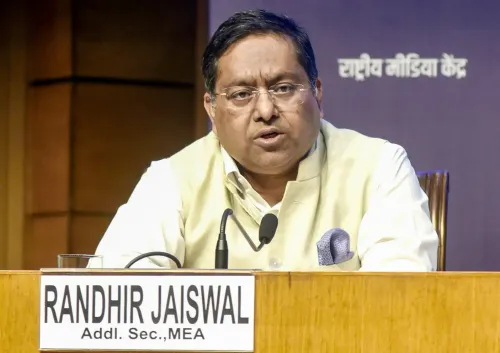
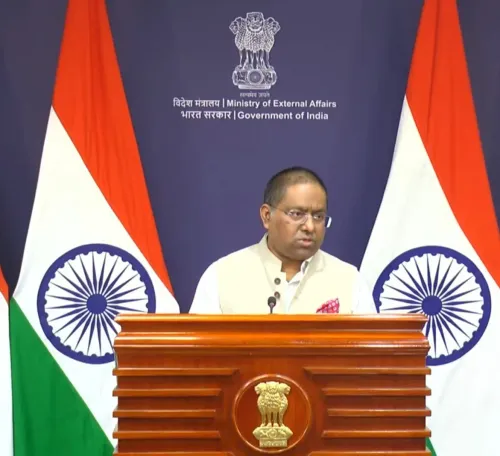
MEA spokesperson Randhir Jaiswal on 22 September 2026 accused Pakistan of 'misrepresenting facts' over a ruling on the Indus Waters Treaty (IWT) .
India rejects the Court of Arbitration (CoA) as 'illegally constituted,' saying it was set up by the World Bank in breach of treaty terms.
The MEA had previously, on 31 August , formally rejected the CoA's award on interim measures and the status of the IWT.
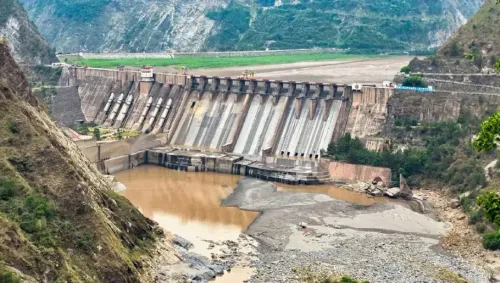
The CoA's ruling concerned the Ratle Hydro-Electric Plant (RHEP) and directed India to observe treaty obligations on Western Rivers projects.
India placed the IWT — signed on 19 September 1960 — in abeyance after the Pahalgam terror attack and has tied its reinstatement to Pakistan ending cross-border terrorism.
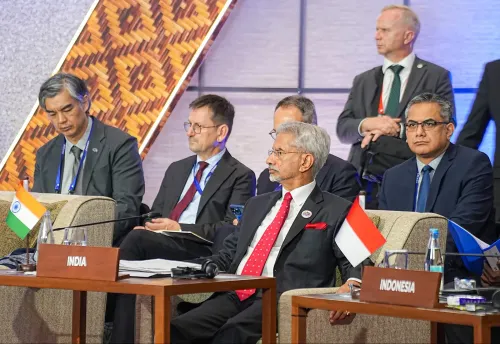
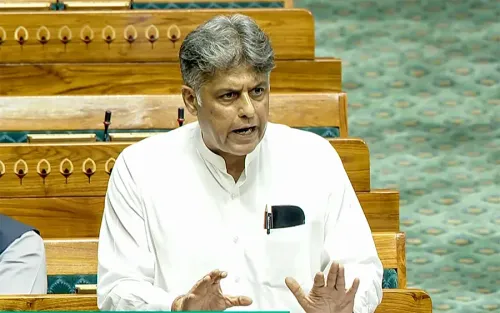
India's Ministry of External Affairs (MEA) on Tuesday, 22 September 2026, sharply rebuked Pakistan for what it described as a pattern of 'misrepresenting facts,' categorically rejecting Islamabad's characterisation of a recent arbitration ruling as a decision by the Permanent Court of Arbitration on the Indus Waters Treaty (IWT). The rejection, delivered at a weekly media briefing in New Delhi, underscores the deepening legal and diplomatic standoff between the two nations over the decades-old water-sharing agreement.
MEA's Direct Rebuttal
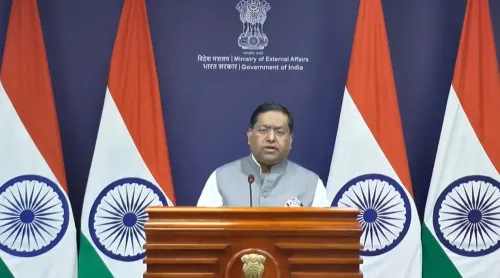
MEA spokesperson Randhir Jaiswal did not mince words at the briefing. 'I would like to say that Pakistan has a habit of misrepresenting facts and propagating falsehoods to serve its malicious propaganda. For starters, the so-called ruling is not a ruling by the Permanent Court of Arbitration, as sought to be projected by the Pakistani minister. It is a ruling by an illegally constituted court. We see this as just one more attempt by Pakistan to distort reality. Our position on this issue is very clear, and we have reiterated it several times,' Jaiswal said.
India's stance is consistent with its rejection last month of an 'award' issued by the Court of Arbitration (CoA) concerning interim measures and the status of the IWT. New Delhi contends that the CoA was set up by the World Bank in 'patent breach' of the terms of the treaty.
India's Rejection of the Court of Arbitration
In a statement dated 31 August, the MEA had declared: 'Today, the illegally constituted so-called Court of Arbitration (CoA) has issued what it termed as an award concerning Interim Measures and Status of the Indus Waters Treaty. This so-called Court was constituted by the World Bank in patent breach of the terms of the Treaty and India categorically rejects its so-called award, just as it has firmly rejected all prior pronouncements by this illegally constituted body.'
India has never appeared before the CoA and has refused to recognise its jurisdiction. The MEA reiterated that the body's pronouncements 'will have no effect on India's actions in connection with the projects being undertaken by India,' specifically referencing hydro-electric infrastructure on the Western Rivers.
The Indus Waters Treaty and Its Current Status
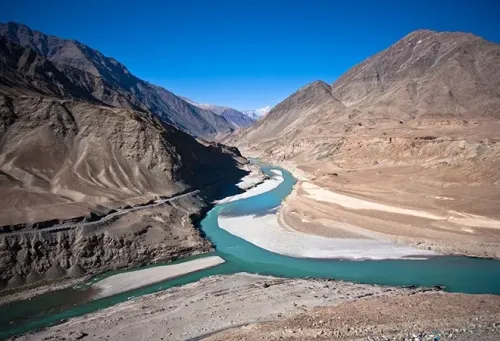
The Indus Waters Treaty was originally signed between India and Pakistan on 19 September 1960, governing the allocation and utilisation of waters from the Indus river system. It is widely regarded as one of the most enduring bilateral agreements between the two countries, having survived multiple wars and crises.
However, India placed the treaty in abeyance following the Pahalgam terror attack, invoking its sovereign rights under international law. New Delhi has stated that the IWT will remain suspended until Pakistan 'credibly and irrevocably abjures its support for cross-border terrorism.' In June, Jaiswal reiterated this position, saying: 'We have suspended the Indus Waters Treaty and kept it in abeyance until Pakistan completely stops cross-border terrorism.'
What the CoA Ruled
The Court of Arbitration had issued an award on the 'Status' of the IWT and an order on interim measures specifically concerning the Ratle Hydro-Electric Plant (RHEP). The court directed that India must observe its obligations under the treaty, including those relating to the design and operation of its hydro-electric projects on the Western Rivers — a directive India has flatly refused to accept, given its non-recognition of the court's jurisdiction.
Diplomatic Context and What Comes Next
The exchange marks at least the third public instance this year where India has formally rejected pronouncements from the CoA, signalling that New Delhi has no intention of engaging with a process it considers illegitimate. Notably, this dispute is unfolding against a backdrop of already strained India-Pakistan relations, with cross-border tensions, suspended bilateral dialogue, and the continued fallout from the Pahalgam attack shaping the diplomatic environment.
With India's abeyance of the IWT holding firm and its rejection of the CoA's jurisdiction unequivocal, the legal impasse is unlikely to resolve without a fundamental shift in either Pakistan's conduct on cross-border terrorism or a renegotiated dispute-resolution mechanism acceptable to both sides.
Point of View
Emphatic rejection of the Court of Arbitration signals something more than a legal position — it is a deliberate strategy to deny the forum any legitimacy before an international audience. The risk, however, is that continued non-engagement allows adverse rulings to accumulate unopposed, potentially shaping global perception of India as a treaty-defying actor. The tie between the IWT suspension and counter-terrorism conditionality is politically coherent domestically, but it conflates two separate legal regimes — water law and counter-terrorism — in a way that complicates India's standing in multilateral forums. The real question is whether New Delhi has a long-term plan beyond rejection, or whether this impasse becomes permanent by default.
NationPress
22 Sept 2026
Frequently Asked Questions
Why did India reject the Permanent Court of Arbitration ruling on the Indus Waters Treaty?
India rejects the ruling because it does not recognise the court that issued it as legitimate. The MEA has repeatedly stated that the Court of Arbitration was 'illegally constituted' by the World Bank in breach of the Indus Waters Treaty's own terms, and therefore has no jurisdiction over India's sovereign decisions.
What is the current status of the Indus Waters Treaty between India and Pakistan?
India placed the Indus Waters Treaty in abeyance following the Pahalgam terror attack, invoking its rights under international law. New Delhi has stated the treaty will remain suspended until Pakistan credibly and irrevocably stops supporting cross-border terrorism.
What did the Court of Arbitration actually rule in its latest award?
The Court of Arbitration issued an award on the 'Status' of the Indus Waters Treaty and an order on interim measures concerning the Ratle Hydro-Electric Plant (RHEP). It directed India to observe its treaty obligations, including those on the design and operation of hydro-electric projects on the Western Rivers.
What is India's objection to Pakistan's characterisation of the ruling?
India says Pakistan falsely presented the ruling as one by the Permanent Court of Arbitration — a recognised international body — when it was in fact issued by a separate body India considers illegally constituted. MEA spokesperson Randhir Jaiswal called this 'propagating falsehoods to serve its malicious propaganda.'
When was the Indus Waters Treaty originally signed, and what does it cover?
The Indus Waters Treaty was signed on 19 September 1960 between India and Pakistan, governing the utilisation of waters from the Indus river system. It allocated the three eastern rivers to India and the three western rivers primarily to Pakistan, and has historically been viewed as one of the most resilient bilateral agreements between the two countries.