India rejects Indus Waters Treaty 'award' by 'illegally constituted' arbitration court
Synopsis
India has again refused to recognise the Court of Arbitration’s authority over the Indus Waters Treaty, rejecting its latest award on interim measures and the Ratle hydro-electric project. With the treaty formally in abeyance since the Pahalgam attack and New Delhi conditioning its return on Pakistan ending cross-border terrorism, this dispute is no longer just about water — it is a live instrument of India’s Pakistan policy.
Key Takeaways
India on 31 August rejected the Court of Arbitration’s latest award on interim measures and the status of the Indus Waters Treaty (IWT) .
The MEA called the CoA ‘illegally constituted’ and said it was set up by the World Bank in breach of the Treaty’s terms.
The court ordered India to observe Treaty obligations concerning the Ratle Hydro-Electric Plant (RHEP) on the Western Rivers .
India has placed the IWT in abeyance since the Pahalgam terror attack , demanding Pakistan end cross-border terrorism before reinstatement.
MEA spokesperson Randhir Jaiswal reaffirmed in June that the suspension remains in force.
India has never appeared before the CoA and says its rulings have no legal effect on Indian projects.
India on Monday, 31 August categorically rejected the latest “award” issued by what the Ministry of External Affairs (MEA) termed an “illegally constituted” Court of Arbitration (CoA), concerning interim measures and the status of the Indus Waters Treaty (IWT). The rejection marks New Delhi’s firmest public statement yet on an arbitral body it has consistently refused to recognise.
What the MEA Said
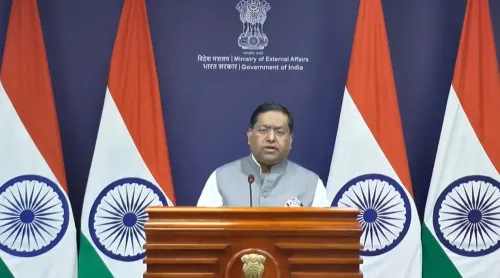
In a strongly worded statement, the MEA said the so-called Court of Arbitration “was constituted by the World Bank in patent breach of the terms of the Treaty.” New Delhi made clear it “categorically rejects its so-called award, just as it has firmly rejected all prior pronouncements by this illegally constituted body.”
The ministry further stated that India has “never recognised the existence in law” of the CoA and has “consistently maintained that the creation of this alleged arbitral body constitutes a grave violation of the IWT.” Accordingly, India has never appeared before the court and has refused to take cognisance of its earlier rulings.
What the Court Ordered
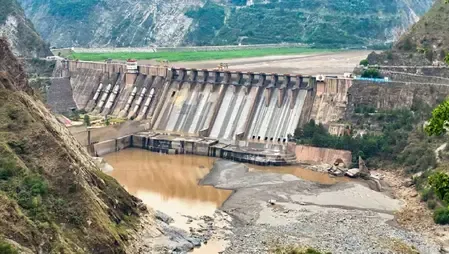
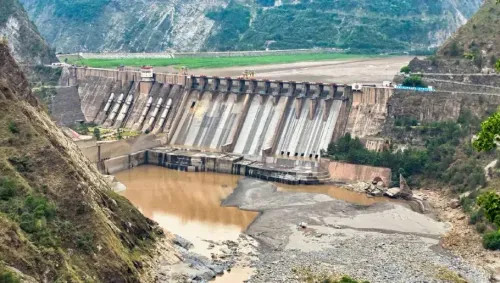
The Court of Arbitration issued two documents: an award on the “Status” of the Indus Waters Treaty and an order on interim measures concerning the Ratle Hydro-Electric Plant (RHEP). The court directed that India must observe its obligations under the Treaty, including those relating to the design and operation of its hydro-electric projects on the Western Rivers. India dismissed both pronouncements as having “no jurisdiction whatsoever” over its sovereign decisions.
IWT in Abeyance: The Background
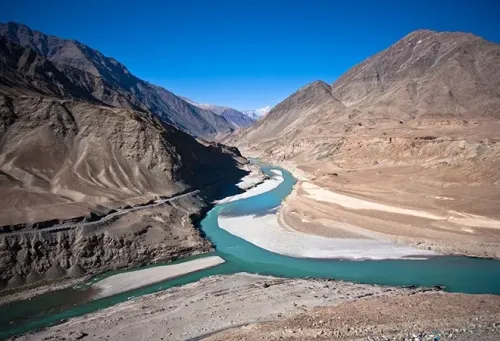
The Indus Waters Treaty was originally signed between India and Pakistan on 19 September 1960, governing the utilisation of waters of the Indus river system. Following the Pahalgam terror attack in 2024, India placed the IWT in abeyance, invoking its rights as a sovereign nation under international law. New Delhi has since made reinstatement conditional on Pakistan “credibly and irrevocably” abjuring support for cross-border terrorism.
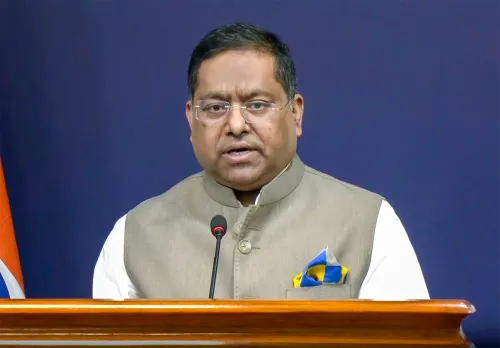
In June, MEA spokesperson Randhir Jaiswal reiterated this position during a weekly media briefing in New Delhi. “We have suspended the Indus Waters Treaty and kept it in abeyance until Pakistan completely stops cross-border terrorism,” Jaiswal said, responding to a question on Pakistan’s Foreign Ministry statement.
India’s Position Going Forward
The MEA confirmed that India’s decision to hold the IWT in abeyance “remains in force.” New Delhi also asserted that any future pronouncements by the CoA “will have no effect on India’s actions in connection with the projects being undertaken by India.” This is at least the second formal rejection of the CoA’s authority, underscoring a pattern of non-participation that India has maintained since the body was constituted. The dispute over the Ratle project and the broader treaty status is expected to remain a flashpoint in India-Pakistan relations for the foreseeable future.
Point of View
India’s hydro-electric pipeline in Jammu and Kashmir would face external design review. By tying the IWT’s abeyance to Pakistan’s terrorism record, New Delhi has also made the treaty a diplomatic lever, not merely a water-sharing agreement. What mainstream coverage underplays is that this dual-track — rejecting arbitration while holding the treaty hostage to security conditions — sets a precedent with implications well beyond the Indus basin.
NationPress
15 Oct 2026
Frequently Asked Questions
Why did India reject the Court of Arbitration’s IWT award on 31 August?
India rejected the award because it does not recognise the Court of Arbitration as a legally valid body, arguing it was constituted by the World Bank in breach of the Indus Waters Treaty’s own terms. The MEA stated the court has no jurisdiction over India’s sovereign decisions on its hydro-electric projects.
What is the Indus Waters Treaty and when was it signed?
The Indus Waters Treaty is a water-sharing agreement between India and Pakistan, signed on 19 September 1960, governing the use of rivers in the Indus system. It has been one of the few bilateral agreements to survive multiple wars between the two countries.
Why has India placed the Indus Waters Treaty in abeyance?
India placed the IWT in abeyance following the Pahalgam terror attack, invoking its rights under international law. New Delhi has said the treaty will remain suspended until Pakistan credibly and irrevocably stops supporting cross-border terrorism.
What did the Court of Arbitration order regarding the Ratle project?
The court issued an interim measures order directing India to observe its Treaty obligations concerning the design and operation of the Ratle Hydro-Electric Plant on the Western Rivers. India dismissed the order as having no legal force.
Has India ever participated in proceedings before the Court of Arbitration?
No. India has never appeared before the Court of Arbitration and has refused to take cognisance of any of its earlier pronouncements, maintaining that the body was illegally constituted from the outset.