Indus Waters Treaty: India gave 60 years of good faith, Pakistan used dispute rules to stall projects
Synopsis
India has given the 1960 Indus Waters Treaty six decades of unbroken compliance — through three wars and multiple terror attacks — while Pakistan reportedly used the treaty's own dispute machinery to stall Indian hydroelectric projects for decades. Now, after the Pahalgam attack, India has suspended cooperation, rejected the Hague court's May 2026 award, and kept the water flowing — all while Pakistan's officials have responded with threats of missile strikes on Indian dams.
Key Takeaways
India rejected the Hague Court of Arbitration's 15 May 2026 award on Indus water storage as 'null and void' , calling the tribunal illegally constituted.
The 1960 Indus Waters Treaty (IWT) was placed in abeyance by India after the Pahalgam terror attack killed 26 civilians .
The MEA reaffirmed on 3 July 2026 that the suspension holds until Pakistan 'credibly and irrevocably' ends cross-border terrorism support.
India honoured the IWT through wars in 1965 , 1971 , and 1999 , and major terror attacks in 2001 and 2008 — water flows to Pakistan were never interrupted.
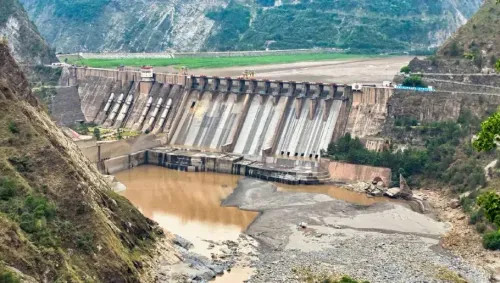
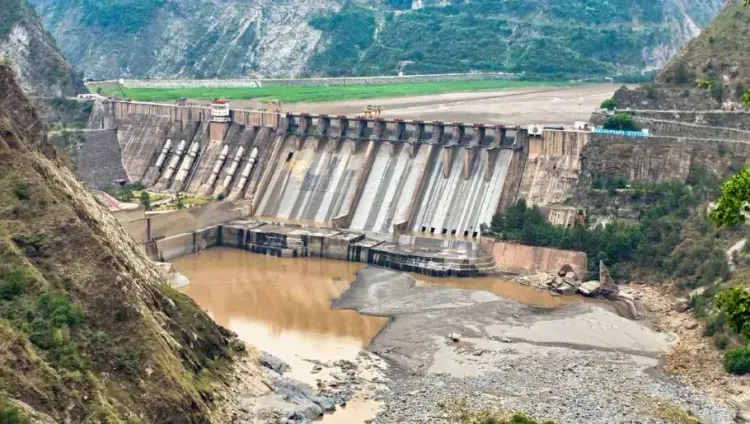
Pakistan allegedly used treaty dispute proceedings to force design changes at Salal , freeze the Tulbul project, and delay Kishenganga , Ratle , and Baglihar .
India's suspension is described as 'calibrated' and 'reversible' ; western river flows to Pakistan remain uninterrupted.
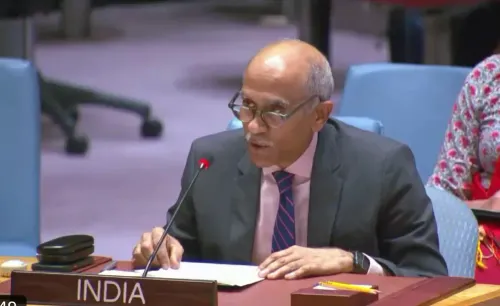
India's rejection of the 15 May 2026 award by the Hague-based Court of Arbitration (CoA) — which it considers illegally constituted — as 'null and void' is rooted in a procedural interpretation of the 1960 Indus Waters Treaty (IWT)'s own dispute resolution framework. According to a report in the American magazine The National Interest, New Delhi's objection is not to arbitration in principle but to the specific forum, and India maintains it remains willing to be bound by the mechanism the treaty itself prescribes.
India's Position on the Court of Arbitration
New Delhi has consistently held — without deviation since April 2025 — that the CoA was improperly constituted and has therefore refused to nominate arbitrators or participate in its proceedings. Any awards issued by the tribunal are considered invalid from inception, according to the Indian government's position.
The 15 May 2026 award concerned permissible water storage at Indian hydroelectric projects on the western rivers of the Indus basin. India's rejection reiterated that the IWT remains in abeyance, a status it imposed following the Pahalgam terror attack in which 26 civilians were killed by Pakistan-backed terrorists. On 3 July 2026, the Ministry of External Affairs (MEA) reaffirmed that the suspension would hold until Pakistan 'credibly and irrevocably' abandoned its support for cross-border terrorism.
Six Decades of Indian Compliance
The report highlights a striking record of Indian adherence to the treaty. Despite three wars with Pakistan — in 1965, 1971, and 1999 — and major terror attacks including the 2001 Indian Parliament attack and the 2008 Mumbai attacks, both attributed to groups backed by Pakistan's Inter-Services Intelligence (ISI), India continued to honour its IWT obligations throughout. Water flows to Pakistan were uninterrupted across all these episodes.
According to the report, India's position is that it has extended the treaty six decades of good faith, only to be met with systematic obstruction through the treaty's own dispute machinery.
How Pakistan Used the Treaty Against Indian Projects
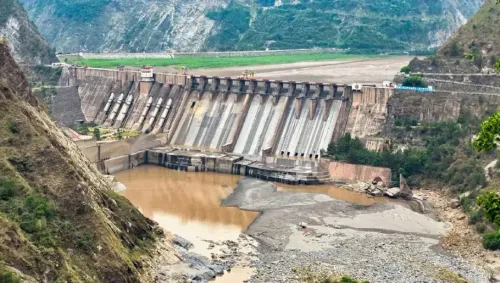
The report details how Pakistan deployed the IWT's dispute resolution mechanism to delay or constrain Indian infrastructure on the western rivers. Objections forced a lower dam and reduced storage capacity at Salal. The Tulbul navigation project was frozen for decades. Projects at Kishenganga, Ratle, and Baglihar were each drawn into prolonged proceedings that, according to the report, raised costs and slowed construction — outcomes Pakistan could not have achieved through direct means.
What India Has and Has Not Done
India's current suspension is described in the report as 'calibrated' and 'reversible'. New Delhi has paused hydrological data-sharing, meetings of the Permanent Indus Commission, and engagement with the treaty's dispute resolution mechanism. Critically, it has not diverted, dammed, or blocked the western rivers — water continues to reach Pakistan.
Pakistan's Response and the Contrast in Posture
Pakistan's reaction has been markedly different in tone. Reportedly, Pakistan's defence minister described any interference with the rivers as 'an act of war', and its army chief warned that Indian dams could be 'struck with missiles'. The report notes that a non-forcible and reversible measure has thus been met with the language of military force — a contrast, it argues, that sits uneasily with Pakistan's claim to approach the treaty as a partner in good faith.
As the diplomatic standoff continues, the trajectory of the IWT will hinge on whether Pakistan meets New Delhi's stated condition — the credible and irreversible abandonment of cross-border terrorism — a threshold that, as of now, remains unmet.
Point of View
But the record outlined in this report reframes it: one party honoured the pact through wars and terror attacks, while the other reportedly weaponised its dispute clauses to constrain infrastructure it had no legal right to block outright. India's suspension is procedurally careful — it has not touched the water flows — but the political signal is unmistakable. The more revealing detail is Pakistan's response: threatening missile strikes on dams in reply to a paperwork freeze is a posture that undermines its own claim to treaty partnership. The real test now is whether the international community, which has historically treated the IWT as sacrosanct, will acknowledge the asymmetry in good faith that this episode has exposed.
NationPress
17 Oct 2026
Frequently Asked Questions
Why did India reject the Hague Court of Arbitration's May 2026 award on the Indus Waters Treaty?
India considers the Court of Arbitration illegally constituted under the 1960 Indus Waters Treaty's own dispute resolution framework, and has therefore declared its awards null and void from inception. New Delhi has refused to nominate arbitrators or participate in the proceedings since April 2025, arguing that the proper forum is the one prescribed by the treaty itself.
Why did India suspend the Indus Waters Treaty?
India placed the IWT in abeyance following the Pahalgam terror attack, in which 26 civilians were killed by Pakistan-backed terrorists. The suspension is explicitly conditional: it will remain in effect until Pakistan credibly and irrevocably abandons its support for cross-border terrorism, as reaffirmed by the MEA on 3 July 2026.
Has India stopped water flows to Pakistan under the suspension?
No. India has paused hydrological data-sharing, Permanent Indus Commission meetings, and dispute resolution engagement, but has not diverted, dammed, or blocked the western rivers. Water continues to reach Pakistan, and the measures are described as calibrated and reversible.
How did Pakistan use the Indus Waters Treaty dispute mechanism against India?
According to the report in The National Interest, Pakistan used treaty proceedings to force a lower dam and reduced storage at Salal, freeze the Tulbul navigation project for decades, and draw out proceedings on Kishenganga, Ratle, and Baglihar — raising costs and slowing construction on projects it could not otherwise halt.
How has Pakistan responded to India's suspension of the Indus Waters Treaty?
Pakistan's response has been confrontational. Its defence minister reportedly described any interference with the rivers as an act of war, and its army chief warned that Indian dams could be struck with missiles — a sharp contrast to India's non-forcible and reversible posture, according to the report.