India rejects CoA award on IWT as 'null and void', cites illegal constitution
Synopsis
India has now rejected multiple CoA awards on the Indus Waters Treaty, each time calling the arbitral body illegally constituted and its rulings void. With the IWT formally in abeyance since the Pahalgam attack, New Delhi is signalling it will not engage with any international arbitration on the treaty until Pakistan meets its counter-terrorism conditions — a position that has no precedent in the 65-year history of the IWT.
Key Takeaways
India on 16 May 2026 rejected the latest Court of Arbitration (CoA) award on the Indus Waters Treaty as 'null and void.' The CoA issued its award on 15 May 2026 , concerning maximum pondage supplemental to an earlier general interpretation ruling.
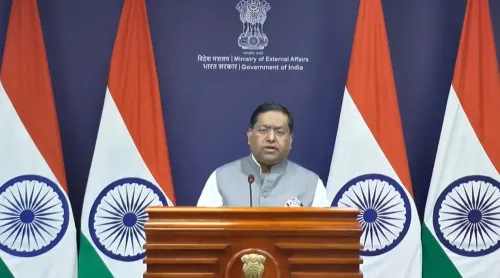
MEA spokesperson Randhir Jaiswal stated India has never recognised the CoA's legal existence and considers all its proceedings illegal.
India placed the IWT in abeyance following the Pahalgam terror attack in 2025, conditioning reinstatement on Pakistan credibly renouncing cross-border terrorism.
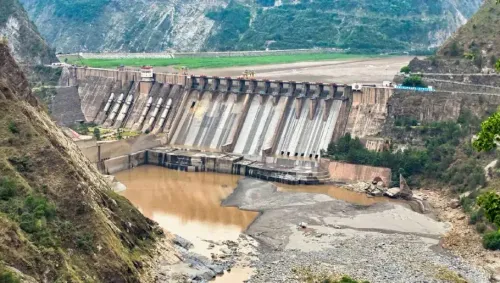
India has previously rejected CoA awards on the Kishenganga and Ratle hydroelectric projects in Jammu and Kashmir .
New Delhi has characterised the arbitration as a 'fabricated mechanism' reflecting Pakistan's 'decades-long pattern of deception.'
India on Saturday, 16 May 2026 categorically rejected the latest award issued by what it terms the 'illegally constituted' Court of Arbitration (CoA) — purportedly set up under the Indus Waters Treaty (IWT) 1960 — declaring it 'null and void' and reaffirming that the treaty itself remains in abeyance following last year's Pahalgam terror attack.
What the CoA Issued
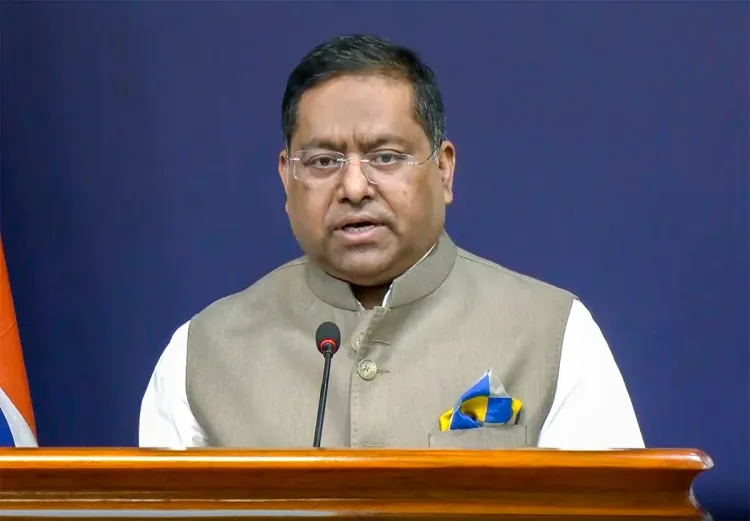
Ministry of External Affairs (MEA) spokesperson Randhir Jaiswal stated in response to media queries that the CoA had, on 15 May 2026, issued 'what it termed an award concerning maximum pondage supplemental to the award on issues of general interpretation of the Indus Waters Treaty.' India rejected it outright, consistent with its position on all prior CoA pronouncements.
'India categorically rejects the present so-called award, just as it has firmly rejected all prior pronouncements of the illegally constituted CoA. India has never recognised the establishment of this so-called CoA. Any proceeding, award, or decision issued by it is null and void,' Jaiswal said.
Why India Placed IWT in Abeyance
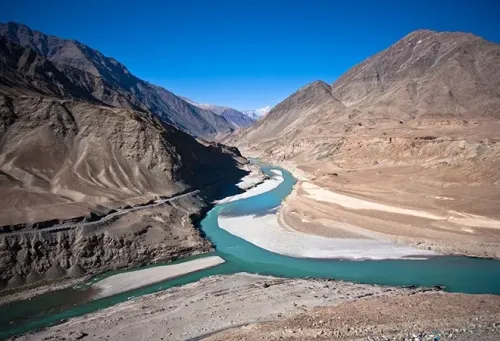
The Indus Waters Treaty was originally signed between India and Pakistan on 19 September 1960, governing the utilisation of waters from the Indus river system. Following the Pahalgam terror attack in 2025, India exercised its rights as a sovereign nation under international law and placed the treaty in abeyance, conditioning its revival on Pakistan credibly and irrevocably abjuring support for cross-border terrorism.
'Until such time that the Treaty is in abeyance, India is no longer bound to perform any of its obligations under the Treaty,' the MEA had stated in June 2025, adding that no arbitral body — 'much less this illegally constituted' one — holds jurisdiction to examine the legality of India's sovereign actions.
History of India's Rejection of the CoA
This is not the first time India has dismissed CoA proceedings. Last year, the MEA had rejected a 'supplemental award' on the CoA's own competence regarding the Kishenganga and Ratle hydroelectric projects in the Indian Union Territory of Jammu and Kashmir. India's position has consistently been that the very constitution of the CoA is 'a serious breach of the Indus Waters Treaty,' rendering all its proceedings and awards 'illegal and per se void.'
India's Broader Position on Pakistan
New Delhi has characterised the arbitration proceedings as 'charades' conducted at Pakistan's behest, describing them as 'desperate attempts' to escape accountability for what India calls Pakistan's role as a 'global epicentre of terrorism.' The MEA has previously stated that 'Pakistan's resort to this fabricated arbitration mechanism is consistent with its decades-long pattern of deception and manipulation of international forums.'
What Comes Next
India's abeyance of the IWT remains in force with no indication of a reversal until Pakistan meets New Delhi's stated conditions. The rejection of the latest CoA award signals that India will continue to treat any further arbitral proceedings as legally inconsequential, deepening the diplomatic and legal impasse over one of the world's most consequential transboundary water treaties.
Point of View
New Delhi has effectively converted a water dispute into a security ultimatum. What mainstream coverage underplays is the precedent this sets: if a founding post-Partition treaty can be unilaterally suspended, it signals a broader willingness to revisit the architecture of India-Pakistan institutional arrangements. The CoA, for its part, continues to issue awards regardless, creating a growing body of rulings that India dismisses but which could complicate future diplomatic settlement. The longer the impasse runs, the harder any negotiated re-engagement becomes.
NationPress
30 Sept 2026
Frequently Asked Questions
What did the Court of Arbitration rule on 15 May 2026?
The Court of Arbitration issued an award on 15 May 2026 concerning maximum pondage, described as supplemental to an earlier award on the general interpretation of the Indus Waters Treaty. India rejected it as null and void, consistent with its rejection of all prior CoA pronouncements.
Why has India placed the Indus Waters Treaty in abeyance?
India placed the IWT in abeyance following the Pahalgam terror attack in 2025, citing its rights as a sovereign nation under international law. New Delhi has stated the treaty will remain suspended until Pakistan credibly and irrevocably abjures its support for cross-border terrorism.
Why does India consider the Court of Arbitration illegally constituted?
India's position is that the very constitution of the CoA is a breach of the Indus Waters Treaty itself, making all its proceedings and awards illegal and void from the outset. India has never recognised the CoA's legal existence and has consistently refused to participate in its proceedings.
Which hydroelectric projects are at the centre of the IWT dispute?
The Kishenganga and Ratle hydroelectric projects, located in the Indian Union Territory of Jammu and Kashmir, have been central to the arbitration dispute. The CoA had previously issued a supplemental award on its own competence regarding these projects, which India also rejected.
What is the Indus Waters Treaty and when was it signed?
The Indus Waters Treaty is a water-sharing agreement between India and Pakistan signed on 19 September 1960, governing the utilisation of waters from the Indus river system. It is one of the world's longest-standing transboundary water treaties and has survived multiple India-Pakistan conflicts — until India placed it in abeyance in 2025.