Palestine envoy slams US visa ban on PLO, PA officials at UNGA 2026
Synopsis
For the second year running, Palestinian representatives have been barred from addressing the UN General Assembly — this time under US visa sanctions tied to a 2002 law. Palestine's Ambassador to India has issued a formal opposition paper, charging Washington with acting as the UN's owner rather than its host. The move underlines a deepening rift between US policy and global calls for Palestinian representation.
Key Takeaways
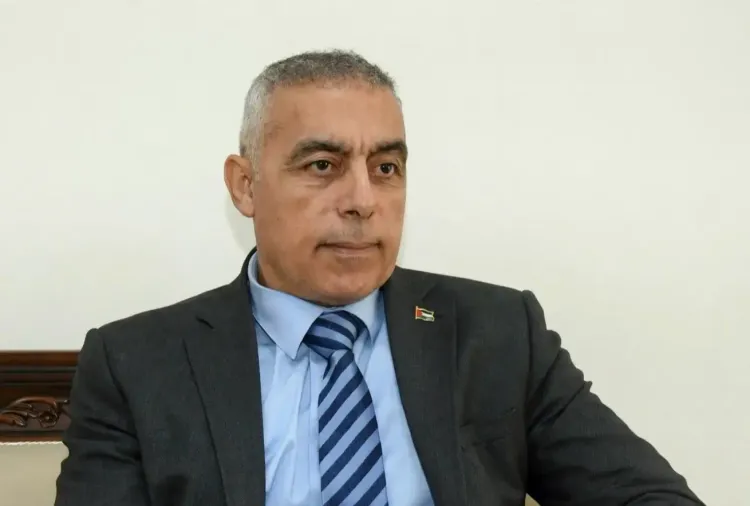
Palestine's Ambassador to India, Abdullah M Abu Shawesh , condemned the US visa ban on PLO and PA officials on 24 September 2026 .
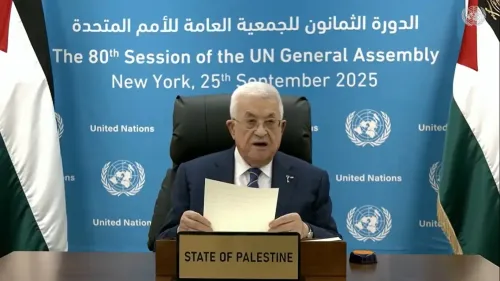
Palestinian representatives have been blocked from speaking at the UNGA for the second consecutive year .
The US State Department cited the PLO and PA's failure to meet commitments under MEPCA 2002 and PLOCCA 1989 .
The Palestinian Embassy has filed a formal opposition paper against the decision.
Shawesh also flagged Israel's expulsion of UNRWA from its Jerusalem headquarters as evidence of the UN's limited enforcement capacity.
He described the situation in Gaza as a 'genocidal war' of approximately three years and called on 193 UN member states to move beyond rhetoric on the peace process.
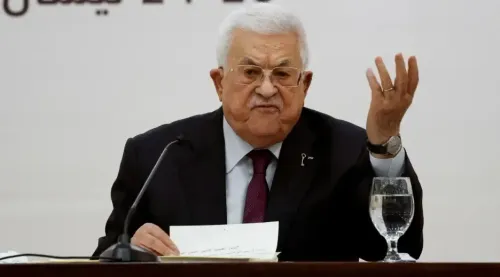
Palestine's Ambassador to India, Abdullah M Abu Shawesh, on Thursday, 24 September 2026, sharply criticised the United States for extending visa restrictions on members of the Palestine Liberation Organisation (PLO) and the Palestinian Authority (PA), blocking Palestinian representatives from addressing the United Nations General Assembly (UNGA) for the second consecutive year. The envoy charged that Washington was behaving as though it were the owner of the United Nations rather than a host country.
The US Decision and Its Legal Basis
The US State Department confirmed the extension of sanctions under Section 604(a)(1) of the Middle East Peace Commitments Act of 2002 (MEPCA), citing the PLO and PA's alleged failure to fulfil their obligations as described in the PLO Commitments Compliance Act of 1989 (PLOCCA) and MEPCA. Washington stated the PLO and PA had once again 'failed to live up to their commitments' under these two pieces of legislation.
The practical consequence is that Palestinian diplomats have been denied visas to travel to New York for the annual General Assembly, where the Palestinian delegation would ordinarily address world leaders.
What the Palestinian Ambassador Said
'I think the very first and important point regarding the 2026 UNGA meeting is that we, the Palestinians, have been denied our right to attend it. This is again due to the decision of the host country and our Embassy has already issued an opposition paper on it as the US is behaving like the owner of the United Nations. So, unfortunately, again for the second year in a row, the United States of America revoked or prohibited us as Palestinians to attend and to deliver or to speak before the United Nations General Assembly,' Shawesh said.
He noted that despite the restrictions, Palestine and Gaza were 'fully represented' at the UNGA through other world leaders who stressed the need to end what he described as the 'Israeli occupation'.
UNRWA and the Limits of UN Authority
Shawesh also recalled how the UN had been unable to protect its own premises in Jerusalem after Israel banned and expelled the United Nations Relief and Works Agency (UNRWA) — the UN body responsible for Palestinian refugees. 'By the end of the day, all of these resolutions mean nothing to Israel... Israel outlawed this very important UN entity, attacked and hijacked it, expelled them from their main building in Jerusalem and the international community. The United Nations itself did not have the ability to protect even its premises,' he said. He added that the UN's effectiveness depends on collective effort from all 193 member nations.
Call for Practical Steps Toward Peace
The Ambassador characterised the situation in Palestine not as a 'conflict' but as a 'devastating, genocidal war' ongoing for approximately three years, compounded by what he described as an occupation dating back to 1967. While expressing hope for a diplomatic solution, he cautioned that such hope would remain 'theoretical' unless the international community moved from rhetoric to concrete action.
'Once the international community moves from the rhetoric, from the lip services to a practical move, the peace will be there,' Shawesh said, urging a meaningful push toward implementing the peace process. The Palestinian Embassy has formally lodged an opposition paper over the visa denial, signalling that this dispute is likely to intensify heading into the remainder of the UN session.
Point of View
With no parallel mechanism available to the aggrieved party beyond formal protest. What makes this structurally significant is not just the bilateral US-Palestine dimension, but the precedent it sets: a host-country veto over who may address the UN General Assembly. The UNRWA episode Shawesh raised compounds the concern — if the UN cannot protect its own agencies or ensure access for observer states, questions about its operational sovereignty become unavoidable. Mainstream coverage tends to frame this as a US-Palestine dispute; the harder question is what it signals for the UN's credibility as a neutral forum.
NationPress
24 Sept 2026
Frequently Asked Questions
Why have Palestinian officials been denied entry to the UNGA 2026?
The US State Department extended visa sanctions against PLO and PA members under Section 604(a)(1) of the Middle East Peace Commitments Act of 2002, citing the PLO and PA's alleged failure to honour commitments under that law and the PLO Commitments Compliance Act of 1989. As the host country for the UN headquarters in New York, the US has authority over entry visas, which has resulted in Palestinian representatives being blocked from the General Assembly for the second consecutive year.
What has Palestine done in response to the US visa ban?
Palestine's Embassy issued a formal opposition paper against the US decision. Ambassador Abdullah M Abu Shawesh also publicly criticised the move, stating that the host country was 'behaving like the owner of the United Nations.' Despite the ban, he noted that Palestine and Gaza were represented at the UNGA indirectly through statements by other world leaders.
What is UNRWA and why did Shawesh bring it up?
UNRWA is the United Nations Relief and Works Agency for Palestine Refugees, responsible for providing services to Palestinian refugees across the region. Shawesh cited Israel's ban and expulsion of UNRWA from its main building in Jerusalem as evidence that the international community and the UN itself lacked the capacity to enforce its own resolutions or protect its premises — reinforcing his broader point about the limits of UN authority.
What legal provisions underpin the US visa restrictions on PLO and PA officials?
The restrictions are applied under Section 604(a)(1) of the Middle East Peace Commitments Act of 2002 (MEPCA), read alongside the PLO Commitments Compliance Act of 1989 (PLOCCA). The US State Department invokes these laws periodically, stating that the PLO and PA have not fulfilled the commitments outlined in the legislation.
What is Palestine's position on a diplomatic solution to the conflict?
Ambassador Shawesh expressed continued belief in the possibility of a diplomatic and peaceful solution, but stressed that hope alone is insufficient. He called on the international community to take 'real steps' toward implementing the peace process — moving from what he described as 'rhetoric lip service' to practical action — and characterised the situation in Gaza as a devastating war, not merely a conflict.