Teejan Bai, Padma Vibhushan Pandavani legend, dies at 69 in Raipur
Synopsis
India's most celebrated Pandavani performer is gone. Teejan Bai — a tribal woman who defied child marriage, community exile, and a male-dominated art form to carry the Mahabharata across continents — died at 69 in Raipur. Her passing leaves not just a cultural void, but an urgent question: who carries the tradition she spent a lifetime refusing to let die?
Key Takeaways
Padma Vibhushan Dr Teejan Bai passed away at AIIMS Raipur in the early hours of 6 July 2025 , aged 69 .
Cause of death was a prolonged battle with severe lung infection , sepsis , and acute kidney injury .
She was born on 8 August 1956 in Ganiyari village , near Bhilai, Chhattisgarh, into the Pardhi scheduled tribe.
She received the Padma Shri (1987/1988) , Padma Bhushan (2003) , Padma Vibhushan (2019) , and the Sangeet Natak Akademi Award (1995) .
In 2018 , she was awarded the Fukuoka Arts and Culture Prize in Japan for contributions to cultural exchange.
She performed her first public Pandavani recital at age 13 , breaking into a traditionally male-dominated art form despite community ostracism.
Padma Vibhushan Dr Teejan Bai, widely regarded as the greatest exponent of Pandavani folk music, passed away in the early hours of Sunday, 6 July 2025, at AIIMS Raipur following a prolonged battle with severe lung infection, sepsis, and acute kidney injury. She was 69. Her death ends a performing career that spanned more than five decades and carried an ancient oral tradition from the tribal heartlands of Chhattisgarh to stages across the world.
A Voice That Embodied the Mahabharata
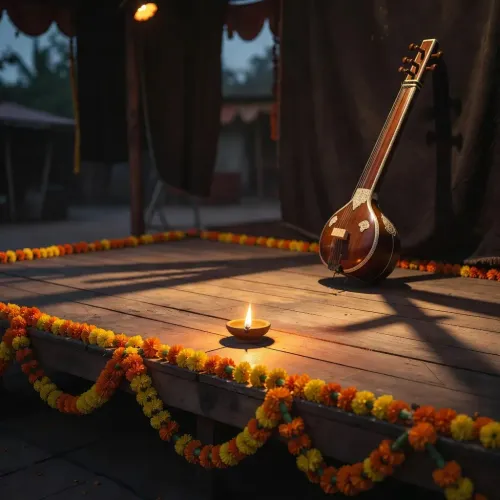
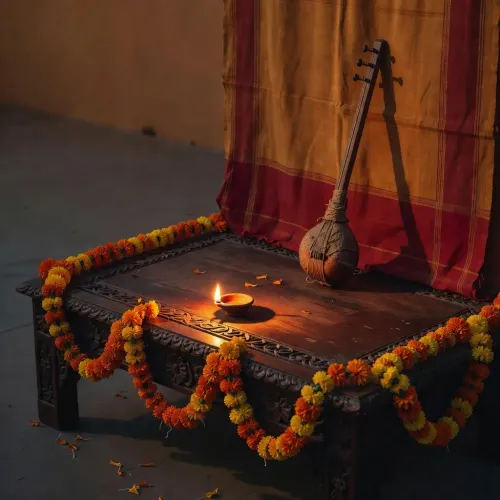
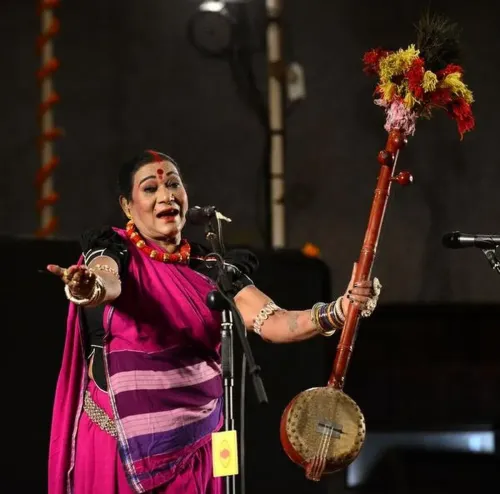
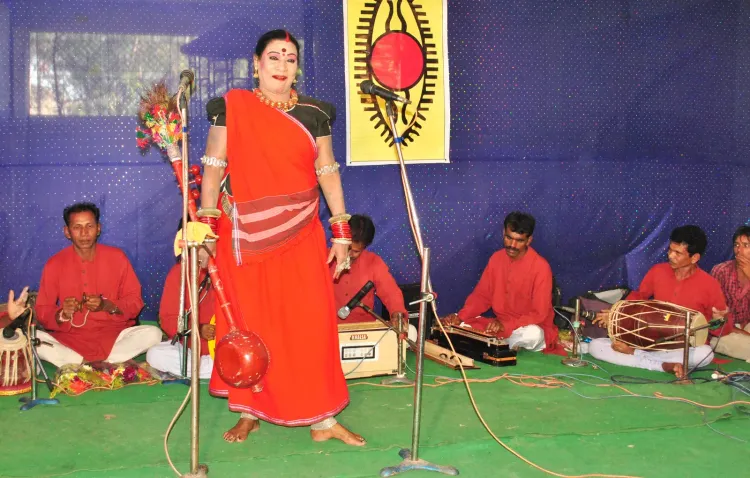
Teejan Bai did not merely sing the Mahabharata — she inhabited it. Seated on the floor with her tambura, she enacted entire episodes from the epic, embodying Arjuna, Krishna, Draupadi, and a cast of gods, warriors, and sages through voice, gesture, and raw theatrical energy. Her performances were less recital and more spiritual invocation, making the dharma of the ancients feel immediate to audiences who had never read a single Sanskrit verse.
She performed her first public rendition at the age of 13 — a feat made more remarkable by the fact that Pandavani was then an almost exclusively male-dominated art form. Her community ostracised her for it. She built a small hut for herself, borrowed utensils and food from neighbours, and refused to abandon her calling.
From Ganiyari to Global Stages
Born on 8 August 1956 in the village of Ganiyari, near Bhilai, Teejan Bai came from the Pardhi scheduled tribe. Her parents, Chunuk Lal Pardhi and Sukhwati, survived by making mats and brooms. Married off at 12 into an abusive union, she faced compounded adversity — poverty, child marriage, and social exile — before carving out a life entirely on her own terms.
She eventually took Pandavani far beyond Chhattisgarh, performing on national and international stages and preserving an oral tradition that, without her advocacy, might have quietly disappeared. In 2018, she received the prestigious Fukuoka Arts and Culture Prize in Japan, one of Asia's most respected honours for contributions to cultural exchange.
Honours and Recognition
The Indian state recognised Teejan Bai's contribution across four decades of awards. She received the Padma Shri in 1987/1988, the Padma Bhushan in 2003, and the Padma Vibhushan — India's second-highest civilian honour — in 2019. The Sangeet Natak Akademi Award followed in 1995, alongside an honorary Doctorate in Literature and numerous other accolades.
Yet those who knew her noted that she remained deeply rooted in her tribal identity and village life, never distancing herself from the soil that had shaped her.
What India Has Lost
Teejan Bai's death comes at a moment when traditional folk arts across India face acute pressures — shrinking audiences, dwindling patronage, and the erosion of oral transmission chains. She was among the last performers who could fill a village square and a concert hall with equal authority, bridging rural heritage and urban curiosity through sheer force of artistry.
Critics and cultural scholars argue that her greatest contribution was not any single performance, but the proof she offered: that a tribal woman from a marginalised community could, through art alone, claim national and international stature. Her life was a rebuke to every orthodoxy that tried to silence her.
As tributes pour in from across the country, the question her passing raises is whether India's institutions of folk-art preservation are equipped to carry forward what she spent a lifetime building.
Point of View
No structured gurukul pipeline, no state-backed archival programme at scale. The awards came; the ecosystem did not. India has a pattern of honouring folk artists with medals while allowing the traditions they carry to remain structurally precarious. The real tribute to Teejan Bai would be fixing that — before the next generation of Pandavani performers faces the same lonely battle she did.
NationPress
5 Oct 2026
Frequently Asked Questions
When and where did Teejan Bai pass away?
Teejan Bai passed away in the early hours of 6 July 2025 at AIIMS Raipur, Chhattisgarh. She had been battling severe lung infection, sepsis, and acute kidney injury for a prolonged period before her death at the age of 69.
What is Pandavani, the art form Teejan Bai is known for?
Pandavani is a traditional folk performance art from Chhattisgarh in which the performer narrates and enacts stories from the Mahabharata, typically accompanied by a tambura. It is an oral tradition rooted in the tribal communities of central India, and was historically performed almost exclusively by men before Teejan Bai broke that barrier.
What awards and honours did Teejan Bai receive?
Teejan Bai received the Padma Shri (1987/1988), Padma Bhushan (2003), and Padma Vibhushan (2019) — three of India's highest civilian honours. She also received the Sangeet Natak Akademi Award in 1995, the Fukuoka Arts and Culture Prize in Japan in 2018, and an honorary Doctorate in Literature.
What obstacles did Teejan Bai overcome in her life?
Teejan Bai was born into poverty in a Pardhi scheduled tribe family and was married off at the age of 12. When she chose to perform Pandavani — then a male-dominated art form — her community ostracised her. She lived alone, built her own shelter, and continued performing despite social rejection, eventually achieving national and international recognition.
Why is Teejan Bai's death significant for Indian folk arts?
Teejan Bai was one of the last performers capable of bridging rural folk tradition and global cultural audiences through Pandavani. Her death raises urgent questions about the institutional support available for oral folk traditions in India, which lack the structural backing that classical art forms enjoy.