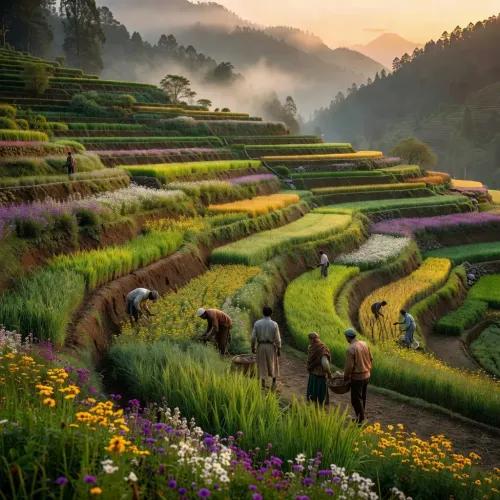
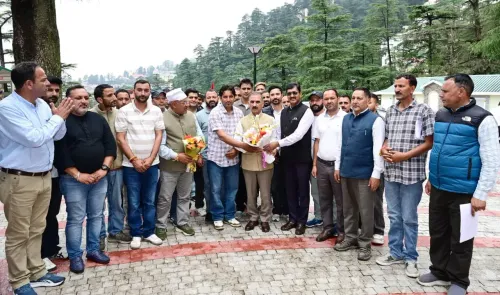
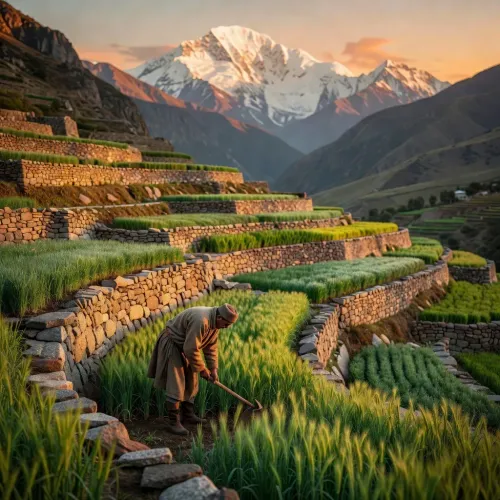
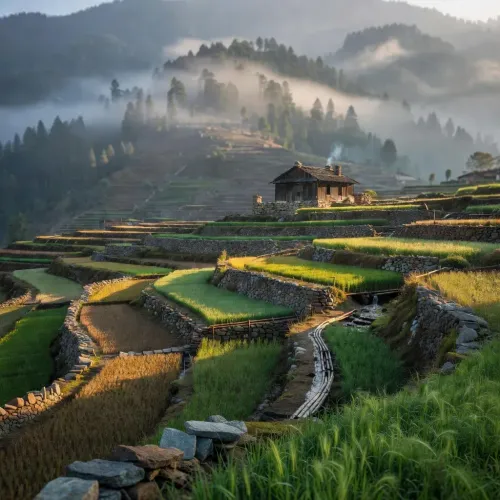
Pangi Valley named Himachal's first natural farming sub-division

Synopsis
Himachal Pradesh has turned Pangi Valley — one of India's most isolated tribal sub-divisions — into the state's first declared natural farming zone, pairing a ₹5 crore revolving fund with a guaranteed ₹60/kg MSP for barley. It is a rare instance of agricultural policy being designed around terrain and altitude rather than retrofitted from plains-farming logic.
Key Takeaways
Pangi Valley has been declared Himachal Pradesh's first natural farming sub-division , announced on 19 July 2025 .
The initiative is backed by a ₹5 crore revolving fund and an MSP of ₹60 per kg for naturally grown barley.
Scheduled tribal areas cover 42.49% of the state's area but house only 3.92 lakh people at a density of 7 per sq km .
The state allocated ₹890.28 crore under the Tribal Sub Plan in 2024-25 and ₹638.73 crore for 2025-26 .
3,234 tribal women have become Lakhpati Didis; eligible women receive ₹1,500/month under the Indira Gandhi Pyari Behna scheme.
Himachal Day was held in Kaza for the first time in the state's 75-year history, signalling a governance-to-the-doorstep commitment.
Pangi Valley in Himachal Pradesh has been declared the state's first natural farming sub-division, the state government announced on Sunday, 19 July 2025. The initiative, backed by a ₹5 crore revolving fund and a guaranteed minimum support price (MSP) of ₹60 per kg for naturally grown barley, positions the remote tribal belt as a replicable model for chemical-free, climate-resilient agriculture in high-altitude India.
What the Initiative Covers
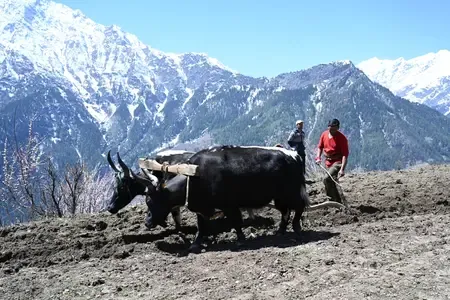
The natural farming programme targets tribal sub-divisions across the high-altitude districts of Lahaul-Spiti, Kinnaur, Pangi, and Bharmour — regions defined by sparse populations, extreme terrain, and prolonged winters that routinely disrupt connectivity and service delivery. The revolving fund is designed to give farmers sustained working capital without dependence on chemical inputs or commercial credit cycles.
The assured MSP of ₹60 per kg for barley is a significant market signal, removing price uncertainty that has historically discouraged smallholder adoption of natural farming methods. Notably, barley is one of the few crops viable at the altitudes that characterise Pangi, making it central to any livelihood strategy for the valley.
The Scale of Tribal Development
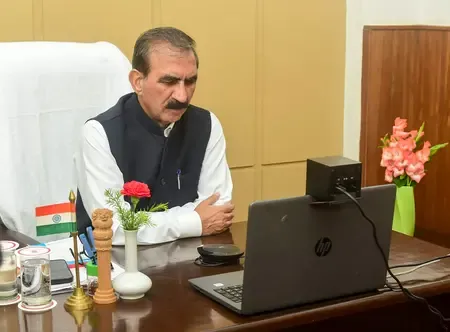
Scheduled areas account for 42.49 per cent of Himachal Pradesh's geographical area but are home to only 3.92 lakh people — just 5.71 per cent of the state's total population. Population density in these zones stands at a mere 7 people per sq km, against the state average of 123. Despite these constraints, the government led by Chief Minister Sukhvinder Sukhu has achieved 100 per cent electrification and safe drinking water coverage across all permanent and seasonal tribal habitations.
The tribal belt also records a sex ratio of 1,018 women per 1,000 men, more favourable than the state average of 972 — a demographic detail that policymakers say reflects the relative social stability of these communities.
Spending and Social Welfare
The state continues to earmark 9 per cent of its annual development outlay under the Tribal Sub Plan (TSP) — well above the scheduled tribe population share. In 2024-25, ₹890.28 crore was allocated under TSP, while ₹638.73 crore has been committed under the Scheduled Tribe Component for 2025-26.
On education, 3,361 tribal students benefited from pre-matric scholarships in 2025-26, 5,693 received post-matric scholarships, and 304 were awarded merit scholarships. Healthcare access has expanded through two district hospitals, six community health centres, 49 primary health centres, and 123 health sub-centres. The establishment of Adarsh Swasthya Sansthans in Lahaul-Spiti and Bharmour — equipped with specialist doctors, MRI and CT scan facilities — has brought tertiary-level care closer to communities that previously had to travel hundreds of kilometres for such services.
Women's Empowerment and Livelihoods
3,234 women from tribal communities have become Lakhpati Didis through Self-Help Groups and livelihood programmes. Eligible women in tribal areas are also receiving ₹1,500 per month in financial assistance under the Indira Gandhi Pyari Behna Sukh Samman Nidhi Yojana. Additionally, a 5 per cent interest subsidy is available for establishing, expanding, or upgrading homestays in tribal areas for investments up to ₹5 crore, opening income streams through tourism.
What Comes Next
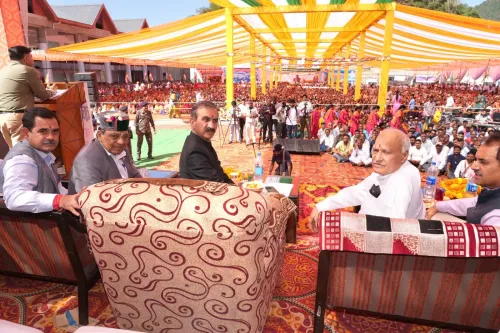
The government's decision to hold Himachal Day celebrations in Kaza — the first time in the state's 75-year history that the event has been hosted in a tribal town — is being read as a symbolic commitment to decentralised governance. If Pangi's natural farming model demonstrates replicable outcomes, it could inform agricultural policy for other high-altitude tribal sub-divisions across the state. The coming cropping season will be the first real test of whether the MSP guarantee and revolving fund translate into measurable farmer uptake.
Point of View
But the real measure will be farmer adoption rates once the revolving fund is operationalised. An MSP of ₹60 per kg for barley is meaningful only if procurement infrastructure actually reaches a valley that remains cut off for months each winter — the same connectivity deficit that has historically made policy delivery in Pangi aspirational rather than actual. The TSP allocation at 9 per cent of the development budget is commendable on paper, yet the gap between allocation and utilisation in tribal Himachal has been a recurring audit observation. What the Sukhu government needs to demonstrate is not headline schemes but last-mile execution in sub-zero terrain.
NationPress
18 Oct 2026
Frequently Asked Questions
What is the Pangi Valley natural farming initiative in Himachal Pradesh?
Pangi Valley has been declared Himachal Pradesh's first natural farming sub-division, supported by a ₹5 crore revolving fund and a minimum support price of ₹60 per kg for naturally grown barley. The programme promotes chemical-free, climate-resilient agriculture in the state's remote tribal belt.
Why was Pangi Valley chosen for this natural farming model?
Pangi is a high-altitude tribal sub-division characterised by sparse population, extreme terrain, and prolonged winters — conditions that make chemical-intensive farming impractical and that align naturally with low-input agricultural methods. The government sees it as a replicable model for other tribal high-altitude areas including Lahaul-Spiti, Kinnaur, and Bharmour.
How much is Himachal Pradesh spending on tribal development in 2025-26?
The state has committed ₹638.73 crore under the Scheduled Tribe Component for 2025-26, following an allocation of ₹890.28 crore under the Tribal Sub Plan in 2024-25. The government earmarks 9 per cent of its annual development outlay for tribal areas, well above the scheduled tribe population share of 5.71 per cent.
Who are the Lakhpati Didis mentioned in the Himachal tribal development report?
Lakhpati Didis are women who have crossed an annual income threshold of ₹1 lakh through Self-Help Groups and government livelihood programmes. In Himachal's tribal areas, 3,234 women have achieved this status, reflecting the state's focus on women's economic empowerment in remote communities.
What healthcare facilities are available in Himachal Pradesh's tribal areas?
The tribal belt is served by two district hospitals, six community health centres, 49 primary health centres, and 123 health sub-centres. Adarsh Swasthya Sansthans in Lahaul-Spiti and Bharmour now offer specialist doctors alongside MRI and CT scan facilities, bringing advanced diagnostic care to communities that previously lacked such access.