NTA paper leak probe: Pappu Yadav questions agency's ₹3,654 crore corpus in Lok Sabha
Synopsis
Independent MP Pappu Yadav used the Lok Sabha debate on the Examination Amendment Bill to expose what he called systemic rot at the NTA — a ₹3,654 crore body run by just 24 officials, led by an appointee allegedly found guilty by a court, while the CBI reportedly released five key accused in the NEET-UG paper leak case.
Key Takeaways
Pappu Yadav (Independent MP, Purnea ) raised concerns over the NTA during the Examination Amendment Bill debate in Lok Sabha on 29 July .
The NTA , set up in 2018 , reportedly accumulated ₹3,654 crore between 2019 and 2024 while being run by only 24 officials .
He alleged the NTA chairperson had previously been found guilty by a court in Madhya Pradesh before being appointed to head the UPSC and then the NTA .
The CBI allegedly released five main accused in the paper leak case, including Sanjeev Mukhiya , a key suspect in the NEET-UG leak in Bihar .
Yadav cited examination models from the US , South Korea , and China as benchmarks for India to emulate.
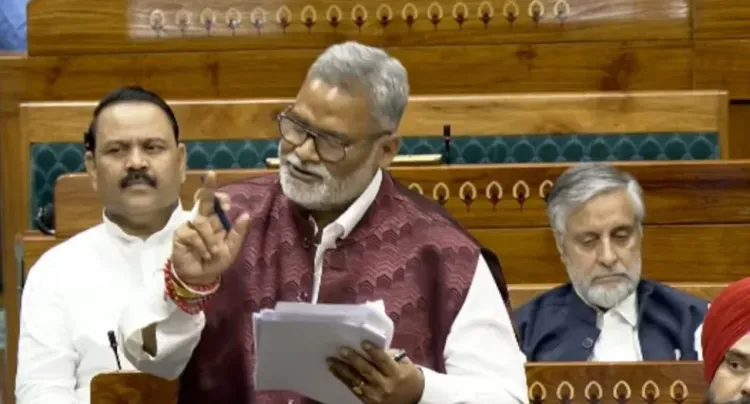
Independent Member of Parliament from Purnea, Rajesh Ranjan — widely known as Pappu Yadav — on Wednesday, 29 July mounted a sharp challenge against the Centre during the Lok Sabha debate on the Examination Amendment Bill, raising pointed questions about the National Testing Agency (NTA)'s financial accumulation, leadership appointments, and the handling of examination paper leak investigations.
NTA's ₹3,654 Crore Corpus Under Scrutiny
Participating in the debate, Pappu Yadav stated that the NTA, established in 2018, had accumulated ₹3,654 crore between 2019 and 2024. He questioned why an agency conducting examinations for six to eight crore candidates annually was being operated by only 24 officials. 'I want to know why six to eight crore application forms are being processed every year and why such a huge amount of money goes to the NTA. Who are the people who have a stake in the NTA?' he asked on the floor of the House.
Leadership Appointments Questioned
Pappu Yadav alleged that the same official had been repeatedly entrusted with key positions despite adverse judicial findings. 'The Centre appointed as NTA chairman a person who had served in Madhya Pradesh and had been found guilty by a court. The same individual was later appointed Chairman of the Union Public Service Commission and then Chairman of the NTA. Is there only one officer in the entire country capable of holding these positions?' he asked. The allegation, if substantiated, raises serious questions about the government's due-diligence process for apex examination body appointments.
Paper Leak Probe: CBI and SIT in the Dock
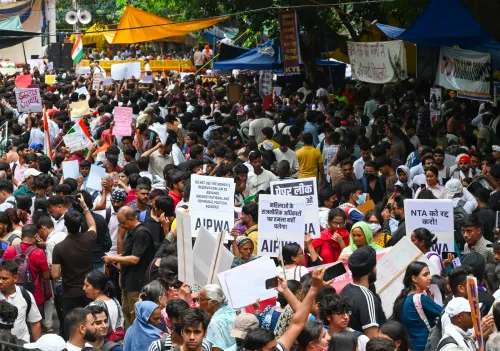
The Purnea MP also trained his sights on the investigation into examination paper leak cases, questioning the role of central investigative agencies. He alleged that the Central Bureau of Investigation (CBI) had released five main accused in the paper leak case, including Sanjeev Mukhiya, described as allegedly a key accused in the NEET-UG paper leak and other examination fraud cases in Bihar. He further alleged that the Centre had constituted a Special Investigation Team (SIT) and stripped the state of its investigative powers. This comes amid sustained public outrage over the NEET-UG controversy, which had triggered nationwide protests earlier in 2024.
Global Best Practices Cited
Pappu Yadav urged the government to draw on international models to reform India's examination system. He cited the United States, where many high-stakes tests are conducted through real-time computer-based testing; South Korea, where question paper setters are reportedly kept in isolation at undisclosed locations before examinations to preserve confidentiality; and China, where he claimed stringent penalties — including lifetime restrictions on government employment — are imposed on those convicted of examination fraud.
What Happens Next
The Examination Amendment Bill remains under active parliamentary debate, with opposition members pressing for stronger anti-leak provisions and independent oversight of the NTA. The government is yet to formally respond to the specific allegations raised by Pappu Yadav regarding leadership appointments and the release of accused individuals. How the Centre addresses these questions in its reply to the debate will be closely watched by student groups and civil society organisations tracking examination integrity.
Point of View
On-record government rebuttal, not parliamentary silence. The CBI's reported release of five key accused, including Sanjeev Mukhiya, without a publicly explained legal basis, compounds the opacity. What is missing from this debate is an independent institutional audit of the NTA: its finances, its staffing ratios, and its conflict-of-interest safeguards. The Examination Amendment Bill, as it stands, risks being a legislative patch on a structural wound.
NationPress
28 Oct 2026
Frequently Asked Questions
What did Pappu Yadav say about the NTA in Lok Sabha?
Pappu Yadav alleged that the NTA accumulated ₹3,654 crore between 2019 and 2024 while being staffed by only 24 officials to manage examinations for six to eight crore candidates annually. He also questioned the appointment of its leadership and the handling of paper leak investigations.
What is the Examination Amendment Bill debated in Lok Sabha?
The Examination Amendment Bill is legislation under parliamentary debate aimed at reforming India's examination system, with provisions relating to examination integrity and the functioning of bodies like the NTA. Opposition members have used the debate to press for stronger anti-leak provisions and independent NTA oversight.
Who is Sanjeev Mukhiya and why is he significant?
Sanjeev Mukhiya is allegedly a key accused in the NEET-UG paper leak case and other examination fraud cases in Bihar. Pappu Yadav alleged in Lok Sabha that the CBI released him along with four other main accused, raising questions about the integrity of the central investigation.
What international models did Pappu Yadav recommend for India's exam system?
He cited the United States for real-time computer-based testing, South Korea for isolating question paper setters at undisclosed locations before exams, and China for imposing lifetime bans on government employment for those convicted of examination fraud.
What happened to Bihar's investigative powers in the NEET paper leak case?
According to Pappu Yadav's allegations in Lok Sabha, the Centre constituted a Special Investigation Team (SIT) and took away the state of Bihar's powers to investigate the examination paper leak cases, centralising the probe with agencies that he alleged have since released key accused.