Anti-paper leak Bill: 13 NDA speakers named for Lok Sabha debate
Synopsis
With Rahul Gandhi and 13 NDA MPs lined up for Tuesday's Lok Sabha floor debate, the anti-paper leak Bill is set for its most politically charged moment yet. The legislation — proposing 10-year jail terms, ₹10 crore fines, and three-month fast-track verdicts — is the government's direct answer to the student protests that gripped New Delhi for weeks.
Key Takeaways
The NDA named 13 speakers for the Lok Sabha debate on the anti-paper leak Bill on 28 July .
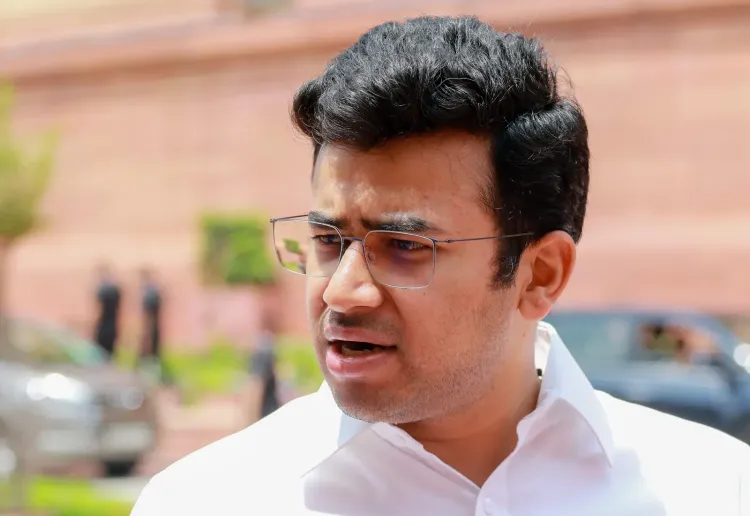
BJP's Tejasvi Surya , Anurag Thakur , and Shiv Sena's Shrikant Shinde are among the NDA panellists.
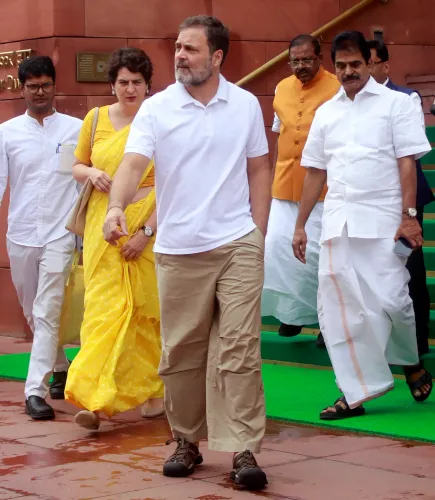
Leader of Opposition Rahul Gandhi and Congress MPs Priyanka Gandhi and K.C.
Venugopal will speak for the Opposition.
The Public Examinations (Prevention of Unfair Means) Amendment Bill, 2026 proposes up to 10 years imprisonment and fines up to ₹10 crore .
Fast-track courts will be mandated to deliver verdicts within three months .
The Bill amends the Public Examinations (Prevention of Unfair Means) Act, 2024 following widespread paper-leak protests in New Delhi .
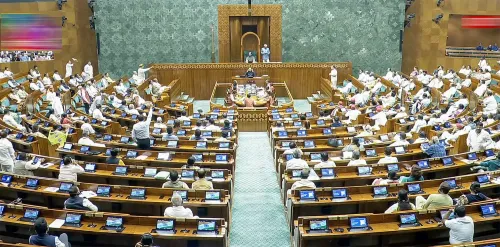
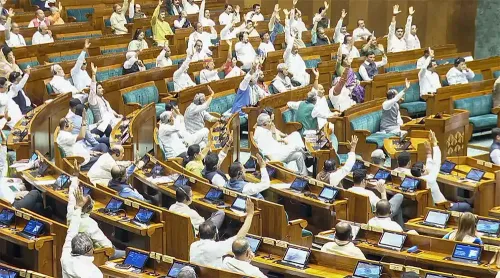
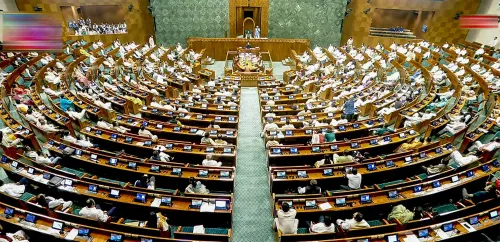
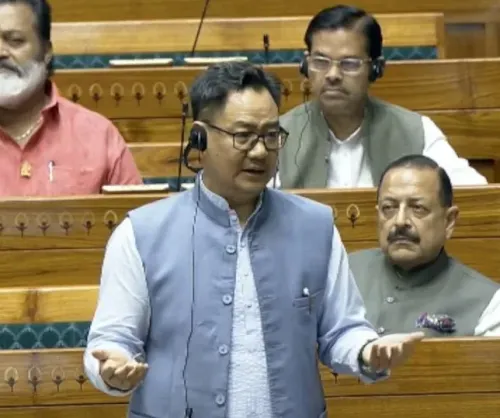
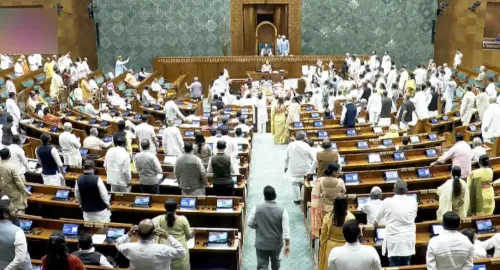
The National Democratic Alliance (NDA) on Tuesday, 28 July released a list of 13 speakers for the Lok Sabha debate on the Public Examinations (Prevention of Unfair Means) Amendment Bill, 2026, signalling a coordinated floor strategy for one of the session's most politically charged pieces of legislation.
NDA Speaker Line-Up
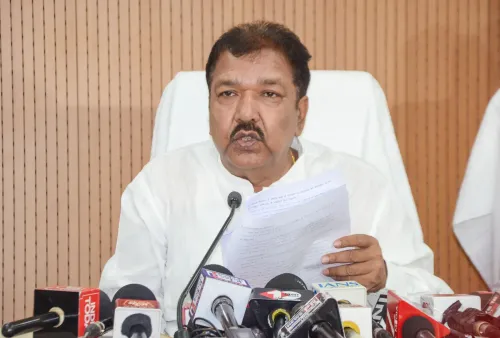
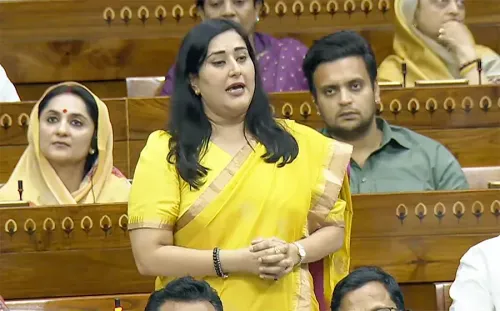
The Bharatiya Janata Party (BJP) fielded the largest contingent, naming Bansuri Swaraj, Tejasvi Surya, Anurag Thakur, Shashank Mani Tripathi, Bhola Singh, and Vishnu Dutt Sharma. Allied parties also nominated speakers: Telugu Desam Party (TDP) MP Lavu Krishna Devarayalu, Janata Dal (United) MPs Rajiv Ranjan Singh alias Lalan Singh, Sanjay Jha, and Alok Suman, Shiv Sena MP Shrikant Shinde, Apna Dal (S)'s Anupriya Patel, and Nationalist Congress Party (NCP) MP Sunil Tatkare.
Opposition Voices in the Debate
The Indian National Congress (Congress) confirmed that Leader of Opposition Rahul Gandhi will participate alongside MPs Priyanka Gandhi, K.C. Venugopal, and Jothimani Sennimalai. Their presence elevates the political stakes, with the Opposition expected to press the government on the pace of action following months of public outrage over examination fraud.
How the Debate Was Scheduled
Lok Sabha Speaker Om Birla announced that the House would take up the Bill at 2 pm. He urged members to refrain from disrupting Question Hour, but proceedings were nonetheless adjourned until that time amid continued disorder on the floor.
What the Bill Proposes
The Public Examinations (Prevention of Unfair Means) Amendment Bill, 2026 was introduced by Minister of State for Personnel Jitendra Singh on Monday, 27 July. It seeks to amend the Public Examinations (Prevention of Unfair Means) Act, 2024 and was cleared by the Union Cabinet ahead of its tabling.
Key provisions include imprisonment of up to 10 years, fines of up to ₹10 crore, and confiscation of assets of those convicted. Critically, the Bill mandates fast-track courts to complete trials and deliver verdicts within three months, aiming to end the prolonged legal delays that have historically blunted the deterrent effect of earlier laws.
Background: Protests That Triggered the Bill
The amendment follows weeks of large-scale protests in New Delhi over examination paper leaks that compromised the integrity of competitive public exams. Prime Minister Narendra Modi had earlier committed to bringing a comprehensive Bill with strong penal provisions to Parliament. This legislation is the government's direct legislative response to those demands, framing student protection and systemic accountability as its twin objectives.
With debate now formally scheduled and both sides fielding senior names, the Bill's passage — and the political messaging around it — will be closely watched by millions of students and aspirants across the country.
Point of View
TDP, JD(U), Shiv Sena, Apna Dal, and NCP — is as much a coalition-management exercise as a legislative one. Each ally gets a slot, signalling unity on a bill that plays directly to a mass constituency: competitive-exam aspirants. But the real test is not the debate; it is enforcement. India has had examination-integrity laws before, and paper leaks persisted. Fast-track courts and ₹10 crore fines are credible deterrents only if investigative machinery and prosecutorial capacity keep pace — neither of which the Bill directly addresses. With Rahul Gandhi and Priyanka Gandhi on the Opposition bench, expect the debate to pivot sharply toward accountability for leaks that have already occurred, not just future prevention.
NationPress
27 Oct 2026
Frequently Asked Questions
What is the Public Examinations (Prevention of Unfair Means) Amendment Bill, 2026?
It is a legislative amendment introduced in the Lok Sabha on 27 July 2026 by Minister of State for Personnel Jitendra Singh, seeking to strengthen the Public Examinations (Prevention of Unfair Means) Act, 2024. The Bill proposes up to 10 years in prison, fines of up to ₹10 crore, asset confiscation for convicts, and fast-track courts mandated to deliver verdicts within three months.
Who are the NDA speakers for the Lok Sabha debate on the anti-paper leak Bill?
The NDA named 13 speakers: BJP's Bansuri Swaraj, Tejasvi Surya, Anurag Thakur, Shashank Mani Tripathi, Bhola Singh, and Vishnu Dutt Sharma; TDP's Lavu Krishna Devarayalu; JD(U)'s Lalan Singh, Sanjay Jha, and Alok Suman; Shiv Sena's Shrikant Shinde; Apna Dal (S)'s Anupriya Patel; and NCP's Sunil Tatkare.
Will Rahul Gandhi speak during the anti-paper leak Bill debate?
Yes, Leader of Opposition Rahul Gandhi is confirmed to participate in the Lok Sabha debate on 28 July, alongside Congress MPs Priyanka Gandhi, K.C. Venugopal, and Jothimani Sennimalai.
Why was the anti-paper leak Bill introduced?
The Bill follows weeks of large-scale protests in New Delhi over examination paper leaks that undermined public competitive exams. Prime Minister Narendra Modi had committed to bringing strong legislative action, and the Union Cabinet cleared the Bill before it was tabled in Parliament.
What are the fast-track court provisions in the anti-paper leak Bill?
The Bill mandates fast-track courts to complete trials and deliver judgments within three months in cases involving paper leaks and examination fraud. This provision is designed to ensure swift justice and strengthen the deterrent effect of the law.