Anti-paper leak bill: NDA leaders back 10-year jail, ₹10 crore fine provisions
Synopsis
India's proposed anti-paper leak law — carrying 10-year jail terms and ₹10 crore fines — cleared the Union Cabinet and is headed to Parliament. NDA leaders say it will dismantle organised exam-fraud networks; the Opposition, they claim, is politicising a crisis that has derailed the futures of millions of students.
Key Takeaways
The Union Cabinet has approved a draft anti-paper leak bill set to be introduced in Parliament .
The Bill proposes up to 10 years' imprisonment and fines of up to ₹10 crore for those convicted of examination fraud.
NDA leaders from the BJP and allied parties, including JD(U) , voiced strong support on 27 July .
The legislation targets organised networks behind paper leaks, with provisions for faster accountability.
Paper leaks have disrupted multiple national and state-level exams in recent years, triggering widespread student protests.
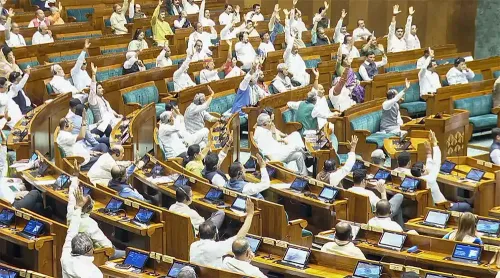
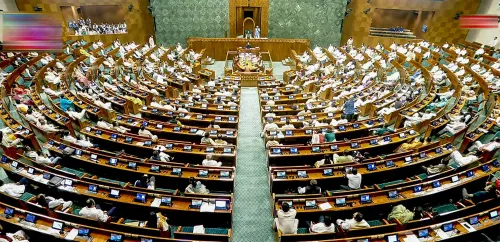
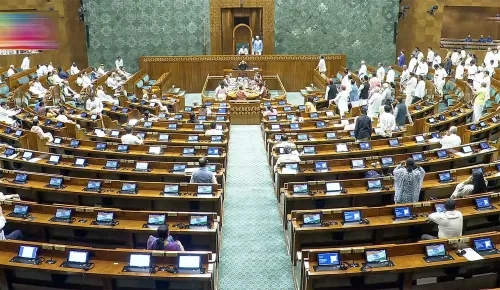
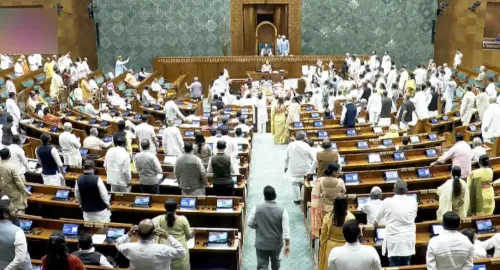
New Delhi, 27 July — National Democratic Alliance (NDA) leaders on Monday threw their weight behind the Centre's proposed anti-paper leak legislation, asserting that the Bill's strict provisions — including 10 years' imprisonment and fines of up to ₹10 crore — will decisively curb examination fraud and protect students' futures. The Union Cabinet has already approved the draft Bill, which is now set to be introduced in Parliament.
Key Provisions of the Proposed Bill
The draft legislation targets organised networks behind examination malpractices, introducing punitive measures designed to deter repeat offenders. Bharatiya Janata Party (BJP) MP Medha Kulkarni described the provisions as a significant policy reform. 'Good reforms are coming in the examination policy so that the problems of exam leaks never arise again and the young generation does not suffer. The provisions that have been made are very strict,' she said.
Kulkarni added that the Bill specifically focuses on dismantling the organised syndicates behind paper leaks and builds in accountability mechanisms to ensure faster action against offenders.
What NDA Leaders Said
Bihar Minister Dilip Jaiswal said the government's intent was unambiguous. 'The government is sensitive, and the government is bringing a law in Parliament that includes a provision of 10 years' imprisonment and a penalty of crores of rupees. The government's intention is clear,' he said. Jaiswal also took aim at the Opposition, accusing it of exploiting the issue for political gain: 'The opposition is trying to run its political shop on this issue because those who have lost the trust of the people are now trying to disturb the peace and harmony of the country through such misleading statements.'
West Bengal BJP leader Dilip Ghosh confirmed the legislation was on track. 'We had announced that we would introduce a law in the Lok Sabha, and now that law is about to be introduced,' he said, calling paper leaks 'a very serious problem in the country, both in the states and at the Centre' that 'pushes the future of our students into darkness while allowing people to earn crores of rupees illegally.'
Janata Dal (United) National Spokesperson Rajeev Ranjan Prasad said the Union Cabinet's approval sent an unambiguous signal. 'The Union Cabinet's approval of the draft Bill makes it absolutely clear that those involved in paper leak cases are about to face very difficult times. If they are found guilty, they could face a fine of up to ₹10 crore and 10 years of imprisonment,' he said.
Why This Bill Matters
Examination paper leaks have emerged as a recurring national crisis, with high-stakes competitive exams — from NEET to state-level recruitment tests — repeatedly compromised in recent years. The issue gained fresh urgency in 2024, when multiple exam controversies triggered widespread student protests and political debate over the integrity of India's testing ecosystem.
This is not the first attempt to legislate against exam fraud; several states have their own anti-cheating laws. However, a central law would create a uniform deterrent framework applicable across all examinations conducted by national bodies, potentially closing jurisdictional gaps that organised networks have historically exploited.
What Happens Next
The Bill is expected to be tabled in the ongoing Parliament session. Once enacted, it will establish a stronger legal architecture for investigating and prosecuting examination fraud, with provisions for swifter judicial action. Industry observers and student groups have broadly welcomed the move, though civil society voices have called for clarity on implementation — particularly on how 'organised networks' will be defined and investigated.
Point of View
But the real test will be in execution, not enactment. India already has state-level anti-cheating statutes that have done little to stop organised syndicates — because the problem is as much about enforcement capacity and institutional integrity as it is about sentencing. The ₹10 crore fine and 10-year imprisonment provisions are strong on paper, but without an independent investigation mechanism and whistleblower protections, the law risks being another deterrent that deters nobody. The political framing — NDA leaders using the Bill to attack the Opposition rather than detail the implementation roadmap — suggests the legislative push is as much about optics as it is about outcomes.
NationPress
25 Oct 2026
Frequently Asked Questions
What is India's proposed anti-paper leak bill?
It is a central legislation approved by the Union Cabinet that proposes up to 10 years' imprisonment and fines of up to ₹10 crore for individuals convicted of examination fraud, including paper leaks. The Bill is expected to be introduced in the ongoing Parliament session and will apply to exams conducted by national bodies.
Why is an anti-paper leak law being introduced now?
Recurring paper leak scandals — including controversies around major competitive exams in 2024 — triggered nationwide student protests and exposed gaps in India's examination integrity framework. NDA leaders say a uniform central law is needed to close jurisdictional loopholes that organised fraud networks have exploited.
What punishments does the Bill propose?
The Bill proposes a maximum of 10 years in prison and fines of up to ₹10 crore for those found guilty of involvement in examination fraud. The provisions are designed to target not just individuals but organised networks behind paper leaks.
Who will the anti-paper leak law affect?
The law will affect anyone involved in the leaking, distribution, or purchase of examination papers for national-level competitive tests. It is also intended to deter organised syndicates that profit from selling leaked papers, which have historically disadvantaged millions of legitimate aspirants.
When will the anti-paper leak bill become law?
The Union Cabinet has approved the draft Bill and it is set to be introduced in Parliament during the current session. The timeline for passage and enactment depends on the legislative schedule and any amendments debated in both Houses.