Anti-paper leak Bill debate: Rijiju offers 10-hour window in Lok Sabha
Synopsis
The government has offered a 10-hour debate window on the anti-paper leak Bill in Lok Sabha — up from an initial six hours — as the Opposition flagged the absence of PM Modi and Home Minister Shah and demanded more floor time. The Bill proposes 10-year jail terms, ₹10 crore fines, and fast-track courts mandated to deliver verdicts within three months.
Key Takeaways
Kiren Rijiju offered up to 10 hours of debate on the anti-paper leak Bill in Lok Sabha on 28 July .
Debate time was progressively extended — from 6 hours to 8 hours , now potentially 10 hours .
Venugopal objected to PM Modi and Home Minister Shah being absent during the debate.
The Public Examinations (Prevention of Unfair Means) Amendment Bill, 2026 was introduced by Jitendra Singh on Monday.
Key penalties include up to 10 years imprisonment, fines of up to ₹10 crore , and asset confiscation.
Fast-track courts will be mandated to complete trials within three months .
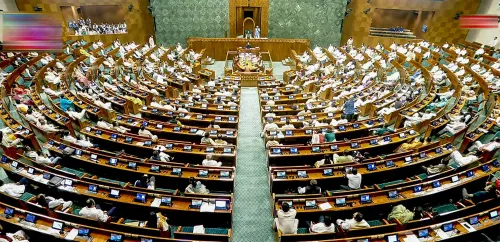
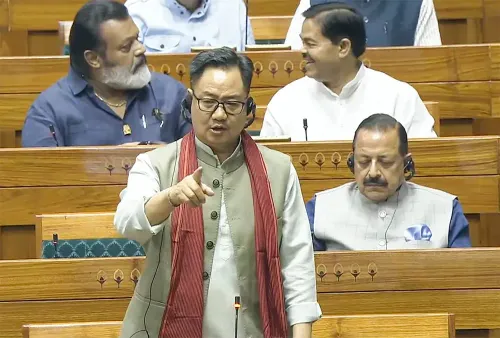
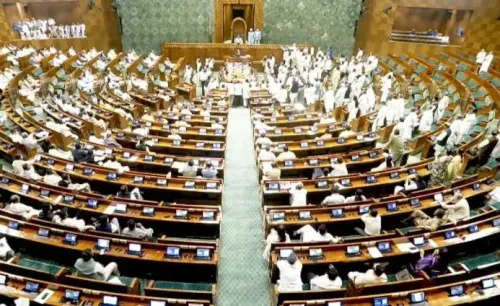
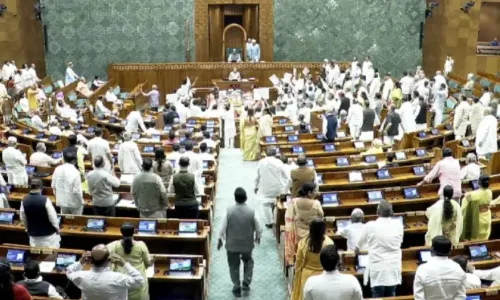
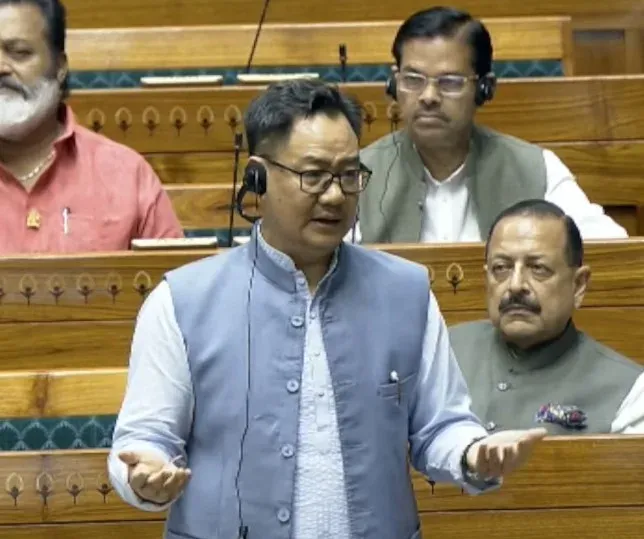
Union Parliamentary Affairs Minister Kiren Rijiju on Tuesday, 28 July said the government is prepared to extend debate on the anti-paper leak Bill in the Lok Sabha to as many as 10 hours, as the House resumed its session at 2 pm to take up the legislation.
How the Debate Time Was Extended
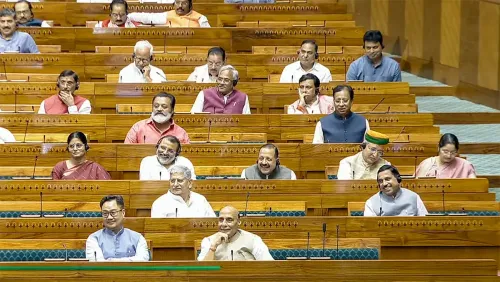
When proceedings began, Congress MP K.C. Venugopal raised an immediate objection, noting the absence of Prime Minister Narendra Modi and Home Minister Amit Shah from the floor during discussion on what he called 'a very important' Bill. The Opposition simultaneously pressed for more time to deliberate on the legislation.
Rijiju responded swiftly, clarifying that the government had no objection to a further extension. 'All political parties had first agreed to six hours of discussion on the anti-paper leak Bill, then it was increased to eight hours. Now, if the Opposition wants more time, we are willing to take it up for 10 hours,' he said.
What the Bill Proposes
The Public Examinations (Prevention of Unfair Means) Amendment Bill, 2026 was introduced in the Lok Sabha on Monday by Minister of State for Personnel Jitendra Singh. It seeks to amend the Public Examinations (Prevention of Unfair Means) Act, 2024.
Among its key provisions are imprisonment of up to 10 years, fines of up to ₹10 crore, confiscation of assets of those found guilty, and a mandate for fast-track courts to deliver verdicts within three months. The stated aim is to enhance transparency and integrity in the examination system while protecting students' futures.
Background and Cabinet Approval
The Bill follows Union Cabinet approval of related provisions designed to establish fast-track courts and impose harsher penalties in paper leak and examination fraud cases. The move comes shortly after Prime Minister Modi announced that comprehensive legislation with strong anti-paper-leak provisions would be brought before Parliament.
Notably, this is not the first legislative attempt to address examination malpractice — the original 2024 Act was itself a response to a series of high-profile paper leak incidents that triggered nationwide protests and cast a shadow over competitive examinations. The 2026 amendment signals an escalation in the government's stated commitment to examination integrity.
What Happens Next
With the government open to a 10-hour debate window, Opposition parties are expected to use the extended floor time to press for broader accountability measures. The fast-track court mechanism, if enacted, would mark a significant shift in how examination fraud cases are prosecuted, with time-bound judgments replacing the prolonged trials that have historically blunted deterrence.
Point of View
But the real friction is elsewhere — the Opposition's objection to the absence of Modi and Shah signals a political contest over ownership of the issue, not just legislative scrutiny. The anti-paper leak Bill is popular with voters, and both sides know it. The Congress, which has made examination fraud a campaign issue, faces the challenge of critiquing a Bill whose stated goals it cannot oppose. The 10-year imprisonment and ₹10 crore fine provisions are headline-grabbing, but the credibility test will be the fast-track court mechanism: India's track record of delivering time-bound justice in exam fraud cases is poor, and the three-month verdict mandate will require judicial infrastructure that does not yet exist at scale.
NationPress
26 Oct 2026
Frequently Asked Questions
What is the anti-paper leak Bill being debated in Lok Sabha?
The Public Examinations (Prevention of Unfair Means) Amendment Bill, 2026, introduced on Monday by Minister of State for Personnel Jitendra Singh, amends the 2024 Act to impose stricter penalties for examination fraud. Key provisions include up to 10 years in prison, fines of up to ₹10 crore, asset confiscation, and fast-track courts mandated to deliver verdicts within three months.
Why did the government agree to extend the debate to 10 hours?
Parliamentary Affairs Minister Kiren Rijiju said the government has no objection to extending the debate after the Opposition demanded more time. The discussion had already been raised from an initial six hours to eight hours before Rijiju offered a further extension to 10 hours.
What did the Congress object to during the Lok Sabha debate?
Congress MP K.C. Venugopal objected to the absence of Prime Minister Narendra Modi and Home Minister Amit Shah from the House during discussion on what he described as a very important Bill, and pressed for additional debate time.
What penalties does the anti-paper leak Bill propose?
The Bill proposes imprisonment of up to 10 years, fines of up to ₹10 crore, and confiscation of assets for those found guilty of examination fraud or paper leaks. It also mandates fast-track courts to complete trials and deliver judgments within three months.
What happens after the Lok Sabha debate?
Once the debate concludes, the Bill will be put to a vote in the Lok Sabha. If passed, it will proceed to the Rajya Sabha before receiving Presidential assent. The fast-track court mechanism and penalty provisions would then come into force upon enactment.