Anti-paper leak bill introduced in Lok Sabha, House adjourned amid Opposition uproar
Synopsis
The Centre moved to close the legal gaps exploited by paper leak networks, introducing a bill in Lok Sabha on 27 July with 10-year jail terms, ₹10 crore fines, and a three-month trial deadline via fast-track courts — even as Opposition sloganeering forced an adjournment before the debate could begin.
Key Takeaways
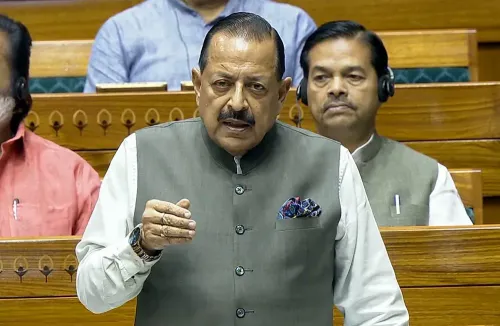
The Public Examinations (Prevention of Unfair Means) Amendment Bill, 2026 was introduced in Lok Sabha on 27 July by MoS Jitendra Singh .
The bill proposes imprisonment of up to 10 years and fines of up to ₹10 crore for those convicted of examination fraud.
Convicted individuals face confiscation of assets under the proposed provisions.
Fast-track courts will be mandated to deliver verdicts within three months .
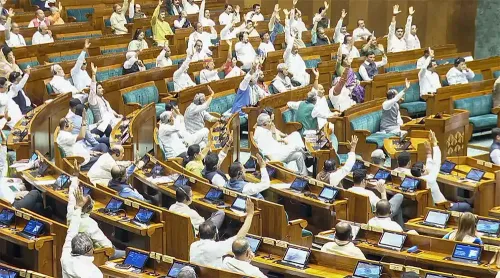
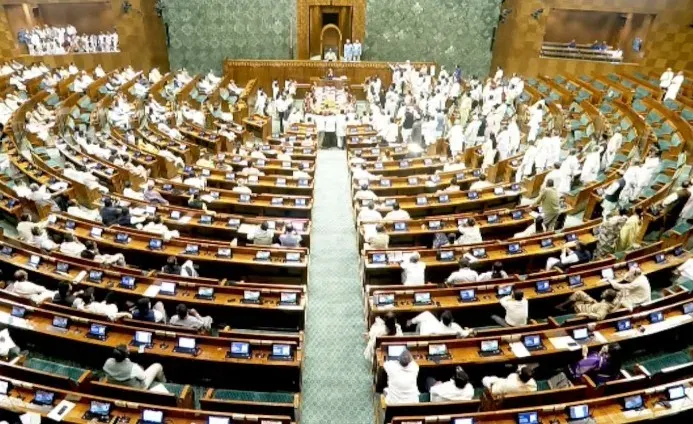
The Lok Sabha was adjourned till 2 pm after Opposition members disrupted proceedings with sloganeering.
The bill amends the Public Examinations (Prevention of Unfair Means) Act, 2024 , following Union Cabinet approval.
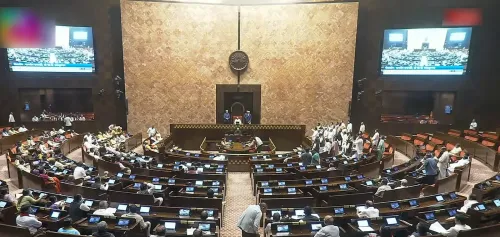
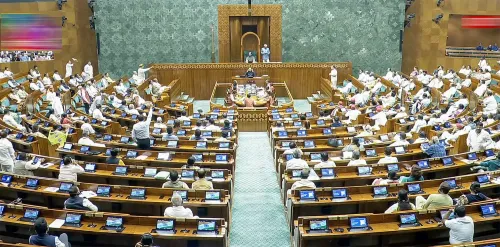
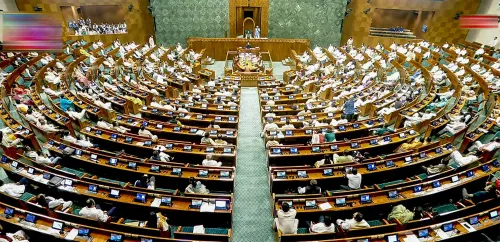
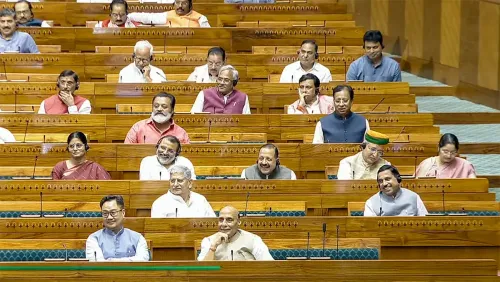
The Centre on Monday, 27 July introduced the Public Examinations (Prevention of Unfair Means) Amendment Bill, 2026, in the Lok Sabha, taking a significant legislative step to tighten the legal framework against paper leaks and examination fraud. The House was subsequently adjourned till 2 pm after Opposition members disrupted proceedings with sustained sloganeering.
Key Provisions of the Bill
Union Minister of State Jitendra Singh introduced the amendment, which seeks to strengthen the Public Examinations (Prevention of Unfair Means) Act, 2024. Among its most consequential provisions are imprisonment of up to 10 years, fines of up to ₹10 crore, and confiscation of assets of those convicted. Crucially, the bill mandates the establishment of fast-track courts with a binding timeline to deliver verdicts within three months of trial commencement.
The proposed amendment also aims to enhance transparency and integrity in the examination system while ensuring, in the government's framing, that students' futures remain protected from the fallout of malpractice.
What the Speaker Said
Lok Sabha Speaker Om Birla appealed directly to Opposition members to allow the House to function, calling the bill 'important' and noting that the 'country has been waiting for a long time' for such legislation. 'For days, you have been wanting to discuss this and today we are discussing it. Whatever suggestions you give, the government will work on implementing them. This is democracy... I urge the House to engage in discussion and debate instead of sloganeering. Do you not want to discuss?' Birla said. Despite his appeal, the disruptions continued, forcing the adjournment.
Background and Political Context
The bill follows Union Cabinet approval of the amendment and comes shortly after Prime Minister Narendra Modi publicly committed to introducing comprehensive legislation providing for strong action against paper leaks. The move is directly linked to the nationwide controversy over alleged irregularities in competitive examinations, which triggered protests and demands for accountability across multiple states in recent months.
This is not the first time examination fraud has forced legislative attention — but the scale of public anger over recent incidents has elevated the political urgency. The Opposition's disruption of proceedings, ironically, delayed debate on a bill that several of its members had themselves demanded.
What Happens Next
With the House reconvening at 2 pm, the government is expected to push for debate and passage of the bill. Fast-track courts, once established under the new framework, will be legally bound to conclude trials within three months — a provision designed to address the prolonged delays that have historically allowed examination fraud cases to drag on without resolution.
Point of View
Even when the legislation aligns with the opposition's stated position. The bill's real test is not passage but implementation: fast-track courts have been mandated before without the infrastructure to deliver on the timeline, and asset confiscation provisions have historically been difficult to enforce. Whether the three-month verdict deadline translates into actual accountability, or becomes another aspirational clause on paper, depends entirely on judicial capacity and executive will — neither of which is legislated into existence by the bill itself.
NationPress
25 Oct 2026
Frequently Asked Questions
What is the Public Examinations (Prevention of Unfair Means) Amendment Bill, 2026?
It is a proposed amendment to the Public Examinations (Prevention of Unfair Means) Act, 2024, introduced in Lok Sabha on 27 July 2026. The bill strengthens penalties for examination fraud, including up to 10 years in prison, fines of up to ₹10 crore, and asset confiscation, while mandating fast-track courts to deliver verdicts within three months.
Why was the Lok Sabha adjourned on 27 July 2026?
The Lok Sabha was adjourned till 2 pm on 27 July after Opposition members disrupted proceedings with sustained sloganeering during the introduction of the anti-paper leak bill. Speaker Om Birla appealed for order before ordering the adjournment.
What are the key penalties under the anti-paper leak bill?
The bill proposes imprisonment of up to 10 years, fines of up to ₹10 crore, and confiscation of assets for those found guilty of examination-related offences. Fast-track courts will be required to complete trials and deliver judgments within three months.
Who introduced the anti-paper leak bill in Parliament?
Union Minister of State Jitendra Singh introduced the Public Examinations (Prevention of Unfair Means) Amendment Bill, 2026, in the Lok Sabha on 27 July as part of the government's legislative agenda on examination integrity.
What prompted the Centre to introduce this bill?
The bill follows widespread public outrage over alleged paper leaks in major competitive examinations and comes after Prime Minister Narendra Modi announced that comprehensive legislation against paper leaks would be introduced in Parliament. The Union Cabinet had approved the bill before its introduction in the Lok Sabha.