Is Parliament Ready to Welcome More Lawmakers After Census and Delimitation?
Synopsis
In a groundbreaking move, the Indian government has approved a fully digital Census 2027 with a budget of Rs 11,718 crore. This significant development aims to enhance data quality and operational efficiency. Discover how this census impacts representation in Parliament and the political debate surrounding caste enumeration.
Key Takeaways
Census 2027 will be fully digital, enhancing data quality.
Budget allocated is Rs 11,718 crore .
Delimitation will follow the Census, impacting seat distribution.
New Parliament building designed for increased membership capacity.
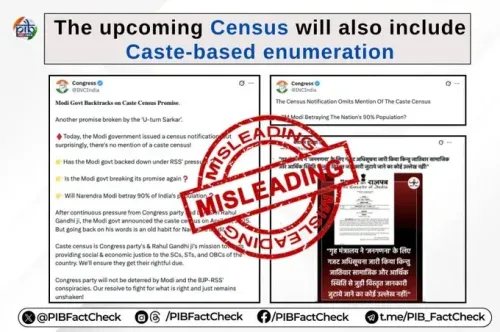
Political sensitivity surrounds caste enumeration.
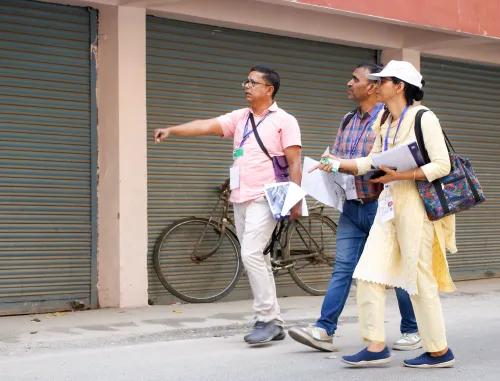
New Delhi, Dec 12 (NationPress) In a pivotal move, the government sanctioned a comprehensive two-phase, fully digital Census 2027 on Friday (December 12), with a budget of Rs 11,718 crore. Officials noted that the digital format will enhance operational speed and data integrity.
The decadal census was delayed from 2021 primarily due to the COVID-19 pandemic and its aftermath, as authorities indicated that immediate post-pandemic counts in various nations faced quality and coverage issues.
Furthermore, it was highlighted that disruptions in logistics and human resources justified the postponement.
The census represents India's fundamental demographic undertaking, necessitating extensive planning, resource distribution, and the legal framework of delimitation that influences electoral rolls.
Interestingly, the last comprehensive census in 2011 recorded a population of 1.21 billion, capturing trends in urbanization, literacy improvements, and a gradually bettering sex ratio. Such insights play a crucial role in shaping a decade's worth of policy and planning. These decadal snapshots serve as the primary resource for socio-economic metrics utilized by ministries, states, and researchers in developing welfare initiatives and infrastructure projects.
The population tally supports the constitutional process of delimitation, which involves redrawing constituency boundaries to ensure roughly equal representation. It provides the demographic framework essential for electoral rolls and for selecting sample groups for surveys.
However, the postponed process and the decision to incorporate caste data have sparked political and technical apprehensions; southern states express worries about population-based seat redistribution. The delimitation process following the decennial census will redistribute seats among states based on updated population statistics.
The current freeze on the total number of Lok Sabha seats is slated for reassessment after 2026, potentially allowing for redistribution and an increase in total seats if Parliament decides.
Southern states have publicly voiced concerns that new census data could lead to delimitation that diminishes their relative representation, given slower population growth in some southern regions compared to northern areas.
The central government has promised that these concerns will be addressed in due course.
Meanwhile, the integration of caste enumeration has heightened political sensitivity, with discussions surrounding the potential use of this data in reservation and electoral calculations. Given that the population increase during this period will result in a larger number of lawmakers, the government needed to design a Parliament building capable of comfortably accommodating them.
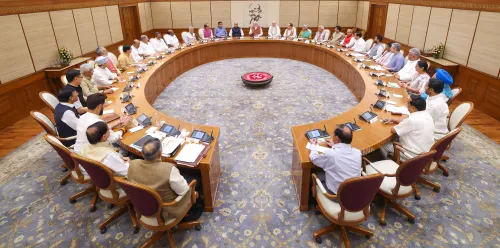
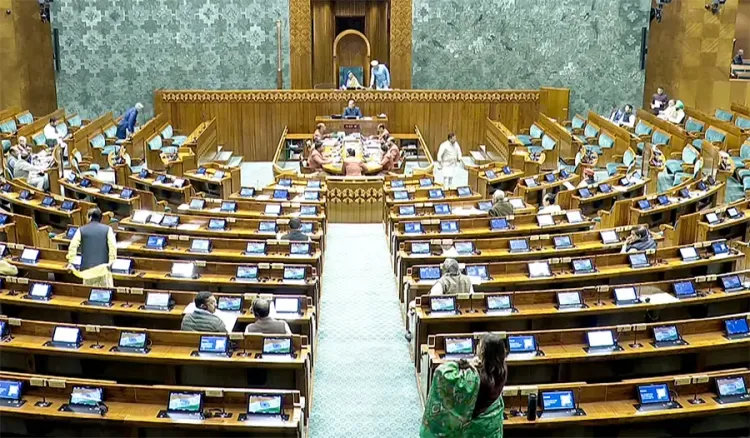
Therefore, anticipating future needs, the government constructed a new building where the Lok Sabha can seat up to 888 members and the Rajya Sabha can hold 384. The exact number of future representatives will only be determined following appropriate legal and political processes after the 2027 Census and the delimitation exercise. The expanded capacity alleviates a physical constraint that previously limited the number of members in each house simultaneously.
The new complex was designed not just as a modern workspace but to future-proof India’s legislature for a larger membership and more intricate committee operations.
Reports from experts have emphasized that the old circular chamber was inadequate for a growing democracy, lacking space for increased membership, modern technology, and committee facilities. The rationale was to create a larger, triangular structure that can accommodate more legislative activities simultaneously.
Thus, the new Parliament building resolves a practical bottleneck, being prepared to host a larger legislature; however, any actual increase in seats requires political consensus and legal action following the Census and delimitation. Until those actions are completed, the enhanced capacity remains a contingency rather than a certainty.
In practice, Parliament must enact enabling legislation or a constitutional amendment to modify the total number of seats; the Delimitation Commission will then redraw boundaries and allocate seats among states using the new population data.
jb/uk
Point of View
The decision to conduct a digital Census 2027 represents a significant advancement in India's demographic assessment process. While it aims to provide accurate data essential for policy-making, the associated political sensitivities must be navigated carefully to ensure fair representation across regions.
NationPress
8 Oct 2026
Frequently Asked Questions
What is the budget for Census 2027?
The budget for Census 2027 is Rs 11,718 crore.
Why was the Census postponed?
The Census was postponed from 2021 mainly due to the COVID-19 pandemic, which caused logistical and human resource disruptions.
What are the implications of the Census on parliamentary representation?
The Census results will lead to a delimitation process that may redistribute seats among states based on updated population figures.
How many members can the new Lok Sabha building accommodate?
The new Lok Sabha building can accommodate up to 888 members.
What issues have been raised regarding caste data inclusion?
The inclusion of caste data has sparked political sensitivities and debates concerning its potential use in reservation and electoral calculations.