Parliamentary Joint Committee Reviews Constitutional Amendment and J&K Bills

Synopsis
The Joint Committee of Parliament is actively engaging with stakeholders regarding key constitutional amendments, including the 130th Amendment Bill and amendments related to Jammu & Kashmir. This legislative review aims to ensure accountability and address concerns surrounding political conduct.
Key Takeaways
Joint Committee of Parliament is reviewing key constitutional amendments.
Discussion includes the 130th Amendment Bill and its implications for political accountability.
Concerns regarding potential misuse of legislation have been raised by opposition parties.
The committee aims to ensure a balance between democratic rights and rule of law.
Ongoing consultations with various stakeholders are underway.
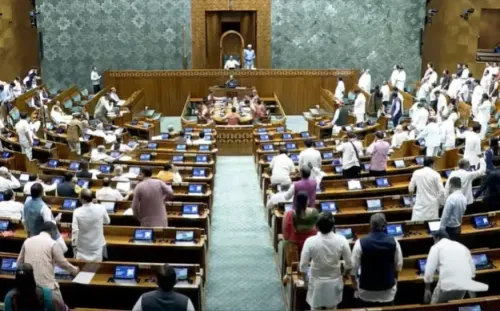
New Delhi, April 1 (NationPress) The Joint Committee of Parliament met to discuss the Constitution (One Hundred and Thirtieth Amendment) Bill, 2025, along with two related bills on Wednesday, engaging with various stakeholders by hearing insights from renowned legal and academic organizations.
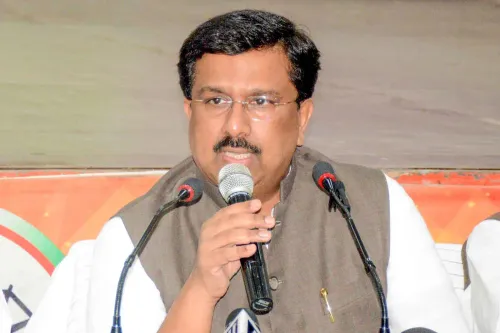
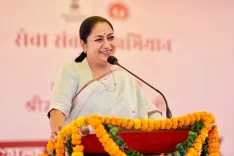
Under the leadership of BJP MP Aparajita Sarangi from Bhubaneswar, the committee listened to representatives from the Centre for Law and Policy Research in Bengaluru and OP Jindal Global University from Sonipat, Haryana.
The session concentrated on three critical legislative proposals: the Constitution (130th Amendment) Bill, 2025; the Jammu & Kashmir Reorganisation (Amendment) Bill, 2025; and the Government of Union Territories (Amendment) Bill, 2025.
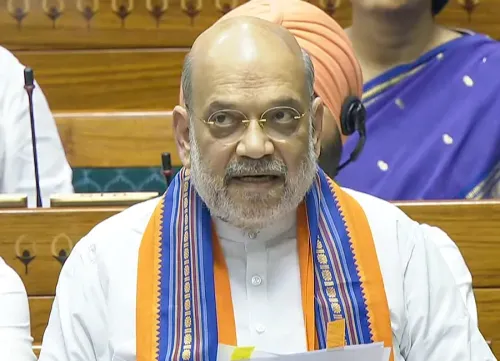
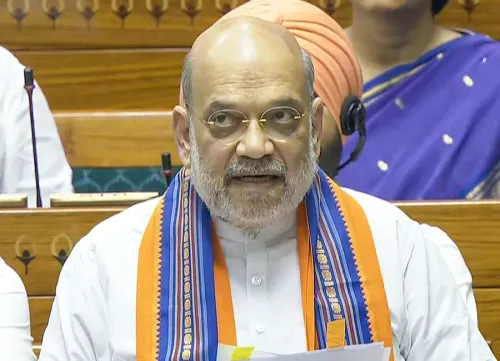
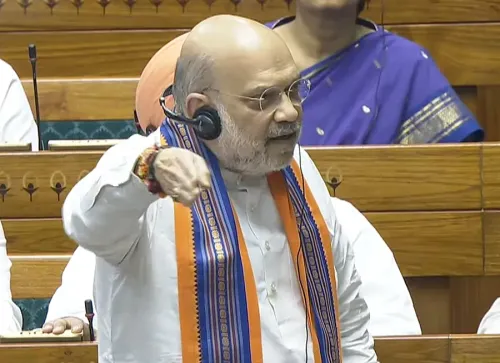
Introduced in the Lok Sabha on August 20, 2025, by Union Home Minister Amit Shah, the 130th Constitutional Amendment Bill aims to modify Articles 75, 164, and 239AA of the Constitution.
A key provision of this bill requires the automatic dismissal of the Prime Minister, Chief Ministers, or any Minister (whether at the Centre, states, or Delhi) if they are arrested and detained for 30 continuous days on charges that carry a minimum imprisonment of five years.
If the Prime Minister or Chief Minister does not recommend removal to the President or Governor by the 31st day, the minister will automatically lose their position; however, they can be reinstated upon release.
The two associated bills extend similar accountability provisions to Puducherry (by amending the Government of Union Territories Act, 1963) and Jammu & Kashmir (by modifying the J&K Reorganisation Act, 2019).
The government has characterized this legislative package as a significant move towards purging politics, upholding constitutional integrity, and preventing ministers from managing government affairs while incarcerated.
The Joint Committee, consisting of 31 members, was formed in November 2025 to thoroughly investigate the proposals amidst heated political discussions.
Several opposition parties have expressed concerns that the legislation could potentially be exploited against political adversaries, undermine the principle of innocence, and challenge federalism.
The panel is consulting a diverse group of stakeholders, including state administrations, civil society groups, and legal specialists. Wednesday's hearing is part of a series of ongoing consultations to assess the constitutional, legal, and practical ramifications of these proposed adjustments.
The committee is anticipated to file its report to Parliament after reviewing all contributions.
This development unfolds as Parliament continues to engage in discussions on addressing the persistent issue of criminalization in politics while ensuring a balance between democratic rights and adherence to the rule of law.
Point of View
It is crucial to recognize the ongoing parliamentary discussions on the 130th Amendment Bill and its implications for political accountability. While the government positions these amendments as essential for upholding constitutional morality, the opposition raises valid concerns about potential misuse. A balanced approach is necessary to ensure democratic integrity.
NationPress
24 Sept 2026
Frequently Asked Questions
What is the 130th Amendment Bill about?
The 130th Amendment Bill seeks to amend Articles 75, 164, and 239AA of the Constitution, mandating the automatic removal of ministers if they are arrested and detained for 30 consecutive days on serious charges.
Who introduced the 130th Amendment Bill?
The bill was introduced in the Lok Sabha by Union Home Minister Amit Shah on August 20, 2025.
What other bills are being discussed alongside the 130th Amendment Bill?
Two additional bills being discussed are the Jammu & Kashmir Reorganisation (Amendment) Bill, 2025, and the Government of Union Territories (Amendment) Bill, 2025.
What are the concerns raised by opposition parties?
Opposition parties have raised concerns about the potential misuse of the bill against political rivals and its impact on the presumption of innocence and federal principles.
When was the Joint Committee constituted?
The Joint Committee was constituted in November 2025 to conduct a detailed examination of the proposed amendments.