Patna student protest turns tense: police use water cannons near CM's residence
Synopsis
Left-wing students marching to Bihar CM Samrat Choudhary's residence in Patna were met with water cannons and detentions on 4 August — but the protest is bigger than teacher vacancies. It is the first organised attempt to merge the university recruitment crisis with unresolved anger over alleged police brutality during the NEET paper-leak agitation, putting the Bihar government under pressure on two fronts simultaneously.
Key Takeaways
The Chhatra Yuva Sangharsh Morcha led a march in Patna on 4 August toward Chief Minister Samrat Choudhary's residence over a five-point charter of demands.
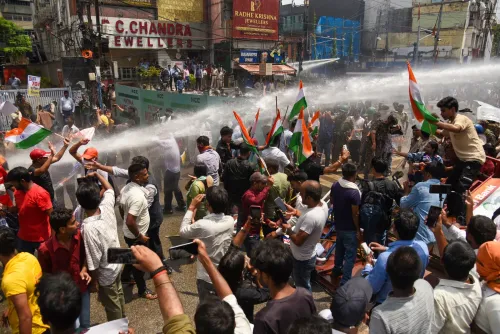
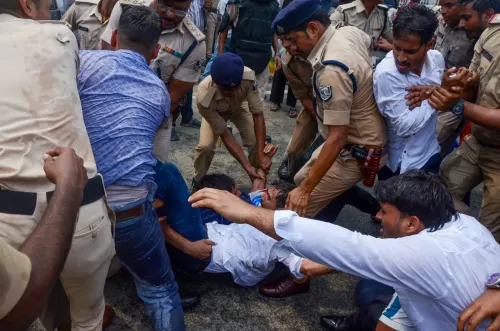
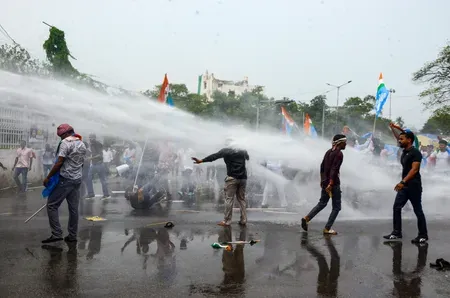
Police stopped the procession near Dakbungalow Crossing , deployed water cannons , and reportedly detained several protesters.
Primary demand: immediate filling of vacant teaching posts at Bihar's universities.
Students also opposed the proposed repeal of the University Act of 1976 .
Protesters alleged excessive police force during earlier NEET paper-leak demonstrations in Siwan and Jehanabad , demanding a high-level inquiry and compensation for those affected.
Senior officers including the Senior SSP, SPs, DSPs , and SHOs were present on the ground; the Bihar government had not formally responded as of Tuesday evening.
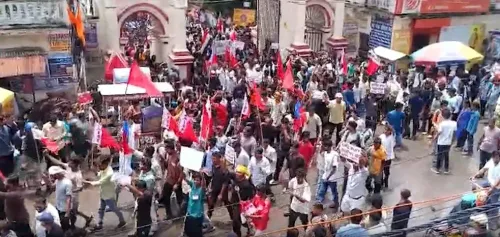
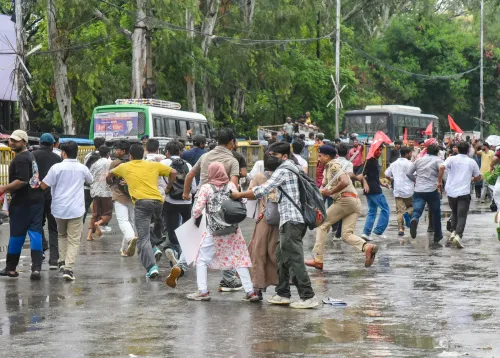
Left-wing student groups clashed with police in Patna on Tuesday, 4 August as hundreds of demonstrators marching toward Chief Minister Samrat Choudhary's residence were stopped near Dakbungalow Crossing, where authorities deployed water cannons and detained several protesters. The march, organised by the Chhatra Yuva Sangharsh Morcha, was anchored in a five-point charter demanding immediate filling of vacant university teaching posts in Bihar.
How the Protest Unfolded
The procession set off from Ramghulam Chowk with students targeting the Chief Minister's official residence. Police had pre-positioned heavy security, initially intercepting the march near Gate No. 12 of Gandhi Maidan. Demonstrators pushed past that cordon and advanced toward Dakbungalow Crossing, where barricades had been erected to halt further movement.
A standoff intensified near the Income Tax Roundabout as protesters attempted to breach police lines. Officers subsequently activated water cannons to disperse the crowd. Some students were seen scaling barricades and raising slogans; one group reportedly climbed onto a water-cannon vehicle. Senior officers — including the Senior SSP, SPs, DSPs, and SHOs — were present on the ground throughout the operation.
The Five-Point Charter of Demands
At the heart of the agitation is the demand for immediate recruitment to vacant teaching positions at Bihar's universities, a long-pending issue that student unions argue has crippled academic quality in the state. Protesters also opposed the proposed repeal of the University Act of 1976, insisting that any overhaul of the higher-education framework must safeguard the interests of both students and faculty.
The remaining demands are directly linked to the recent wave of student unrest over the NEET paper-leak controversy. Protesters alleged that police used disproportionate force against agitating students in Siwan and Jehanabad, and called for a high-level inquiry into those incidents. They further demanded compensation for those allegedly injured during anti-NEET-leak demonstrations and insisted that accountability be fixed at the SP and DSP levels wherever misconduct is alleged.
Allegations of Police Misconduct
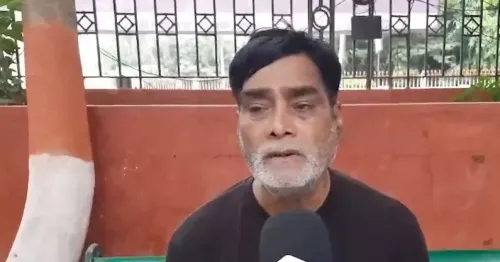
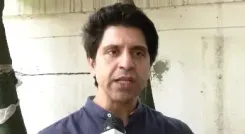
A female student participating in Tuesday's march alleged on the spot that security forces had used force against peaceful protesters and demanded an independent probe. The Chhatra Yuva Sangharsh Morcha stated that students associated with their movement were reportedly facing harassment at multiple locations across the state, and called for strict action against any police personnel found guilty — regardless of rank.
This comes amid a broader pattern of student-police friction in Bihar, where the NEET paper-leak controversy has already triggered multiple rounds of protests since earlier this year. Tuesday's demonstration marks a consolidation of those grievances into a single, organised push at the seat of state power.
What Happens Next
As of Tuesday evening, no formal response had been issued by the Bihar government or Chief Minister Samrat Choudhary's office regarding the protesters' demands. The status of those detained remained unclear. Student leaders indicated they would continue their agitation if the government did not engage with their charter within a specified timeframe.
Point of View
More volatile agitation. Chief Minister Samrat Choudhary faces a credibility test: university teacher recruitment has been stalled long enough to become a recurring flashpoint, and every round of water cannons without a policy response raises the political cost. The demand for accountability at the SP and DSP level, if left unaddressed, risks deepening mistrust between the state administration and its student population ahead of what is expected to be a politically sensitive period.
NationPress
18 Sept 2026
Frequently Asked Questions
Why did students protest in Patna on 4 August 2025?
Students affiliated with the Chhatra Yuva Sangharsh Morcha marched toward Bihar Chief Minister Samrat Choudhary's residence on 4 August demanding immediate filling of vacant teaching positions at state universities, opposing the proposed repeal of the University Act of 1976, and seeking accountability for alleged police misconduct during earlier NEET paper-leak protests.
What action did police take against the Patna protesters?
Police stopped the march near Dakbungalow Crossing using barricades and subsequently deployed water cannons to disperse the crowd. Several protesters were reportedly detained. Senior officers including the Senior SSP, SPs, DSPs, and SHOs were present at the scene.
What is the Chhatra Yuva Sangharsh Morcha's five-point demand?
The charter includes: immediate recruitment to vacant university teaching posts; withdrawal of the proposed repeal of the University Act of 1976; a high-level inquiry into alleged police excess during NEET paper-leak protests in Siwan and Jehanabad; compensation for students affected by that action; and fixing accountability at the SP and DSP level wherever misconduct is alleged.
How does this protest connect to the NEET paper-leak controversy?
Protesters allege that police used disproportionate force against students agitating over the NEET paper leak in Bihar's Siwan and Jehanabad districts. Tuesday's march folded those unresolved grievances into a broader demand for accountability, making the NEET controversy a central plank alongside the university recruitment issue.
Has the Bihar government responded to the protesters' demands?
As of Tuesday evening, no formal response had been issued by Chief Minister Samrat Choudhary's office or the Bihar government. Student leaders indicated they would continue their agitation if authorities did not engage with their charter within a specified timeframe.