Bihar student protests: Police use water cannons in Patna, NSUI leaders detained
Synopsis
Patna's streets turned into a standoff on 4 August as student groups and NSUI activists marching over education grievances were met with water cannons and mass detentions — including Bihar Congress President Rajesh Ram. With videos of alleged police manhandling circulating online and demands ranging from vacant teaching posts to accountability for the Siwan firing incident, the Bihar government faces a rapidly escalating political test.
Key Takeaways
Student protests over a five-point charter of demands intensified in Patna on 4 August , spanning Dak Bungalow Chowk to the Income Tax Roundabout .
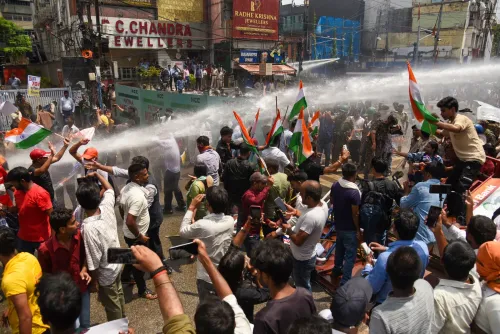
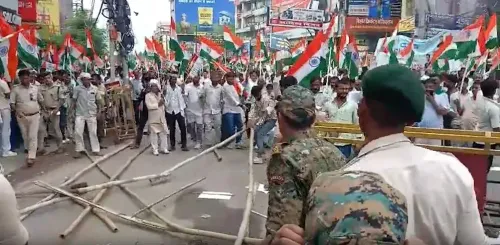
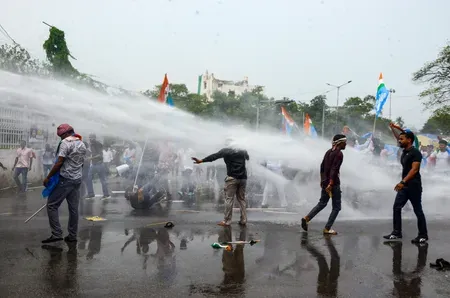
Police deployed water cannons and erected barricades after some protesters attempted to breach them near Dak Bungalow Crossing .
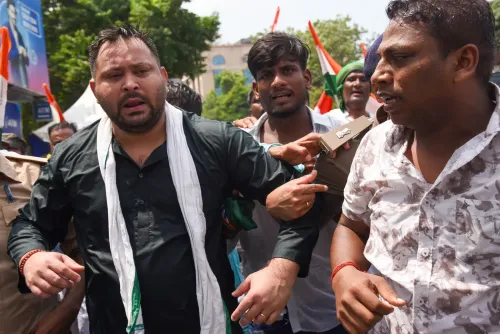
Bihar Congress President Rajesh Ram , the NSUI state president , and several other leaders were detained during the demonstrations.
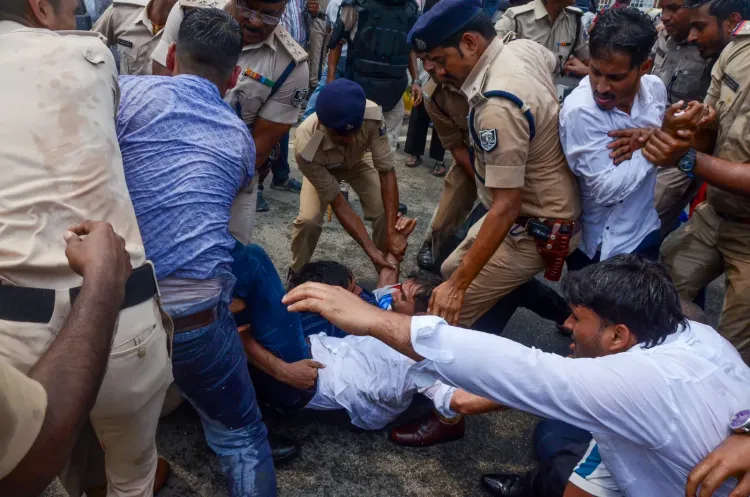
Protesters alleged police manhandling of male and female demonstrators; videos purportedly showing this circulated on social media.
Key demands include action on vacant teaching and non-teaching posts , accountability for alleged irregularities, and response to the alleged AK-47 firing incident in Siwan .
Police maintained that all measures were taken to preserve law and order and prevent protesters from entering restricted areas.
Student protests erupted across Patna on Tuesday, 4 August, as multiple student organisations and National Students' Union of India (NSUI) activists took to the streets over a five-point charter of demands, prompting police to deploy water cannons and detain several protest leaders, including Bihar Congress President Rajesh Ram.
How the protests unfolded
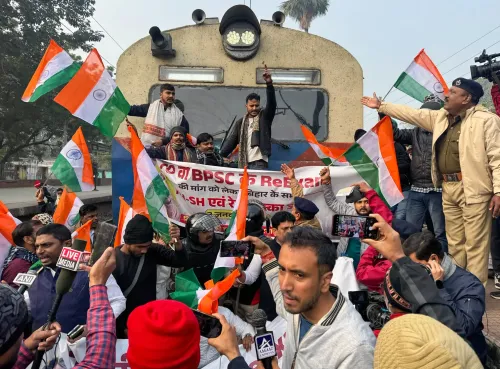
Demonstrations stretched from Dak Bungalow Chowk to the Income Tax Roundabout in central Patna. One group, marching under the banner of the Chhatra Yuva Sangharsh Morcha, attempted to advance towards the Chief Minister's residence, while NSUI organised a parallel demonstration at the Income Tax Roundabout.
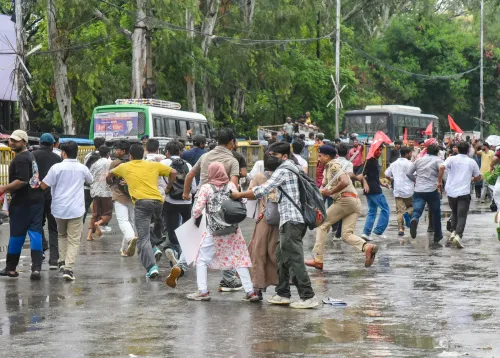
Police erected barricades near Dak Bungalow Crossing to halt the march. When a section of protesters attempted to breach the barricades, authorities deployed water cannons to disperse the crowd. Several students and student leaders were reportedly detained during the confrontation. A large police contingent, supervised by senior officers including the Senior SSP, SPs, DSPs, and multiple Station House Officers, was deployed across Income Tax Golambar and adjoining areas.
Allegations of police misconduct
Protesters alleged they were demonstrating peacefully when they were forcibly prevented from proceeding. Some student leaders accused police personnel of manhandling demonstrators — reportedly dragging both male and female protesters away by their arms and legs. Videos purportedly showing this circulated on social media, though their authenticity could not be independently verified.
During the commotion, some students reportedly questioned whether they were being treated like 'terrorists' because of the manner in which they were allegedly removed from the protest site.
What the government and police said
Police officials maintained that the use of water cannons and detentions were necessary to maintain law and order and prevent protesters from advancing into restricted areas. Announcements were made over loudspeakers repeatedly warning demonstrators to remain behind the barricades. Authorities said some protesters climbed over the barricades despite the warnings, prompting police personnel to move in.
Key demands and political dimension
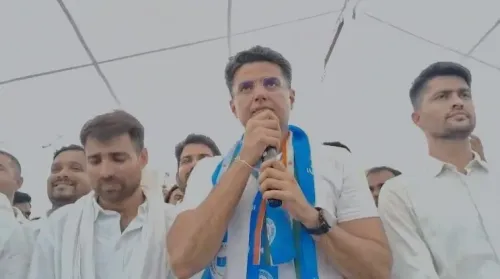
Bihar Congress President Rajesh Ram, who joined the NSUI demonstration at the Income Tax Roundabout, was among those detained. He alleged that police personnel manhandled him during the detention. Ram stated that the students were protesting over issues including the state of the education system, a large number of vacant teaching and non-teaching posts, and accountability for those allegedly responsible for irregularities.
Ram also claimed that pressure from the student movement had contributed to the resignation of Union Education Minister Dharmendra Pradhan — an assertion that remains contested — and argued that the agitation could not be suppressed through police action alone.
Protesters additionally raised slogans over an alleged AK-47 rifle firing incident in Siwan and demanded accountability for police personnel accused of using excessive force during student demonstrations elsewhere. They called on the government to initiate dialogue and address their demands through democratic means.
What happens next
With detentions of senior political and student leaders and video evidence circulating online, pressure is mounting on the Bihar government to engage with protesters' demands. The standoff raises broader questions about the handling of student agitations across India in recent months. Whether the state administration chooses dialogue or continued containment will determine the trajectory of the movement in the days ahead.
Point of View
Barricades, and the detention of an opposition party president — risks amplifying rather than defusing the student movement. Arresting Rajesh Ram hands the Congress a ready-made grievance narrative and elevates what began as an education-sector agitation into a broader civil liberties flashpoint. The protesters' five-point charter is substantive: vacant teaching posts and accountability for irregularities are longstanding failures that no amount of crowd control resolves. If the administration continues to treat dialogue as a concession rather than a tool, it may find the movement harder to contain with each passing week.
NationPress
19 Sept 2026
Frequently Asked Questions
Why are students protesting in Patna?
Students in Patna are protesting over a five-point charter of demands that includes concerns about the state of the education system, a large number of vacant teaching and non-teaching posts, and accountability for those allegedly responsible for irregularities. Protesters also raised slogans over an alleged AK-47 rifle firing incident in Siwan and demanded action against police personnel accused of using excessive force in earlier demonstrations.
What action did police take against the protesters?
Police erected barricades near Dak Bungalow Crossing to prevent the march from advancing, and deployed water cannons when some protesters attempted to breach them. Several students and student leaders were reportedly detained, including Bihar Congress President Rajesh Ram and the NSUI state president. Senior officers including the Senior SSP supervised the security arrangements.
Who is Rajesh Ram and why was he detained?
Rajesh Ram is the Bihar Pradesh Congress Committee president. He joined the NSUI demonstration at the Income Tax Roundabout in Patna and was detained by police along with other student leaders. He alleged that police personnel manhandled him during the detention and argued that the student agitation could not be suppressed through police action.
What is the Chhatra Yuva Sangharsh Morcha?
The Chhatra Yuva Sangharsh Morcha is a student organisation that led one of the protest groups marching towards the Bihar Chief Minister's residence on 4 August. It was one of multiple groups participating in the day's demonstrations alongside NSUI activists.
What is the alleged Siwan AK-47 firing incident referenced by protesters?
Protesters in Patna raised slogans demanding accountability related to an alleged incident involving an AK-47 rifle in Siwan, Bihar. The source does not provide further verified details about this incident, and NationPress is attributing the reference solely to the protesters' stated demands.