India-Pakistan peace calls grow, but Pakistan's divided authority clouds talks
Synopsis
A cross-border appeal by citizens urging Modi and Sharif toward peace sounds hopeful — but Pakistan's military dominance, armed militant presence, and civilian incoherence mean there is no single authority in Islamabad capable of honouring a peace commitment. History, from the 2014 SAARC invite to the 2015 Lahore stopover, shows that Indian goodwill gestures have repeatedly been overtaken by violence originating in Pakistan.
Key Takeaways
Prominent citizens from India and Pakistan have jointly appealed to PM Narendra Modi and PM Shehbaz Sharif on 1 July to pursue dialogue and end decades of hostility.
Pakistan Army Chief General Asim Munir is consolidating authority over foreign policy, making the military's endorsement a prerequisite for any peace process.
Armed militants were reportedly photographed openly at a funeral inside Pakistan, highlighting the threat extremist groups pose to any peace initiative.
PM Modi invited Nawaz Sharif to his May 2014 swearing-in and made a surprise visit to Lahore on 25 December 2015 — both gestures were subsequently undermined by terror attacks.
The 2025 Pahalgam attack , in which 26 tourists were killed, has reinforced India's position that structural change in Pakistan's security environment must precede dialogue.
India has consistently maintained that symbolic gestures are insufficient without concrete action against terror groups operating from Pakistani soil.
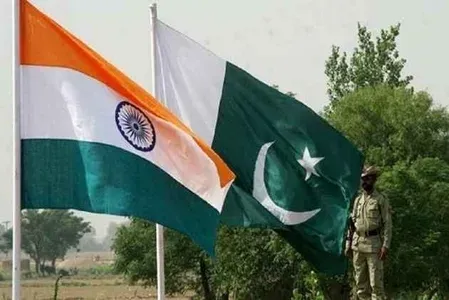
Prominent citizens from both India and Pakistan have reportedly joined a cross-border appeal urging Prime Minister Narendra Modi and Prime Minister Shehbaz Sharif to end decades of bilateral hostility — a call that is timely and morally resonant, yet faces formidable structural obstacles rooted in Islamabad's fragmented power landscape. The appeal, signed by intellectuals, activists, and public figures on both sides, was made public on 1 July and calls for dialogue, cooperation, and mutual respect as the foundation of a new chapter in South Asian relations.
What the Appeal Says
The joint letter emphasises the shared cultural, historical, and human bonds between the two nations. It argues that ordinary citizens on both sides bear the heaviest cost of strained ties — through restricted trade, curtailed cultural exchange, and the persistent shadow of conflict. The signatories contend that peace is not merely an aspirational ideal but a practical prerequisite for economic growth, regional stability, and the well-being of hundreds of millions of people.
Pakistan's Fractured Power Structure
The central complication is structural. Unlike India, where the Prime Minister holds clear constitutional authority, Pakistan operates under a system of competing power centres. Pakistan's Army remains the country's most dominant institution, and Army Chief General Asim Munir has been steadily consolidating his grip over both domestic politics and foreign policy. Historically, the military has dictated the contours of Pakistan's relationship with New Delhi, often marginalising civilian governments in the process. Any substantive peace initiative would require the military's explicit endorsement — rendering Sharif's role secondary at best, critics argue.
A further destabilising factor is the documented presence of militant groups that operate with considerable freedom inside Pakistan. The challenge was starkly illustrated recently when photographs from the funeral of former cricketer Shoaib Akhtar's brother showed armed militants openly mingling with mourners. Such images underscore a hard reality: even if civilian leaders or the military signalled a genuine openness to peace, extremist factions retain the capacity to derail progress through violence and provocation.
Defence Minister Khawaja Muhammad Asif's frequent off-the-cuff statements — at times provocative, at times contradictory — have further muddied Pakistan's official position, weakening its credibility in international diplomacy and reflecting a broader incoherence within the civilian leadership.
India's Track Record of Outreach
On the Indian side, Prime Minister Modi commands a strong mandate and centralised authority. His government has consistently prioritised national security, particularly following major terrorist incidents. The 2025 Pahalgam attack, in which 26 Indian tourists were shot dead by militants who reportedly targeted Hindu victims near Pahalgam in Kashmir, deepened public and political resolve against normalisation without accountability.
Yet Modi has also demonstrated a willingness to extend goodwill gestures. At his May 2014 swearing-in ceremony, he invited all heads of state from the South Asian Association for Regional Cooperation (SAARC), including Pakistan's then Prime Minister Nawaz Sharif — the first time a Pakistani leader had attended such an event in New Delhi. The invitation was widely read as a signal of openness to dialogue. On 25 December 2015, Modi made a surprise stopover in Lahore on his return from Kabul to personally wish Nawaz Sharif on his 66th birthday — the first visit by an Indian Prime Minister to Pakistan in more than a decade, since the 2008 Mumbai attacks.
How Past Overtures Unravelled
Each of these gestures was subsequently overshadowed by violence. The January 2016 Pathankot terror attack, followed by a series of militant strikes, forced India to harden its position, demanding concrete action against terror groups as a precondition for any resumed dialogue. The pattern — civilian outreach undercut by military calculus and militant action — has repeated itself with enough consistency to constitute a structural dynamic rather than a series of isolated setbacks.
These episodes collectively illustrate why New Delhi has concluded that symbolic gestures, however sincere, are insufficient without verifiable structural changes in Pakistan's governance and security environment. As the latest cross-border peace appeal circulates, that fundamental asymmetry remains unresolved — and it is the single largest obstacle standing between a letter of goodwill and a genuine diplomatic breakthrough.
Point of View
But it addresses itself to a fiction — the idea that Pakistan has a single, empowered civilian interlocutor capable of delivering on a peace commitment. General Asim Munir, not Shehbaz Sharif, sets the terms of Pakistan's India policy, and the military's historical record on bilateral normalisation is one of consistent obstruction. What makes this moment particularly difficult is that India has already tried the goodwill route — twice, memorably — and paid a security price each time. The burden of proof now lies squarely with Islamabad to demonstrate structural change, not another exchange of pleasantries.
NationPress
30 Sept 2026
Frequently Asked Questions
What is the India-Pakistan peace appeal announced on 1 July?
It is a joint letter signed by prominent citizens, intellectuals, and activists from both India and Pakistan, urging Prime Ministers Narendra Modi and Shehbaz Sharif to end decades of bilateral hostility through dialogue, cooperation, and mutual respect. The appeal highlights the shared cultural and historical ties between the two nations and argues that peace is a practical necessity for regional stability.
Why is meaningful dialogue between India and Pakistan so difficult?
Pakistan's political authority is fragmented across multiple power centres — the elected civilian government, the military establishment led by Army Chief General Asim Munir, and militant groups that operate with considerable freedom. Unlike India, where the Prime Minister holds clear constitutional authority, any peace initiative from Pakistan's civilian leadership requires explicit military backing to be credible or durable.
What past peace gestures has India extended toward Pakistan?
Prime Minister Modi invited then-Pakistani PM Nawaz Sharif to his May 2014 swearing-in ceremony — the first time a Pakistani leader attended such an event in New Delhi. Modi also made a surprise visit to Lahore on 25 December 2015 to personally wish Sharif on his birthday, marking the first Indian PM's visit to Pakistan in over a decade. Both gestures were subsequently overshadowed by major terror attacks.
How did the Pahalgam attack affect India's position on talks?
The 2025 Pahalgam attack, in which 26 Indian tourists were shot dead by militants who reportedly targeted Hindu victims in Kashmir, deepened India's insistence that concrete action against terror groups must precede any resumed dialogue. It reinforced the government's longstanding position that symbolic gestures are insufficient without verifiable structural changes in Pakistan's security environment.
What role does Pakistan's military play in India-Pakistan relations?
Pakistan's Army has historically dictated the contours of the country's foreign policy toward India, often sidelining civilian governments. Army Chief General Asim Munir has been consolidating authority over both domestic politics and foreign policy, meaning any peace initiative would require the military's explicit endorsement to have any realistic chance of advancing.