BJP slams 'hypocrisy' of India-Pak peace letter, demands focus on PoK crackdown
Synopsis
Over 100 prominent citizens from India and Pakistan wrote to PM Modi and Shehbaz Sharif urging peace — and the BJP's response was a single word: 'hypocrisy.' With signatories including Farooq Abdullah and Mehbooba Mufti staying silent on reported PoK crackdowns, the BJP is turning a civil society peace gesture into a pointed accountability question about selective outrage.
Key Takeaways
The BJP on 1 July labelled a joint India-Pakistan peace letter signed by over 100 citizens as 'hypocrisy.' BJP leader Nirmal Singh said dialogue is impossible 'until Pakistan stops supporting terrorism,' citing the Pahalgam attack and Uri incident .
BJP leader Ravinder Raina urged signatories to write to the UN Security Council over alleged human rights violations in PoK instead.
Indian signatories include Farooq Abdullah , Mirwaiz Umar Farooq , Mehbooba Mufti , Manoj Jha , and Humayun Kabir .
National Conference leader Tanvir Sadiq defended the letter, calling it 'a step in the right direction' for peace.
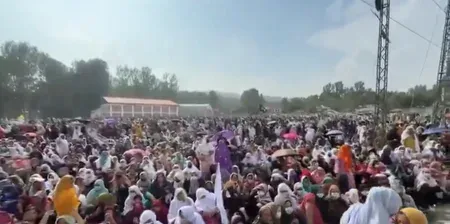
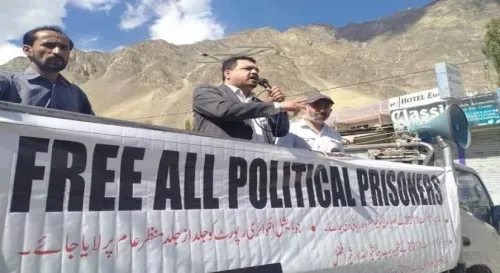
Dozens of protesters were reportedly killed in police action across PoK , a situation the BJP says the letter's signatories have ignored.
The Bharatiya Janata Party (BJP) on Wednesday, 1 July sharply criticised a joint letter signed by more than 100 prominent citizens from India and Pakistan, addressed to Prime Minister Narendra Modi and Pakistani Prime Minister Shehbaz Sharif, calling for an end to hostilities between the two nations. BJP leaders labelled the initiative 'hypocrisy' and argued that those urging dialogue should instead petition the United Nations over alleged human rights violations in Pakistan Occupied Kashmir (PoK), where dozens of protesters were reportedly killed in police action.
BJP's Core Objection
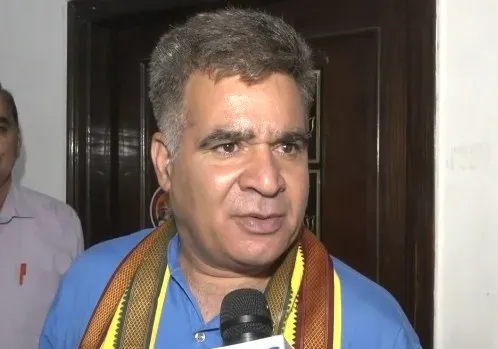
Senior BJP leader and former Jammu and Kashmir Deputy Chief Minister Nirmal Singh acknowledged that good bilateral relations are desirable in principle, invoking the late Prime Minister Atal Bihari Vajpayee's oft-quoted line that 'we can change our friends, we cannot change our neighbours.' However, Singh argued that timing and conditions matter. 'There is a proper time and way to improve relations,' he said.
Referring specifically to the Pahalgam terror attack and the Uri incident, Singh stated: 'If our people are killed, and if terrorists come into the Jammu region and take innocent lives, then talks cannot take place in such an environment. Until Pakistan stops supporting terrorism and steps away from it, dialogue is not possible.'
The Hypocrisy Charge
Singh directed his sharpest criticism at Indian signatories who publicly maintain that PoK is an integral part of Jammu and Kashmir, yet have remained silent on the reported killings of protesters there. 'On one hand, they say that Pakistan-occupied Kashmir is ours and an integral part of Jammu and Kashmir. Yet, when firing takes place there, when people are allegedly being killed by the forces there, they do not utter a single word about it because indirectly they support Pakistan's stand,' he remarked.
BJP leader Ravinder Raina echoed this position, saying any letter should be 'addressed to the United Nations Security Council and the Human Rights Commission, raising the issue of the alleged human rights violations in Pakistan Occupied Jammu and Kashmir.' Raina also questioned the conspicuous silence of Peoples Democratic Party (PDP) Chief Mehbooba Mufti and National Conference President Farooq Abdullah on the PoK situation.
Who Signed the Letter
The Indian signatories include prominent political figures: National Conference Chief Farooq Abdullah, separatist leader Mirwaiz Umar Farooq, PDP Chief Mehbooba Mufti, Rashtriya Janata Dal (RJD) MP Manoj Jha, and Aam Janata Unnayan Party leader and former Bengal Minister Humayun Kabir. The letter represents a cross-party, cross-border civilian push for diplomatic re-engagement at a time when India-Pakistan relations remain deeply strained following recent terror incidents.
National Conference Defends the Move
Not all voices were critical. National Conference leader Tanvir Sadiq defended the letter, arguing it was aimed at empowering those who have consistently stood for a stable India. 'If we want to defeat those who have always created unrest and promoted an atmosphere of conflict between India and Pakistan, then we must empower those who have consistently stood for a better and stronger India. I believe this letter is a step in that direction,' he said.
Sadiq also invoked Vajpayee's 'neighbours' remark while noting that the responsibility for creating a 'conducive' atmosphere rests on both sides, not India alone. 'It is a good thing if a dialogue can start,' he added.
Broader Context
The controversy comes against a backdrop of severely fractured India-Pakistan ties, with diplomatic and trade links largely suspended following the Pahalgam attack. Simultaneously, PoK has witnessed a wave of civil unrest, with dozens of protesters reportedly killed in police action across several parts of the region — a development that has drawn limited mainstream attention despite its scale. Critics argue that the selective framing of the peace letter, which focuses on bilateral hostility but omits PoK's internal crisis, reflects a broader blind spot in cross-border civil society discourse. How the two governments respond to the letter — if at all — will be closely watched.
Point of View
Yet their public silence on the reported crackdown there is conspicuous. The peace letter, however well-intentioned, arrives without any conditionality on Pakistan's conduct — a framing that hands the BJP an easy counter-narrative. What the debate obscures is the PoK crisis itself, which has reportedly claimed dozens of lives and deserves independent scrutiny regardless of the bilateral noise around it. Civil society initiatives that ignore inconvenient facts on one side of the border risk undermining the very credibility they need to be taken seriously.
NationPress
30 Sept 2026
Frequently Asked Questions
What is the India-Pakistan joint peace letter that BJP criticised?
It is a letter signed by more than 100 prominent citizens from India and Pakistan, addressed to Prime Minister Narendra Modi and Pakistani PM Shehbaz Sharif, urging an end to continued hostilities between the two countries. The BJP termed it 'hypocrisy' and argued that the signatories should instead raise the issue of alleged human rights violations in Pakistan Occupied Kashmir (PoK).
Why did the BJP call the letter 'hypocrisy'?
BJP leaders argued that several Indian signatories publicly claim PoK is an integral part of India, yet have remained silent on reports of dozens of protesters allegedly killed in police action there. BJP leader Nirmal Singh said this selective silence amounts to indirectly supporting Pakistan's position.
Who are the prominent Indian signatories of the peace letter?
The Indian signatories include National Conference Chief Farooq Abdullah, separatist leader Mirwaiz Umar Farooq, PDP Chief Mehbooba Mufti, RJD MP Manoj Jha, and former Bengal Minister Humayun Kabir, among others.
What is the BJP's position on resuming India-Pakistan dialogue?
The BJP maintains that dialogue is not possible until Pakistan stops supporting terrorism. Nirmal Singh specifically cited the Pahalgam terror attack and the Uri incident as reasons why talks cannot proceed in the current environment.
What is the National Conference's stance on the peace letter?
National Conference leader Tanvir Sadiq defended the letter, saying it empowers those who stand for a stable India and is 'a step in the right direction.' He also noted that the responsibility for creating a conducive atmosphere for dialogue rests on both India and Pakistan.