Phoolka accuses AAP of exploiting 1984 anti-Sikh massacre victims for votes
Synopsis
BJP leader H.S. Phoolka, a Supreme Court lawyer who has spent four decades fighting for 1984 massacre victims, has accused AAP of the most cynical form of political exploitation — allegedly withholding sanctioned ₹5 lakh compensation payments to victim families in Delhi until closer to Punjab elections, while simultaneously staging protests in their name.
Key Takeaways
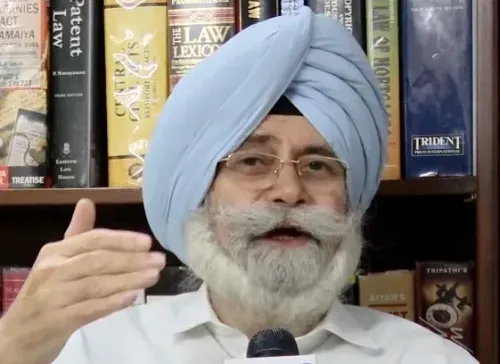
Phoolka accused AAP of exploiting 1984 anti-Sikh massacre victims for electoral gains, speaking in Chandigarh on Wednesday .
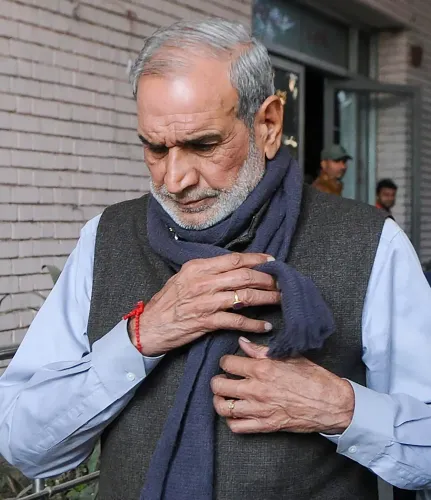
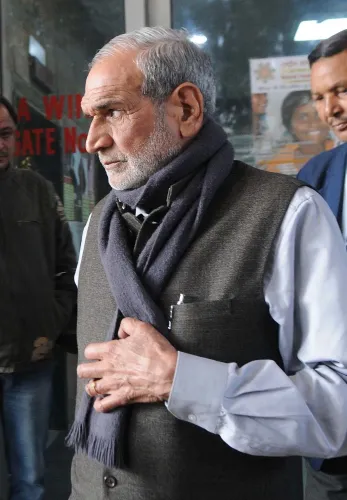
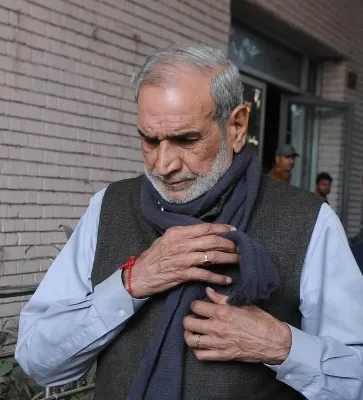
AAP MLA Ram Singh Netaji attended a condolence meeting for Sajjan Kumar , who was convicted for his role in the 1984 massacre — a move Phoolka called a fundamental contradiction.
The Centre under Narendra Modi sanctioned an additional ₹5 lakh compensation per victim family after 2014 ; Phoolka alleges the AAP government in Delhi delayed distribution for electoral reasons.
Phoolka resigned from all party posts in September 2015 in protest; the Delhi government eventually distributed compensation on 1 November 2015 at Tilak Vihar .
Phoolka cited his four-decade association with the 1984 justice campaign, referencing senior BJP leaders Arun Jaitley and Ravi Shankar Prasad and former PM Atal Bihari Vajpayee as long-standing supporters of victims.
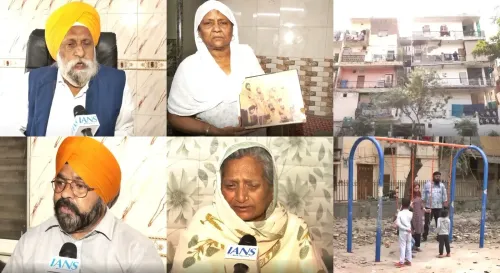
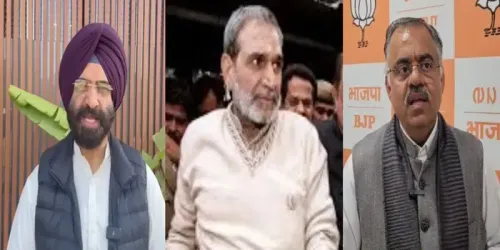
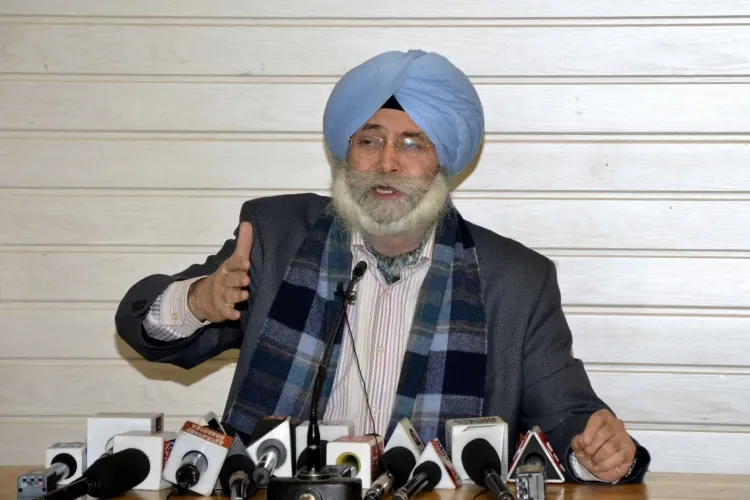
Bharatiya Janata Party (BJP) leader H.S. Phoolka on Wednesday in Chandigarh levelled sharp accusations against the Aam Aadmi Party (AAP), alleging that the party has been cynically exploiting the grief of 1984 anti-Sikh massacre survivors for electoral advantage rather than mounting a sincere campaign for justice. Phoolka, a noted Supreme Court lawyer who has spent nearly four decades fighting cases on behalf of massacre victims, addressed the media directly on the charge.
AAP's Protests Called 'Political Hypocrisy'
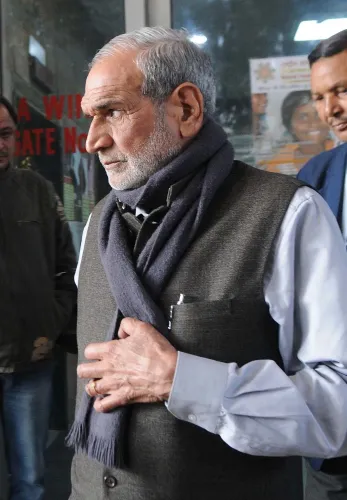
Phoolka described the AAP's recent public protests over the 1984 massacre as a textbook case of political hypocrisy. He specifically called out AAP MLA Ram Singh Netaji for attending a condolence meeting organised in honour of former Congress leader Sajjan Kumar, who was convicted for his role in the massacre. 'Those who genuinely stand with the victims cannot simultaneously express solidarity with those convicted in cases relating to crimes against them,' Phoolka said.
The charge cuts to a fundamental contradiction: a party publicly positioning itself as a champion of 1984 victims while one of its legislators paid respects to a man found guilty of crimes against those very victims.
Compensation Delay Under AAP Government in Delhi
Phoolka offered a concrete example of what he termed electoral manipulation of victims' suffering. After the Narendra Modi-led government came to power in 2014, the then Union Home Minister Rajnath Singh announced an additional ₹5 lakh compensation for each victim family of the massacre. The Centre directed states to disburse the funds without delay, given that families had already waited nearly 30 years.
According to Phoolka, while several states complied promptly, the distribution stalled in Delhi after the AAP government assumed office. He said he made repeated requests for disbursement, only to be told — in his account — that 'there was no point in giving it immediately and that it could be given closer to the Punjab elections.' The implication was stark: sanctioned relief money was being held back as a political instrument.
Phoolka said he resigned from all party posts in September 2015 in protest against the delay. Subsequently, on 1 November 2015, the Delhi government distributed the additional compensation at an event in Tilak Vihar. 'The victims had already waited 30 years. Their suffering should never have been viewed through the lens of electoral calculations,' he said.
Phoolka's Four-Decade Association with the 1984 Justice Campaign
Phoolka contextualised his own credibility on the issue, noting that his association with the BJP on the question of justice for 1984 victims predates his formal membership in the party by decades. He recalled serving as an adviser to Madan Lal Khurana during Khurana's tenure as Delhi Chief Minister, and noted that senior BJP leaders including Arun Jaitley and Ravi Shankar Prasad appeared in legal cases related to the massacre.
He also invoked former Prime Minister Atal Bihari Vajpayee, crediting him with efforts to document the true scale of the killings and stand with survivors despite political pressure. Phoolka argued that it was during Vajpayee's tenure, and again during Modi's tenure, that individuals responsible for the massacre were brought to justice — a claim that situates the BJP's record on the issue in a favourable light, though critics have long debated the pace and completeness of accountability across successive governments.
Why the Accusations Matter Now
The timing of Phoolka's remarks is significant. The 1984 anti-Sikh massacre remains a deeply charged issue in Punjab politics, where Sikh voters form the demographic backbone of the electorate. Both the BJP and the AAP have sought to position themselves as genuine advocates for victims, making the credibility contest between the two parties particularly intense. Phoolka's allegations, if they gain traction, could complicate the AAP's outreach to Sikh communities ahead of future electoral cycles.
This is not the first time the 1984 massacre has surfaced as a fault line between political parties in the run-up to elections — it has recurred as a mobilising issue in nearly every Punjab election cycle since the 1990s, with different parties alternately claiming the mantle of victim advocacy.
Point of View
And neither the AAP nor the Delhi government has publicly refuted the sequence of events he describes. What mainstream coverage often misses is the structural pattern: the 1984 massacre has been instrumentalised by virtually every major party at some point, making it difficult for victims to distinguish genuine advocacy from seasonal outrage. The real accountability question is not which party cares more, but why, four decades on, compensation and conviction processes remain incomplete enough to still be usable as election-season currency.
NationPress
17 Oct 2026
Frequently Asked Questions
What is H.S. Phoolka's accusation against AAP regarding the 1984 massacre?
BJP leader H.S. Phoolka has accused AAP of exploiting the grief of 1984 anti-Sikh massacre victims for electoral gain rather than genuinely fighting for justice. He specifically alleged that the AAP government in Delhi delayed distributing Centre-sanctioned ₹5 lakh compensation payments to victim families until closer to the Punjab elections.
Why did Phoolka criticise AAP MLA Ram Singh Netaji?
Phoolka questioned Ram Singh Netaji's participation in a condolence meeting organised for former Congress leader Sajjan Kumar, who was convicted for his role in the 1984 anti-Sikh massacre. Phoolka argued that attending such a meeting directly contradicts AAP's public stance of standing with massacre victims.
What was the ₹5 lakh compensation and why was its distribution delayed?
After the Modi government came to power in 2014, then Union Home Minister Rajnath Singh announced an additional ₹5 lakh compensation for each victim family of the 1984 massacre. According to Phoolka, the AAP government in Delhi held back distribution, and he was reportedly told it would be released closer to the Punjab elections; it was eventually distributed on 1 November 2015 in Tilak Vihar.
What is H.S. Phoolka's background in the 1984 justice campaign?
H.S. Phoolka is a noted Supreme Court lawyer who has spent nearly four decades fighting legal cases on behalf of 1984 massacre victims. He served as an adviser to then Delhi Chief Minister Madan Lal Khurana and has worked alongside senior BJP leaders including Arun Jaitley and Ravi Shankar Prasad on cases related to the massacre.
Why does the 1984 massacre remain a politically sensitive issue?
The 1984 anti-Sikh massacre, in which thousands of Sikhs were killed following the assassination of Prime Minister Indira Gandhi, remains unresolved for many survivors and is a deeply emotive issue for Sikh voters — a significant demographic in Punjab. It has recurred as a mobilising issue in nearly every Punjab election cycle since the 1990s, with multiple parties competing to claim the mantle of victim advocacy.