PIB Fact Check flags fake 'Operation Sindoor 2.0' letter linked to Defence Secretary
Synopsis
A forged letter invoking 'Operation Sindoor 2.0' and falsely attributed to Defence Secretary Rajesh Kumar Singh went viral — only to be swiftly debunked by PIB Fact Check, which confirmed the Ministry of Defence issued no such directive. The incident highlights the growing risk of fabricated official documents being weaponised to spread military-related misinformation.
Key Takeaways
PIB Fact Check on 17 June declared a viral letter about 'Operation Sindoor 2.0' as completely fabricated.
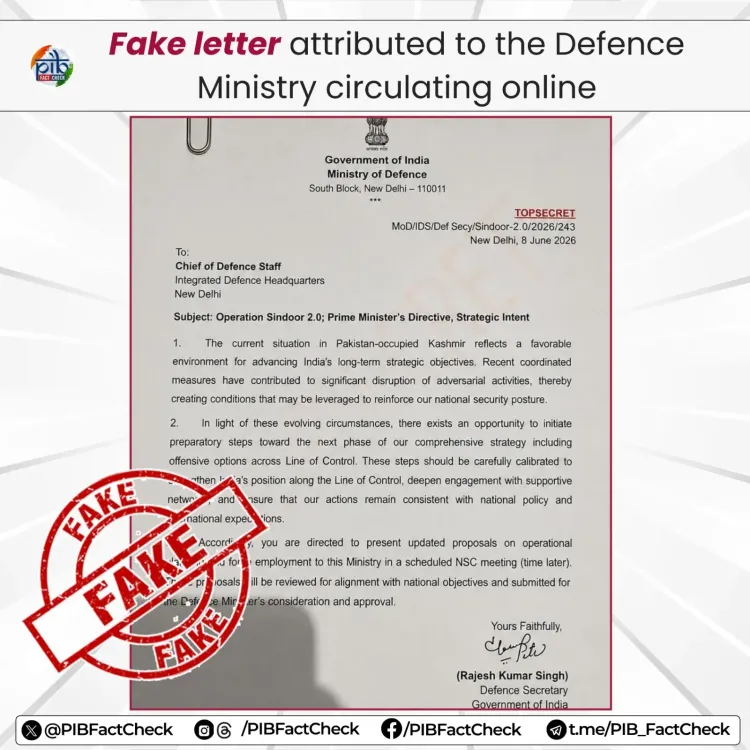
The forged document falsely attributed to Defence Secretary Rajesh Kumar Singh claimed to outline a Prime Minister's Directive on Strategic Intent .
The Ministry of Defence confirmed it issued no such letter or communication.
PIB Fact Check also debunked claims that ministers Kiren Rijiju and Arjun Ram Meghwal were attending events in London .
Photographs used in the London claim were actually from the All India Judges' Badminton Championship at Thyagaraj Stadium, New Delhi in November 2025 .
Citizens have been urged to report suspicious government-related content to @PIBFactCheck .
The Press Information Bureau (PIB) Fact Check unit on Wednesday, 17 June declared as fabricated a letter circulating widely on social media that purportedly bore the name of Defence Secretary Rajesh Kumar Singh and claimed to outline preparations for 'Operation Sindoor 2.0'. The government's official fact-checking arm confirmed that neither the Defence Secretary nor the Ministry of Defence had issued any such communication.
What the Fake Letter Claimed
The forged document, which PIB Fact Check shared publicly to alert citizens, carried the subject line: 'Operation Sindoor 2.0; Prime Minister's Directive, Strategic Intent.' It was being circulated across digital platforms as an official government directive, falsely attributing it to Defence Secretary Rajesh Kumar Singh.
PIB Fact Check stated categorically: 'This letter is Fake. Neither the Defence Secretary nor the Defence Ministry has issued any such letter.' The unit urged the public not to share or act upon the document.
Government's Warning to Citizens
Posting on social media platform X, PIB Fact Check cautioned citizens against falling for misinformation. 'Do not fall for fake news!' the unit said, adding that people should always rely on verified official sources before sharing any government-related information online.
The agency further advised: 'Beware of fake news circulating online and always depend on reliable official sources for verified information,' and asked citizens to report suspicious government-related content to @PIBFactCheck.
Earlier Debunks: Ministers in London Claim Also False
This is not the first misinformation alert issued by PIB Fact Check in recent days. The unit had previously debunked viral claims alleging that Union Minister of Parliamentary Affairs Kiren Rijiju and Union Minister of State for Law and Justice Arjun Ram Meghwal were visiting London alongside judges and participating in a badminton event there.
PIB Fact Check addressed those claims directly on X, stating: 'This claim is fake. Minister Kiren Rijiju and Union Minister of State for Law and Justice Arjun Ram Meghwal are not visiting London.'
The photographs used in those viral posts were, according to PIB Fact Check, taken during the All India Judges' Badminton Championship held at Thyagaraj Stadium in New Delhi in November 2025 — not in London as falsely claimed.
Broader Context: Misinformation Around Military Operations
The circulation of a fake letter invoking Operation Sindoor 2.0 is notable given the heightened public sensitivity around military affairs. Fabricated documents that mimic official government correspondence carry particular risk — they can trigger public anxiety, spread geopolitical rumours, and undermine institutional trust. This comes amid continued government efforts to counter coordinated misinformation campaigns on digital platforms.
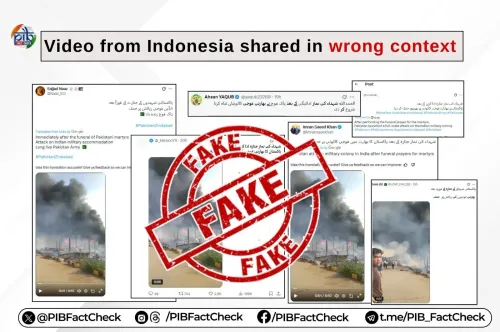
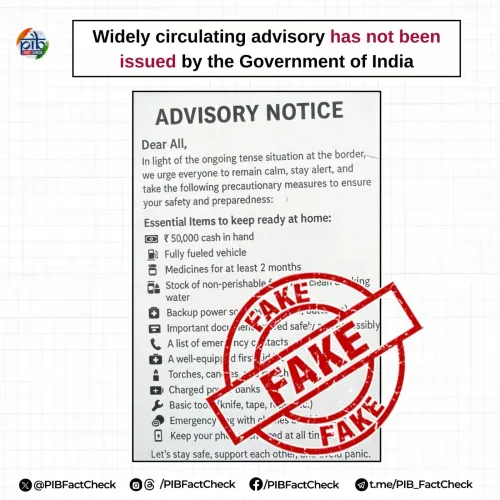
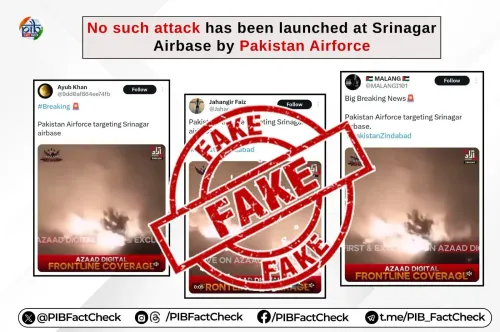
PIB Fact Check has increasingly become a frontline tool in flagging doctored documents, misleading images, and false attributions targeting government ministries and senior officials. Citizens are encouraged to verify any government communication through official ministry websites or the PIB portal before sharing it.
Point of View
Even after debunks. The government's reactive fact-check model works, but the speed at which these documents circulate before correction suggests a structural gap that official channels have yet to close.
NationPress
19 Sept 2026
Frequently Asked Questions
What is the fake 'Operation Sindoor 2.0' letter that PIB debunked?
It is a fabricated letter falsely attributed to Defence Secretary Rajesh Kumar Singh, claiming to detail preparations for 'Operation Sindoor 2.0' under a Prime Minister's directive. PIB Fact Check confirmed on 17 June that neither the Defence Secretary nor the Ministry of Defence issued any such communication.
Who is PIB Fact Check and why does it matter?
PIB Fact Check is the Press Information Bureau's official unit tasked with identifying and debunking misinformation related to the Government of India. It operates across social media platforms and encourages citizens to report suspicious government-related content for verification.
What should citizens do if they receive this fake letter?
Citizens should not share the document and should report it to @PIBFactCheck on X. PIB Fact Check advises verifying all government communications through official ministry websites or the PIB portal before forwarding them.
What other misinformation did PIB Fact Check recently debunk?
PIB Fact Check also debunked viral claims that Union Ministers Kiren Rijiju and Arjun Ram Meghwal were visiting London with judges for a badminton event. The photographs used in those posts were actually from the All India Judges' Badminton Championship held at Thyagaraj Stadium in New Delhi in November 2025.
Why is misinformation about military operations particularly dangerous?
Fabricated documents invoking military operation names can trigger public panic, spread geopolitical rumours, and undermine trust in government institutions. They are especially harmful because they mimic the format and authority of official correspondence, making them harder for ordinary citizens to identify as fake without expert verification.