Pilot demands justice for Dangawas Dalit massacre victims after acquittal
Synopsis
A special SC-ST court in Rajasthan acquitted all accused in the 2015 Dangawas massacre that killed five Dalits, citing benefit of the doubt. Congress leader Sachin Pilot has demanded the BJP state government pursue a High Court appeal and audit prosecution lapses to deliver justice to victim families.
Key Takeaways
The 2015 Dangawas incident in Nagaur, Rajasthan claimed six lives , with five victims from Dalit communities , in a land dispute.
A special SC-ST court acquitted all accused after more than 11 years of investigation and trial, granting benefit of the doubt.
Sachin Pilot held the BJP government accountable, noting both the original violence and the acquittal verdict occurred under BJP administrations.
Pilot demanded the state government examine lapses in investigation and prosecution, and pursue all available legal remedies including a High Court appeal.
The case reflects a broader pattern in Rajasthan of caste-linked land conflicts ending in acquittals despite SC/ST Act protections.
Dalit groups are pressing for a Rajasthan High Court appeal; the state government's response remains awaited.
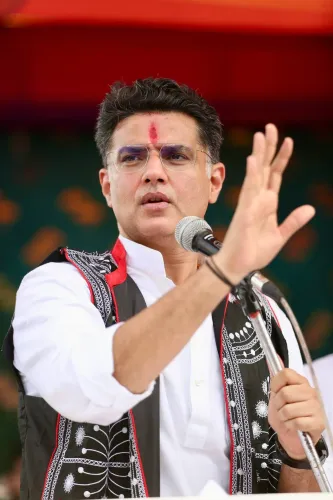
Eleven years after six people — five of them Dalit — were killed in a land dispute in Dangawas village, Nagaur district, Rajasthan, a special SC-ST court has acquitted all accused, citing benefit of the doubt. Congress leader and party general secretary Sachin Pilot has now squarely put the burden on the BJP state government, demanding it pursue every available legal remedy rather than let the verdict stand as the final word.
What the Dangawas verdict means for Dalit justice in Rajasthan
The 2015 Dangawas incident was no minor dispute. A clash over land left six dead, with five victims belonging to Scheduled Caste communities — precisely the population the Scheduled Castes and Scheduled Tribes (Prevention of Atrocities) Act, 1989 was designed to protect. The case moved through over a decade of investigation and trial, only to end with all accused walking free. Pilot's pointed question cuts to the core: how does a case of this magnitude collapse entirely at the bar?
In his post, Pilot wrote — 'सबसे बड़ा सवाल यही है कि इतनी बड़ी वारदात का सच आखिर सामने क्यों नहीं आ सका' ('the biggest question is why the truth behind such a large incident could not come out'). He did not stop at criticism. He called on the government to examine exactly where the investigation and prosecution fell short, and to ensure the affected families receive justice.
Pilot's case against the BJP: both the crime and the verdict happened on your watch
The political framing Pilot chose is deliberate and precise. The 2015 violence occurred under a previous BJP government in Rajasthan led by Vasundhara Raje. The acquittal verdict has now arrived under the current BJP administration. Pilot argues that double ownership — of the original failure in law enforcement and of the prosecution's collapse in court — makes the ruling party doubly responsible for what comes next.
He urged the government not to treat this as a closed matter. The state, he said, must explore all possible legal steps, including an appeal before a higher court, and must audit the lapses at both the investigation and prosecution stages that allowed this outcome.
A pattern Rajasthan has seen before
Dangawas is not an isolated case. Rajasthan has a documented history of caste-linked land conflicts that escalate into violence, drag through courts for years, and frequently end in acquittals — leaving victim families with neither justice nor closure. Opposition voices routinely raise questions about investigation quality and prosecutorial rigour in SC/ST atrocity cases when verdicts favour the accused. The SC/ST Act's special courts were created specifically to prevent this outcome; when they produce acquittals in mass-casualty cases, the systemic failure demands scrutiny beyond any single ruling.
Dalit groups are already pressing for a Rajasthan High Court appeal. The state government's next move — whether to challenge the acquittal or commission a review of prosecution lapses — will signal whether the political pressure translates into institutional accountability.
Eleven years is a long time to wait for justice. The families of Dangawas are still waiting.
Point of View
And reposition Congress as the voice of Dalit communities ahead of future electoral cycles in Rajasthan. The Dangawas acquittal fits a wider pattern where SC/ST Act cases collapse not on merit but on investigative and prosecutorial inadequacy — a structural problem that opposition parties exploit but rarely fix when in power themselves. The real test is whether the BJP government files an appeal, which would transform a political talking point into a measurable governance commitment. If it does not, Pilot's framing of double complicity — crime under BJP, acquittal under BJP — will have lasting political purchase.
NationPress
11 Aug 2026
Frequently Asked Questions
What happened in the 2015 Dangawas incident in Nagaur?
In 2015 , a land dispute in Dangawas village, Nagaur district, Rajasthan turned violent, resulting in the deaths of six people , of whom five were Dalits . The case was tried under the SC/ST (Prevention of Atrocities) Act in a special court over more than a decade.
Why were the accused in the Dangawas case acquitted?
The special SC-ST court acquitted all accused by granting them benefit of the doubt, suggesting the prosecution was unable to establish guilt beyond reasonable doubt — raising serious questions about the quality of investigation and evidence presented over the course of the trial.
What is Sachin Pilot demanding after the Dangawas verdict?
Sachin Pilot has demanded that the BJP state government not treat the acquittal as a closed matter. He wants the government to pursue all possible legal steps including a High Court appeal , and to identify where the investigation and prosecution failed victim families.
What is the SC/ST Prevention of Atrocities Act?
The Scheduled Castes and Scheduled Tribes (Prevention of Atrocities) Act, 1989 is a central law that mandates special courts and stringent provisions to try and punish crimes of violence, humiliation, and discrimination committed against Dalit and Adivasi communities.
Can the Rajasthan government appeal the Dangawas acquittal?
Yes. The state government, as the prosecuting party, has the legal standing to challenge the acquittal before the Rajasthan High Court . Dalit groups and opposition leaders including Sachin Pilot are pressing the government to file such an appeal.