Pilot invokes Imam Hussain's sacrifice on Muharram

Synopsis
Congress general secretary Sachin Pilot marked Muharram by honouring the martyrdom of Hazrat Imam Hussain at Karbala, calling the occasion an inspiration to walk the path of justice, faith, and humanity. The message reflects Congress's broader secular outreach to India's Muslim community.
Key Takeaways
Sachin Pilot , Congress general secretary and Chhattisgarh in-charge, posted a Muharram tribute on 27 June 2026 .
He invoked the martyrdom of Hazrat Imam Hussain at the Battle of Karbala (680 CE) as a call for justice, faith, and humanity.
Muharram is the first month of the Islamic calendar; Ashura on its tenth day marks the Karbala commemoration.
The message avoids sectarian framing, emphasising universal values of insaaf , iman , and insaniyat .
Congress leaders routinely use such occasions to reinforce the party's secular positioning and minority outreach.
Statements from other national and state leaders on Ashura are expected as the occasion draws closer.
Congress leader and party general secretary Sachin Pilot on Friday, 27 June 2026, shared a message marking Muharram, invoking the martyrdom of Hazrat Imam Hussain and his companions as an enduring call to walk the path of justice, faith, and humanity.
In his post on X, Pilot wrote: 'Moharram ka mahina insaaf aur neki ki raah par chalne waale Hazrat Imam Hussain evam unke saathiyon ki shahadat ki yaad dilaata hai.' ('The month of Muharram reminds us of the martyrdom of Hazrat Imam Hussain and his companions, who walked the path of justice and righteousness. This day inspires us to walk the path of justice, faith, and humanity.')
Context
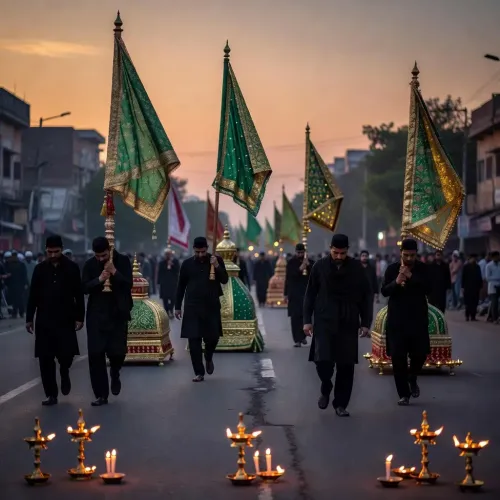
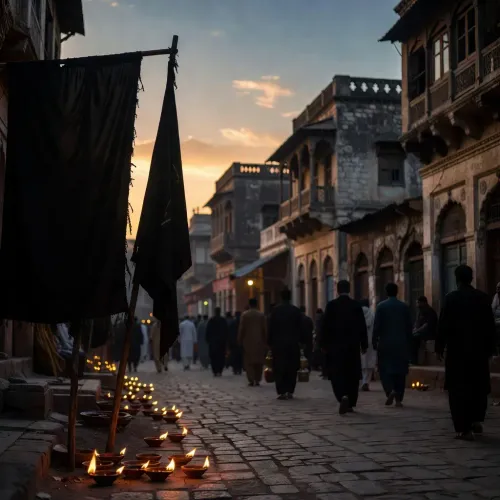
Muharram is the first month of the Islamic lunar calendar and one of its most solemn periods. The month culminates in Ashura, the tenth day, which commemorates the Battle of Karbala in 680 CE — when Imam Hussain, grandson of the Prophet Muhammad, along with a small group of companions and family members, was martyred after refusing to pledge allegiance to what he considered an unjust ruler. The event is observed with mourning processions, prayers, and reflection across Muslim communities worldwide, and is particularly significant for Shia Muslims, though its moral lessons resonate broadly across the faith.
Pilot's message centres on the universal values associated with Karbala — justice (insaaf), faith (iman), and humanity (insaniyat) — rather than on doctrinal or sectarian framing, a tone consistent with inclusive public discourse on the occasion.
Policy Backdrop
Indian political leaders across party lines have a long tradition of issuing statements on significant religious occasions, including Muharram, Eid, Diwali, Christmas, and Gurpurab, as a demonstration of commitment to the country's pluralist fabric. For the Indian National Congress, such messaging carries additional political weight: the party has historically positioned itself as the custodian of India's secular constitutional values, and Muharram statements are often framed to link the sacrifice at Karbala to ideals of justice enshrined in the Indian Constitution.
Pilot, who serves as Congress general secretary and Chhattisgarh in-charge, is among the party's prominent younger-generation voices. His message aligns with a broader pattern of Congress leaders using religious commemorations to articulate the party's secular identity, particularly in the context of ongoing debates over minority inclusion and pluralism in Indian public life.
Stakeholders and Impact
The message is addressed to India's Muslim community, which observes Muharram across the country through processions, majlis (congregational gatherings), and acts of remembrance. The occasion draws participation not only from Shia Muslims, for whom Ashura holds the deepest liturgical significance, but also from many Sunni Muslims and, in several parts of India, from members of other faiths who join in mourning processions as an expression of communal solidarity.
For the Congress party, such outreach is part of a sustained effort to reinforce its relationship with minority communities ahead of a period that includes several state-level electoral cycles. Chhattisgarh, Pilot's assigned state as in-charge, has a Muslim population that forms a notable part of the electorate in urban constituencies.
What's Next
As Ashura approaches, statements from other national and state-level leaders — including those from the ruling Bharatiya Janata Party and regional parties — are expected, along with organised Muharram processions in major cities including Delhi, Lucknow, Hyderabad, and Mumbai. Political participation in or proximity to these processions will be closely watched as an indicator of each party's outreach strategy toward Muslim voters. The broader conversation around pluralism, minority rights, and constitutional values is likely to intensify in the weeks ahead.
Point of View
Allowing the message to travel beyond a single community. As Chhattisgarh in-charge, Pilot's outreach also has a tactical dimension: urban Muslim voters in the state remain a constituency Congress cannot afford to take for granted. The emphasis on 'insaaf' (justice) is unlikely to be accidental — it maps onto a broader Congress narrative that frames the current political moment as a contest over constitutional values. Whether such messaging translates into durable electoral goodwill will depend on organisational follow-through beyond the calendar of religious occasions.
NationPress
26 Jun 2026
Frequently Asked Questions
Why did Sachin Pilot post about Muharram?
Sachin Pilot posted about Muharram to mark the Islamic month of mourning and pay tribute to the martyrdom of Hazrat Imam Hussain at Karbala, calling it an inspiration to pursue justice, faith, and humanity. Congress leaders routinely issue such messages on major religious occasions as part of the party's secular outreach.
What is the significance of Muharram and Ashura in India?
Muharram is the first month of the Islamic lunar calendar, and its tenth day — Ashura — commemorates the martyrdom of Imam Hussain at the Battle of Karbala in 680 CE. In India, it is observed with mourning processions, congregational gatherings, and acts of remembrance by Muslim communities across the country.
Who was Imam Hussain and why is he remembered?
Imam Hussain was the grandson of Prophet Muhammad who was martyred at Karbala in 680 CE after refusing to pledge allegiance to what he considered an unjust ruler. He is revered across Muslim communities for his stand against oppression, and his sacrifice is seen as a timeless symbol of justice and moral courage.
What is Sachin Pilot's current role in Congress?
Sachin Pilot is currently the general secretary of the Indian National Congress and the party's in-charge for Chhattisgarh. He previously served as Deputy Chief Minister of Rajasthan.
How does Congress use Muharram messaging politically?
Congress leaders use Muharram and other religious occasions to reinforce the party's secular identity and outreach to minority communities. Messages typically emphasise universal values — justice, faith, humanity — to appeal broadly while signalling inclusion to Muslim voters ahead of state and national elections.