Pilot Slams BJP Over Jodhpur Hospital C-Section Crisis
Synopsis
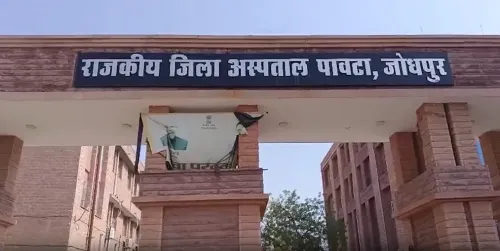
Congress leader Sachin Pilot on June 22, 2026, attacked the Rajasthan BJP government after eight women fell critically ill and two suffered kidney failure following C-sections at Jodhpur's Paota District Hospital, demanding a high-level inquiry, accountability, compensation, and better care for victims.
Key Takeaways
Eight women fell critically ill and two suffered kidney failure after caesarean deliveries at Paota District Hospital, Jodhpur .
Congress leader Sachin Pilot held the Rajasthan BJP government responsible, citing a pattern of healthcare deterioration under its watch.
Pilot referenced earlier maternal kidney failure cases at hospitals in Kota and Bikaner , some of which resulted in deaths, saying the government took no corrective action.
Pilot demanded a high-level inquiry , accountability for those responsible, financial compensation for affected families, and improved treatment for the women.
The incident highlights systemic concerns about post-operative care standards in Rajasthan 's district government hospitals.
Congress leader and Rajasthan in-charge Sachin Pilot on Monday, June 22, 2026, sharply criticised the Rajasthan BJP government after reports emerged that eight women fell critically ill and two suffered kidney failure following caesarean deliveries at Paota District Hospital in Jodhpur. Pilot demanded a high-level inquiry, accountability for those responsible, financial assistance for affected families, and immediate better treatment for the women.
Context
Posting on X in Hindi, Pilot called the reports 'atyant duhkhad evam chintajanak' (extremely saddening and alarming). He wrote that the BJP government had 'completely failed' to manage the state's deteriorating healthcare system. He specifically noted that despite earlier incidents of maternal kidney failure at hospitals in Kota and Bikaner — in some of which women had died — the government had not taken the matter seriously or adopted any concrete corrective measures.
Pilot's post stated that under BJP rule, medical and health services have been 'continuously deteriorating' and the condition of government hospitals has reached a 'peak of neglect,' with ordinary citizens 'paying with their lives.' He called for a high-level probe, accountability for those responsible, financial compensation for affected families, and proper medical care for the women impacted.
Policy Backdrop
Rajasthan has a long-standing record of maternal healthcare complaints at district-level government hospitals, a pattern that predates the current administration. The BJP government, which came to power in the state in late 2023, oversees a network of public hospitals including Paota District Hospital in Jodhpur, one of the state's largest cities. Opposition leaders have consistently used lapses in obstetric care — particularly at district and divisional hospitals — to question administrative oversight and resource allocation in public health.
Post-caesarean complications, including infections and organ failure, are recognised as indicators of systemic gaps in surgical hygiene protocols, post-operative monitoring, and drug quality control in government facilities. The references to similar incidents in Kota and Bikaner in Pilot's post suggest a pattern of recurring lapses across multiple government medical centres in the state.
Stakeholders and Impact
The most immediate victims are the eight women who fell critically ill and the two whose kidneys were reported to have failed — all patients who relied on a government hospital for delivery care. Their families face both a medical crisis and potential financial burden in seeking further treatment. Patients dependent on state-run hospitals across Rajasthan — particularly in lower-income and rural segments — are the broader constituency affected by any systemic failure in public obstetric care.
The Rajasthan state health department faces pressure to respond with a credible inquiry. The political stakes are significant: maternal mortality and hospital negligence are emotive issues that resonate strongly with voters, and the Congress party, as the principal opposition, has a strategic interest in sustaining scrutiny on the ruling BJP's health governance record.
What's Next
Attention will now turn to whether the Rajasthan government orders a formal departmental or judicial inquiry into the Paota District Hospital incident, announces compensation for affected families, or issues directives tightening post-operative protocols across district hospitals. Assembly questions and opposition adjournment motions on hospital safety standards are a likely next step. The health department's response — or absence of one — will shape the political narrative around public healthcare delivery in the state in the weeks ahead.
Point of View
Deploying a visceral maternal health crisis to undercut the BJP government's administrative credibility ahead of any future electoral cycle in Rajasthan. By linking the Jodhpur incident to earlier cases in Kota and Bikaner, he constructs a pattern of systemic neglect rather than an isolated lapse — a framing that is far harder for the ruling party to dismiss. The demand for a 'high-level inquiry' is standard opposition playbook, but its potency depends on whether the state government responds swiftly; silence or delay will only amplify the narrative. This episode fits a broader national pattern in which opposition leaders use public hospital failures to contest the ruling party's governance credentials on basic service delivery.
NationPress
22 Jun 2026
Frequently Asked Questions
What happened at Paota District Hospital in Jodhpur?
Eight women fell critically ill and two suffered kidney failure after caesarean deliveries at Paota District Hospital in Jodhpur, according to reports cited by Congress leader Sachin Pilot on June 22, 2026.
What did Sachin Pilot demand after the Jodhpur hospital incident?
Sachin Pilot demanded a high-level inquiry into the incident, accountability for those responsible, financial assistance for the affected families, and better medical treatment for the women who suffered complications.
Has this happened before in Rajasthan government hospitals?
Pilot's post referenced earlier incidents of maternal kidney failure at hospitals in Kota and Bikaner, in some of which women reportedly died, alleging that the government failed to take corrective action after those cases.
Which government is in charge of Rajasthan's hospitals?
The BJP government, which came to power in Rajasthan in late 2023, oversees the state's public hospital network, including Paota District Hospital in Jodhpur.
Why is Sachin Pilot criticising the Rajasthan government over this?
As Congress general secretary and Rajasthan in-charge, Pilot is the principal opposition voice on state governance. He argues the BJP government has consistently failed to address deteriorating healthcare infrastructure, leaving ordinary citizens to bear the consequences.