Sam Pitroda backs CJP protests, calls student movement India's 'Monsoon Spring'
Synopsis
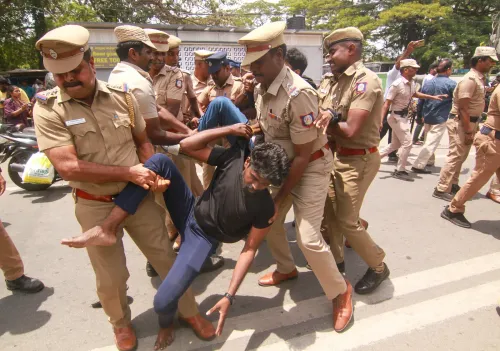
Sam Pitroda, speaking from Washington at 85, has compared India's Cockroach Janta Party student uprising to the Arab Spring — calling it a 'Monsoon Spring' that broke the culture of fear. In a sweeping interview, he questioned India's GDP story, its global standing, and whether the judiciary has the courage to act. The remarks land squarely in the middle of a politically charged moment.
Key Takeaways
Sam Pitroda praised the Cockroach Janta Party (CJP) student movement on 15 October 2026 , calling it India's ' Monsoon Spring .' He identified five parallel crises driving unrest: alleged institutional capture, electoral mistrust, minority marginalisation, poor governance delivery, and technology-driven misinformation.
Pitroda cited 100,000 Indian students leaving for overseas education annually, at an estimated cost of $50 billion per year, as evidence of governance failure.
He dismissed the ' Vishwa Guru ' framing as 'bogus', questioning India's absence from meaningful engagement in the Russia-Ukraine and Gaza conflicts.
On the 2029 elections, he declined to predict whether Rahul Gandhi would become Prime Minister, saying the choice belongs to the people of India.
Pitroda, now 85 , confirmed he has no near-term plans to visit India, citing health and family reasons.
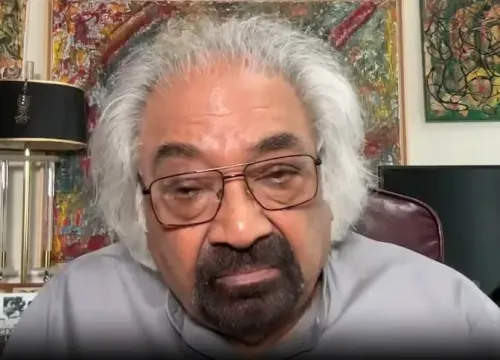
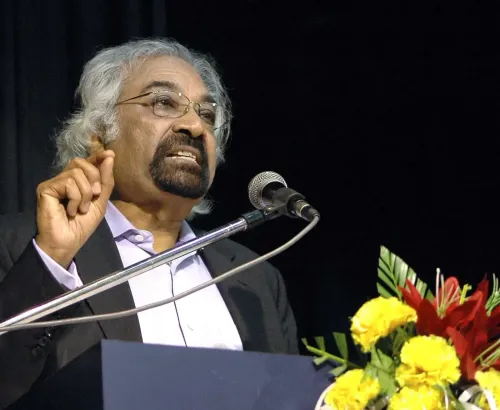
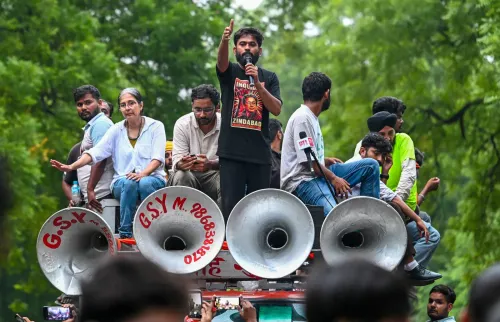
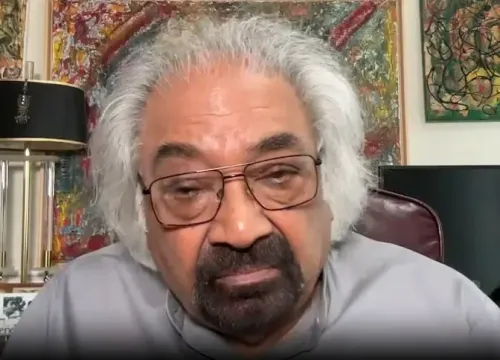
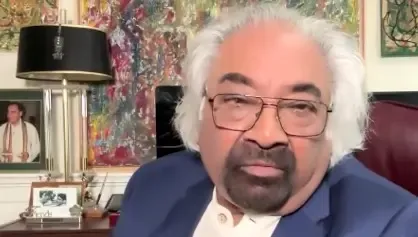
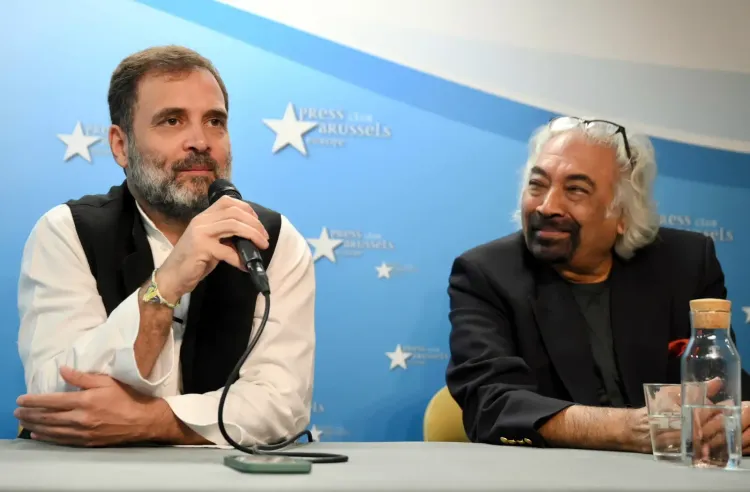
Indian Overseas Congress chief Satyanarayan Pitroda, widely known as Sam Pitroda, on Thursday, 15 October 2026, praised the Cockroach Janta Party (CJP) student movement, describing it as a pivotal force that had galvanised civil society and emboldened ordinary citizens to speak up. Speaking from Washington, the 85-year-old technology adviser and Congress veteran drew a sweeping comparison between the student uprising and the Arab Spring, calling it India's own 'Monsoon Spring'.
What Pitroda said about the CJP movement
Pitroda argued that the CJP protests were not an isolated event but part of five interlocking crises he believes are reshaping Indian politics: an alleged attack on democratic institutions, erosion of trust in the electoral system, the marginalisation of minorities and Dalits, poor governance delivery, and the weaponisation of technology for political propaganda.
'A small group of students who felt hurt after someone called them a Cockroach came together at the right moment because there were issues with the examination, paper leak, poor infrastructure, bad education, increasing tuition fees, coaching classes and unemployment,' he said. 'The end result was that they were fearless, they had courage, and they really could speak up.'
Pitroda acknowledged that some protesters used intemperate language but said their anger opened up space for those who had been too afraid to raise their voices. 'Those who were afraid to speak got courage. Civil society felt, hey, maybe something will happen now,' he added.
Allegations on democracy and governance
Pitroda levelled sharp criticism at what he characterised as institutional capture under the current dispensation, alleging that control of the media, the Enforcement Directorate, and an 'authoritarian mindset' had silenced dissent. He also questioned whether economic growth — which he acknowledged was 'at 7 per cent, or whatever the number is' — was reaching ordinary citizens, pointing to what he described as unequal wealth distribution, stagnant wages, and a failing education system.
'You see 20 people multiplying their wealth a hundred times, and the numbers look good, but that did not help the workers or the common man,' he said. He further noted that 100,000 Indian students leave for overseas education every year, at an estimated cost of $50 billion annually, and questioned why India had failed to build world-class liberal arts and humanities institutions despite decades of economic growth.
On the judiciary and political opposition
Asked whether courts should intervene to address electoral grievances, Pitroda said judicial action was 'one option' — but was careful to clarify he was not directing the judiciary. 'Who am I to tell them?' he said. He also expressed respect for Chief Justice of India's decision not to meet Opposition leaders personally, saying the CJI's insistence on written submissions was 'a process that he wants to follow, and I respect that.'
On whether the CJP should formally align with Congress leader Rahul Gandhi, Pitroda said the student group would serve the country better as an independent pressure group or moral force, focused on fixing schools, primary health centres, and mid-day meal programmes — 'irrespective of which party is in power.'
Views on foreign policy and Elon Musk
Pitroda was sceptical about India's global standing, dismissing the 'Vishwa Guru' framing as 'bogus.' He questioned India's absence from meaningful engagement in the Russia-Ukraine conflict over five years and its limited role in the Gaza crisis, saying: 'We don't have a seat at the table today.' On Elon Musk's potential entry into India's telecom space, he said the question was one of policy rather than personalities, and that any decision on satellite spectrum must be evaluated on whether it delivers services at lower cost to Indian consumers.
Pitroda also offered a measured clarification on Rahul Gandhi's reported exchange with Musk, saying it 'didn't mean anything' and should not be read as an endorsement of spectrum allocation. He declined to comment on Prime Minister Narendra Modi's personal qualities, saying it was 'not my job' to assess individuals.
On Rahul Gandhi becoming Prime Minister
Asked whether Rahul Gandhi could become Prime Minister by 2029, Pitroda said the decision rested entirely with the people of India, offering no personal prediction. He also confirmed he had no near-term plans to visit India, citing his age, his wife's health, and the fact that most of his family — around 100 relatives — now reside in the United States.
Pitroda's remarks are likely to reignite a political debate over Opposition messaging, the legitimacy of the student protest movement, and the Congress party's own positioning ahead of the next general election cycle.
Point of View
But the Arab Spring analogy cuts both ways: those uprisings largely failed to produce stable democratic transitions. His critique of GDP growth bypassing the poor is substantive and echoed by independent economists, but his dismissal of India's foreign policy weight — including its role in facilitating the 2025 Ukraine ceasefire talks — risks overstating the case. Most tellingly, he sidesteps the Congress party's own accountability for the same governance failures he attributes to the current dispensation, particularly on education and primary health. The interview energises a base; it does not build a cross-cutting argument.
NationPress
15 Oct 2026
Frequently Asked Questions
What did Sam Pitroda say about the Cockroach Janta Party?
Sam Pitroda praised the Cockroach Janta Party (CJP) student movement on 15 October 2026, describing it as a fearless uprising that galvanised civil society and gave courage to those who were previously too afraid to speak. He compared the movement to the Arab Spring, calling it India's own 'Monsoon Spring.'
Why did Pitroda say India is at a crossroads?
Pitroda described two competing visions for India's future: one rooted in religion-based ideology, which he associated with the RSS, and another rooted in the secular, pluralist values he attributed to India's founding leaders. He said: 'People of India will have to decide what kind of nation they want to build.'
What did Pitroda say about India's global standing?
Pitroda dismissed India's 'Vishwa Guru' self-image as 'bogus', arguing that India lacks meaningful influence in major global conflicts such as the Russia-Ukraine war and the Gaza crisis. He said India does not have 'a seat at the table' in global decision-making, despite its size.
Did Pitroda say Rahul Gandhi would become Prime Minister in 2029?
No. When asked whether Rahul Gandhi could become Prime Minister by 2029, Pitroda declined to predict, saying the decision rested entirely with the people of India.
What did Pitroda say about the CJP joining Congress?
Pitroda said the CJP would serve the country better as an independent pressure group or moral force, focusing on fixing schools, primary health centres, and mid-day meal programmes regardless of which party is in power, rather than aligning formally with any political party.