Piyush Goyal Chairs Berlin Roundtable on India-Germany Tech Ties
Synopsis
Union Commerce Minister Piyush Goyal addressed a Berlin roundtable with heads of German research organisations, advancing India-Germany collaboration in AI, advanced materials, and innovation ecosystems — building on a Strategic Partnership and the IGSTC framework that date back to 2000 and 2008 respectively.
Key Takeaways
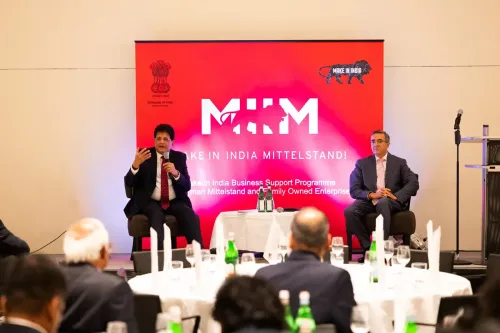
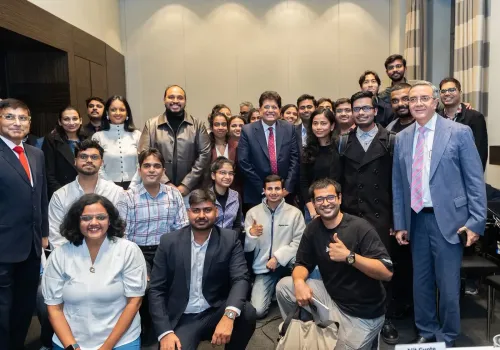
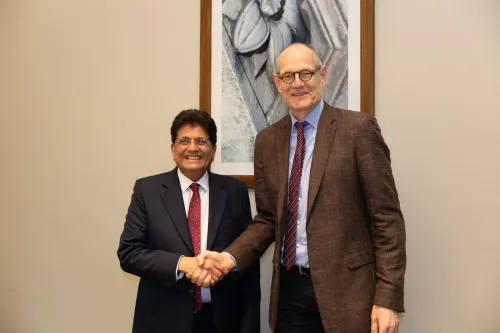
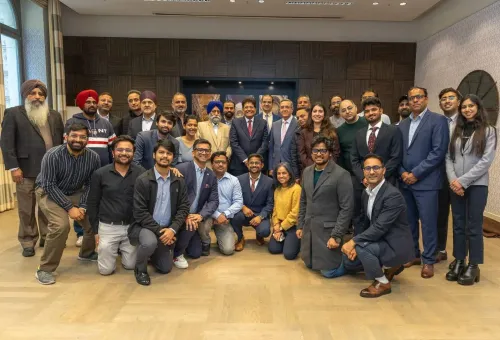
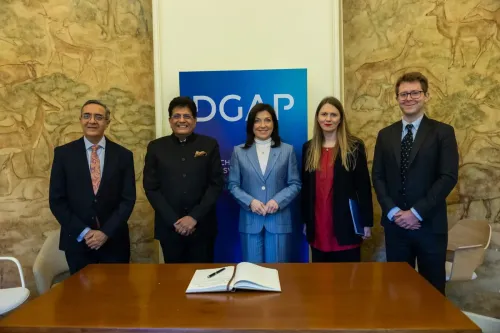
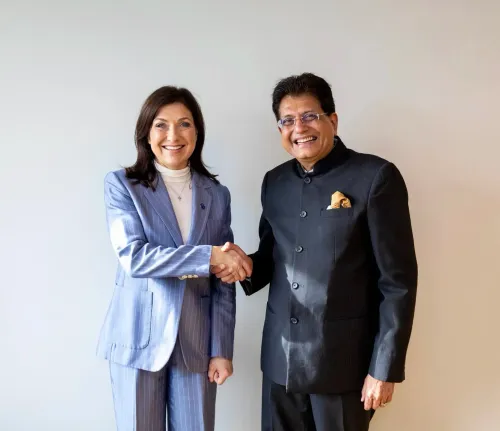
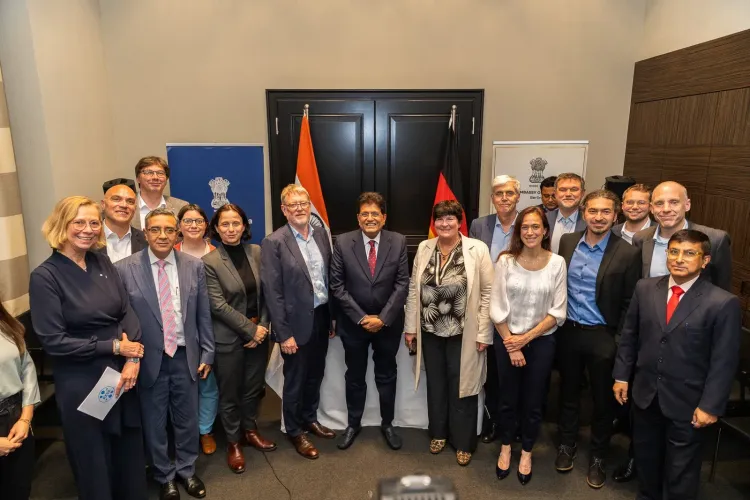
Union Commerce Minister Piyush Goyal chaired a roundtable in Berlin with heads of prominent German research organisations on October 25, 2026 .
Talks focused on artificial intelligence , advanced materials , and strengthening linkages between research institutions, startups , and industry.
The engagement builds on the India-Germany Strategic Partnership (2000) and the Indo-German Science and Technology Centre (IGSTC, 2008) .
The roundtable is part of India's broader push to deepen S&T partnerships with key European nations including France and the United Kingdom .
Possible outcomes include follow-up MoUs and joint funding calls from the bilateral research community.
From a conference room in Berlin, Union Commerce and Industry Minister Piyush Goyal sat across from the heads of some of Germany's most prominent research organisations on Saturday, October 25, 2026 — and the agenda was nothing short of the future: artificial intelligence, advanced materials, and the institutional scaffolding that will hold India's technology ambitions together.
What Was on the Table in Berlin
Goyal addressed the roundtable as part of India's intensifying outreach to European science and technology partners. Discussions centred on expanding collaboration in frontier technologies and innovation, with a particular thrust on advanced materials and artificial intelligence — two domains where both nations are investing heavily. Equally significant was the focus on tightening the connective tissue between research institutions, startups, and industry on both sides, a model that moves beyond academic exchange toward commercially deployable innovation.
Two Decades of India-Germany Science Diplomacy
The conversation in Berlin lands on a foundation built over more than two decades. India and Germany formalised a Strategic Partnership in 2000, embedding science and technology cooperation as a core pillar. That framework produced the Indo-German Science and Technology Centre (IGSTC), launched in 2008, which has since funded bilateral research projects and served as the primary institutional channel for joint work. Saturday's roundtable represents the latest — and arguably most technology-forward — chapter in that arc.
Why AI and Advanced Materials, Why Now
The choice of focus areas is not incidental. India's national push on AI — backed by dedicated missions under its broader technology self-reliance drive — needs global research partnerships to close gaps in compute, talent pipelines, and applied research. Germany, with its deep industrial base and world-class research infrastructure, is a natural counterpart. Advanced materials, meanwhile, sit at the intersection of semiconductor supply chains, green energy, and defence manufacturing — sectors where both governments are racing to reduce dependencies and build sovereign capability. Bringing startups into that loop signals that the ambition is commercial translation, not just co-authored papers.
The Wider European Play
The Berlin roundtable fits a pattern. India has been deepening science and technology engagement with Germany alongside parallel partnerships with France and the United Kingdom, threading a European network of applied research alliances that complement its Indo-Pacific tech diplomacy. For Germany, India represents both a growth market and a research collaborator at scale — a pairing that makes institutional linkages valuable on both ends of the handshake.
Watch for possible follow-up memoranda of understanding and joint funding calls as the roundtable's outcomes are formalised — and for the bilateral agenda to resurface at the next India-Germany intergovernmental consultations.
Point of View
Startup-linked R&D. For Goyal, the Berlin visit reinforces Commerce Ministry's expanding role as a vehicle for technology diplomacy, not just trade. The emphasis on AI and advanced materials signals that India is positioning these bilateral engagements to service its domestic self-reliance goals, not merely to exchange goodwill. If follow-up MoUs materialise, this roundtable could become a template for India's European technology outreach.
NationPress
24 Oct 2026
Frequently Asked Questions
What did Piyush Goyal do in Berlin in October 2026?
Goyal addressed a roundtable with heads of prominent German research organisations in Berlin, focusing on expanding India-Germany collaboration in frontier technologies, AI, advanced materials, and research-startup-industry linkages.
What is the Indo-German Science and Technology Centre?
The Indo-German Science and Technology Centre (IGSTC) was launched in 2008 as a bilateral institution to fund and facilitate joint research projects between Indian and German scientists and institutions.
When did India and Germany establish their Strategic Partnership?
India and Germany formalised their Strategic Partnership in 2000 , which includes dedicated science and technology cooperation mechanisms as a core component.
Why is India focusing on AI and advanced materials with Germany?
Both AI and advanced materials are central to India's national technology self-reliance push and global value-chain integration goals. Germany's industrial base and research infrastructure make it a strong partner for applied, commercially deployable research in these areas.
What could follow from the Berlin roundtable?
Potential outcomes include follow-up memoranda of understanding, joint research funding calls between Indian and German institutions, and further bilateral agenda items at the next India-Germany intergovernmental consultations.