Piyush Goyal Hails Hydrogen Train as Make In India Win
Synopsis
Union Commerce Minister Piyush Goyal on 17 July 2026 hailed India's hydrogen train as smokeless and a landmark Make in India success, spotlighting Indian Railways' push to decarbonise rail transport through indigenous fuel-cell technology.
Key Takeaways
Union Commerce Minister Piyush Goyal publicly praised India's hydrogen train on 17 July 2026 via a post on X.
The minister described the train as 'smokeless' and 'a very successful example of Make in India.' The hydrogen train uses fuel-cell technology and emits only water vapour, making it emission-free at the point of operation.
The Make in India initiative, launched in September 2014 , provides the policy framework under which the train was developed domestically.
Indian Railways , domestic manufacturers, and passengers are the primary stakeholders in the programme's expansion.
Further rollout on identified routes and new policy or budgetary support are the key developments to watch.
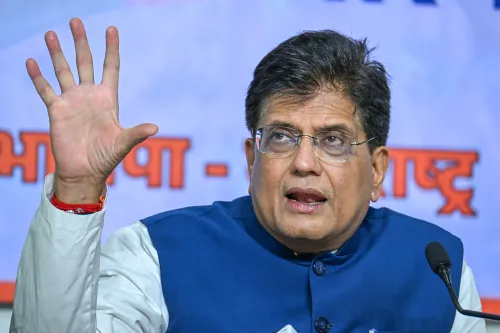
Union Commerce and Industry Minister Piyush Goyal on Friday, 17 July 2026, praised India's hydrogen-powered train as both a smokeless transport solution and a landmark success of the Make in India initiative, sharing his remarks on X alongside a video of the train.
Posting in Hindi, the minister wrote: 'भारत की हाइड्रोजन ट्रेन धुआं रहित तो है ही, ये Make In India का भी एक बहुत सफल उदाहरण है।' — translated: 'India's hydrogen train is not only smokeless, it is also a very successful example of Make in India.'
Context
Indian Railways has been developing indigenous hydrogen fuel-cell train technology as part of a broader push to decarbonise rail transport and reduce dependence on imported rolling stock. The hydrogen train runs on fuel cells that emit only water vapour, making it emission-free at the point of operation. Goyal's post positions this as a convergence of green technology and domestic manufacturing capability.
Policy Backdrop
The Make in India initiative was launched in September 2014 to encourage domestic manufacturing, reduce import dependence, and promote indigenous technology development across sectors. The hydrogen train project sits squarely within this framework, with key components engineered and assembled within the country. The initiative has increasingly extended its scope to advanced technologies including green energy systems and next-generation transport.
India's rail decarbonisation ambitions are linked to wider national energy security goals. By producing hydrogen trains domestically, Indian Railways aims to cut lifecycle emissions while building a local supply chain for fuel-cell technology — reducing reliance on foreign manufacturers for critical rail equipment.
Stakeholders and Impact
Indian Railways, domestic component manufacturers, and rail passengers stand to benefit most directly from the programme's expansion. For manufacturers, the project represents a high-value technology segment that could generate export potential over time. For passengers, smokeless hydrogen trains promise quieter, cleaner journeys, particularly on routes currently served by diesel rolling stock.
The initiative also carries significance for India's climate commitments. Replacing diesel trains with hydrogen-powered alternatives on identified corridors would contribute to reducing the carbon footprint of one of the world's largest rail networks. Domestic production further ensures that the economic value of this transition stays within India.
What's Next
Attention will now turn to the rollout of hydrogen trains on specific routes and any budgetary or policy announcements that could accelerate the programme's scale. The government is expected to identify priority corridors where hydrogen trains can replace ageing diesel units. Any expansion of the programme will be closely watched as a test of India's capacity to industrialise green transport technology at scale.
Point of View
Not competing, goals. By invoking Make in India alongside decarbonisation, the minister frames the railway sector's clean-energy transition as a domestic manufacturing opportunity rather than merely an import of foreign solutions. This fits a broader BJP government pattern of anchoring climate-adjacent policy announcements within the self-reliance narrative, lending political weight to what might otherwise be a technical milestone. The post also implicitly sets a benchmark: future rail modernisation efforts will be measured against this template of indigenous green innovation.
NationPress
17 Jul 2026
Frequently Asked Questions
What is India's hydrogen train?
India's hydrogen train is an indigenously developed fuel-cell-powered train that runs without emitting smoke or carbon dioxide, releasing only water vapour. It is part of Indian Railways' effort to decarbonise rail transport using domestically manufactured technology.
How is the hydrogen train connected to Make in India?
The hydrogen train is considered a Make in India success because its key technology and components were developed and produced within India, reducing dependence on imported rolling stock and advancing the government's domestic manufacturing goals.
What did Piyush Goyal say about the hydrogen train?
On 17 July 2026, Commerce Minister Piyush Goyal posted on X saying India's hydrogen train is not only smokeless but also a very successful example of Make in India, sharing a video of the train alongside his remarks.
When was Make in India launched?
Make in India was launched in September 2014 to boost domestic manufacturing, reduce import dependence, and encourage indigenous development of technology across sectors including transport and green energy.
What are the next steps for India's hydrogen train programme?
The focus is expected to shift to identifying specific rail corridors for hydrogen train deployment and any new budgetary or policy support that could expand the programme's scale across the Indian Railways network.