Piyush Goyal Meets EU Climate Chief on Clean Growth Ties
Synopsis
Commerce Minister Piyush Goyal met EU Climate Commissioner Wopke Hoekstra on 14 July 2026, discussing India–EU cooperation on renewable energy, green hydrogen, clean technologies, and resilient value chains to advance shared net-zero ambitions.
Key Takeaways
Piyush Goyal met EU Commissioner Wopke Hoekstra on 14 July 2026 to discuss India–EU climate and clean-growth cooperation.
Talks covered renewable energy, green hydrogen, clean technologies, innovation, investments and resilient value chains .
The India–EU Clean Energy and Climate Partnership , launched in 2016 , and the Trade and Technology Council , created in 2022 , form the institutional backbone of the relationship.
India's net-zero target of 2070 , pledged at COP26 , and the EU's Carbon Border Adjustment Mechanism are key policy drivers shaping the bilateral agenda.
Follow-up outcomes on green hydrogen standards and clean-tech investment frameworks are expected at the next India–EU summit .
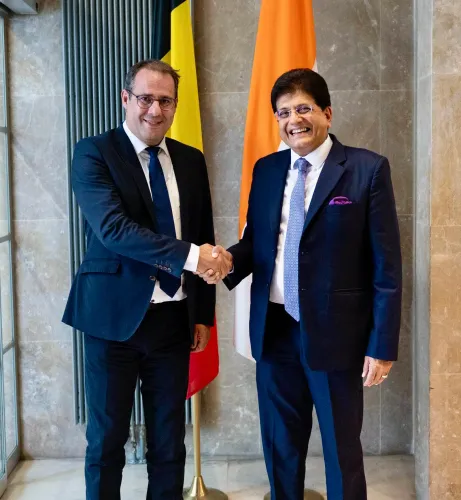
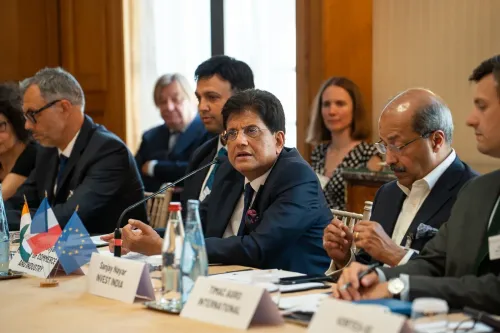
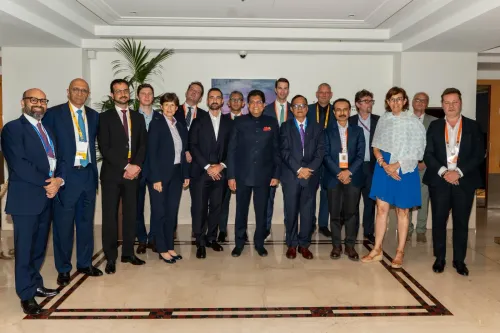
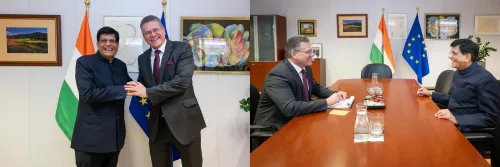
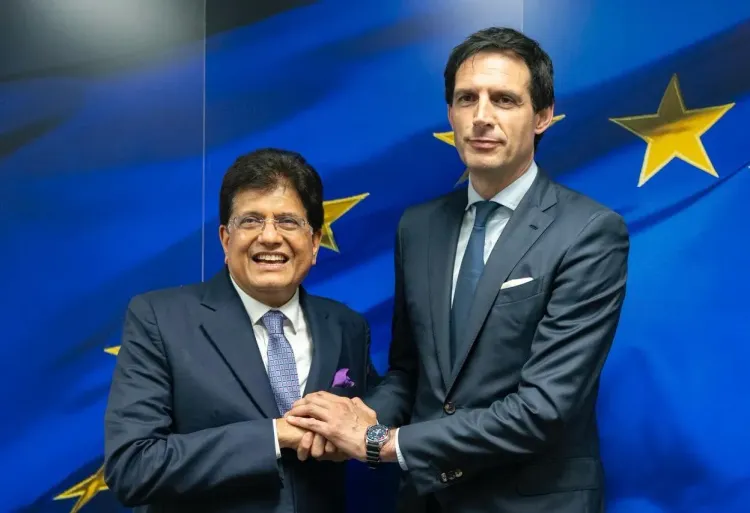
Union Commerce and Industry Minister Piyush Goyal met European Union Commissioner for Climate, Net-Zero and Clean Growth Wopke Hoekstra on Tuesday, 14 July 2026, holding wide-ranging discussions on deepening India–EU cooperation across clean energy, sustainable industry, and shared net-zero goals.
Context
The meeting brought together two senior officials whose portfolios sit at the intersection of trade, technology, and climate policy. Goyal, who also serves as Leader of the House in the Rajya Sabha, represents India's industrial and commercial interests, while Hoekstra steers the EU's binding climate agenda under the European Green Deal. The two exchanged views on what Goyal described as 'strengthening India–EU cooperation in clean growth, climate action and sustainable industrial development.'
Their talks covered a broad agenda: expanding collaboration in renewable energy, green hydrogen, clean technologies, innovation, investments, and resilient value chains — all framed around 'shared net-zero ambitions,' in Goyal's words.
Policy Backdrop
The meeting builds on a relationship with deep institutional roots. The India–EU Clean Energy and Climate Partnership was launched at the 2016 bilateral summit, establishing joint working mechanisms on low-carbon technologies. More recently, the Trade and Technology Council, created in 2022, broadened the partnership to include supply-chain resilience and emerging technologies — themes that featured prominently in Tuesday's agenda.
India committed to a net-zero emissions target by 2070 at COP26 in Glasgow in 2021, a pledge that has since anchored its international climate diplomacy. On the EU side, the European Green Deal sets legally binding targets for member states and is reshaping trade relationships through instruments such as the Carbon Border Adjustment Mechanism (CBAM), which will affect Indian exporters in carbon-intensive sectors. Aligning India's production-linked incentive schemes for green technologies with EU supply-chain requirements has emerged as a priority area for both sides.
Stakeholders and Impact
The discussions carry direct implications for Indian renewable energy firms and green hydrogen developers seeking access to European markets and capital. Green hydrogen, in particular, has become a focal point: India's National Green Hydrogen Mission targets production of 5 million metric tonnes per annum by 2030, and EU demand for clean hydrogen imports is expected to grow substantially as the bloc phases down fossil fuels.
Resilient value chains — a phrase that has gained prominence since global supply disruptions — point to both sides' interest in reducing dependence on single-source suppliers for critical minerals, solar components, and battery technologies. Indian manufacturers stand to benefit if agreements on standards and certification are aligned with EU requirements, lowering non-tariff barriers for clean-tech exports.
What's Next
The immediate follow-up will be watched at the next India–EU summit, where any joint working group outcomes on green hydrogen standards and clean-technology investment frameworks are expected to be formalised. Tuesday's ministerial-level engagement signals political momentum ahead of that summit, and any concrete deliverables — joint projects, pilot programmes, or investment commitments — would mark a tangible step beyond the broad cooperation language that has characterised earlier rounds.
As both India and the European Union accelerate their industrial green transitions, the depth of alignment they can achieve on standards, finance, and supply chains will increasingly determine whether their net-zero ambitions translate into shared economic opportunity or remain parallel, disconnected tracks.
Point of View
New Delhi is signalling that it views the clean-energy transition as a trade and investment opportunity as much as a climate obligation. The timing matters: with the EU's Carbon Border Adjustment Mechanism beginning to bite, India needs early alignment on standards to protect its exporters in carbon-intensive sectors. This ministerial-level engagement ahead of a formal summit suggests both sides are working to convert broad partnership language into concrete, commercially meaningful outcomes.
NationPress
14 Jul 2026
Frequently Asked Questions
Why did Piyush Goyal meet EU Commissioner Wopke Hoekstra?
Piyush Goyal met Wopke Hoekstra on 14 July 2026 to discuss strengthening India–EU cooperation on clean growth, climate action, renewable energy, green hydrogen, and sustainable industrial development in pursuit of shared net-zero ambitions.
What is India's net-zero target?
India committed to achieving net-zero carbon emissions by 2070, a pledge made by Prime Minister Narendra Modi at the COP26 climate summit in Glasgow in 2021.
What is the EU Carbon Border Adjustment Mechanism and how does it affect India?
The Carbon Border Adjustment Mechanism (CBAM) is an EU policy that places a carbon price on imports of certain goods from countries with less stringent climate policies. It affects Indian exporters in sectors such as steel, aluminium, and cement, making alignment on green standards increasingly important for India.
What is the India–EU Clean Energy and Climate Partnership?
The India–EU Clean Energy and Climate Partnership was launched at the 2016 bilateral summit to establish joint cooperation mechanisms on low-carbon technologies, renewable energy, and climate policy between India and the European Union.
What is India's green hydrogen target?
Under India's National Green Hydrogen Mission, the country aims to produce 5 million metric tonnes of green hydrogen per annum by 2030, positioning India as a potential major supplier to global markets including the European Union.