How are PLI schemes contributing to Rs 2 lakh crore investment and boosting production worth Rs 18.7 lakh crore?
Click to start listening
Synopsis
In an astounding development, the PLI schemes have driven a staggering Rs 2 lakh crore investment, leading to a production surge worth Rs 18.7 lakh crore in India. This growth has not only enhanced manufacturing capabilities but also created over 12.6 lakhs jobs, signifying a remarkable turnaround in multiple sectors.
Key Takeaways
- Rs 2 lakh crore investment realized under PLI schemes.
- Incremental production or sales exceed Rs 18.7 lakh crore.
- Over 12.6 lakhs jobs created.
- Significant improvements in domestic manufacturing capacity.
- India is the third-largest player in the global pharmaceuticals market.
New Delhi, Dec 12 (NationPress) A remarkable investment of Rs 2 lakh crore has been achieved by September this year through the production-linked incentive (PLI) schemes spanning 14 sectors. This initiative has led to an impressive increase in production and sales exceeding Rs 18.7 lakh crore and has generated employment for over 12.6 lakhs individuals, both directly and indirectly, as reported to Parliament on Friday.
The PLI program, implemented across multiple key sectors, has significantly enhanced domestic manufacturing capabilities, attracted substantial investments, and bolstered export growth in the relevant sectors.
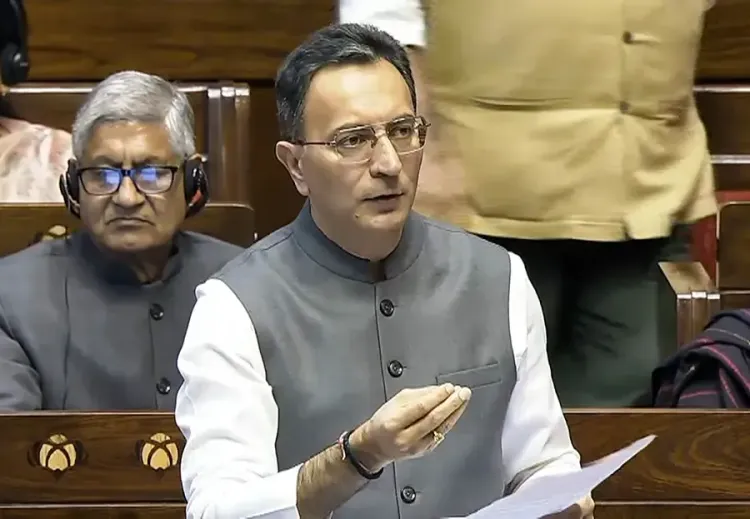
The impact of the PLI schemes has been considerable across various industries in India, according to Jitin Prasada, Minister of State for Commerce and Industry. He noted in a written reply to the Rajya Sabha that the scheme has notably narrowed the gap between domestic manufacturing capacity and the demand for essential medications.
Within the PLI Scheme for medical devices, 21 projects have commenced the production of 54 unique medical devices, including advanced technologies like Linear Accelerator (LINAC), MRI, CT-Scan, Heart Valve, Stent, Dialyser Machine, C-Arm, Cath Lab, Mammograph, and MRI Coils, among others.
India has strengthened its position in the global pharmaceuticals market, now ranking as the third-largest player by volume. Exports constitute 50 percent of total production, and the country has decreased its dependence on imports by manufacturing key bulk drugs like Penicillin G.
Meanwhile, the minister noted that India’s merchandise exports from April to October 2025 have shown resilient performance despite challenging global conditions. Key sectors like electronic goods have surged by 41.94 percent, driven by robust demand for smartphones and consumer electronics in major markets such as the US, UK, and China.
Agricultural exports, including rice, fruits, spices, coffee, and marine products, have also grown steadily, while pharmaceutical exports increased moderately by 6.46 percent, supported by orders from countries like Nigeria and the US.
The engineering goods sector, the largest export category, experienced growth of 5.35 percent, bolstered by increased shipments to Germany, the UK, and South Africa.
Overall, merchandise exports for the fiscal year thus far remain positive compared to the previous year, reflecting underlying resilience amid global economic volatility, geopolitical disruptions, and softened demand in some markets.
Currently, there is no definitive evidence linking the export trends to any tariff-related actions. India's export sectors continue to demonstrate strength and diversification despite challenging external conditions, the minister added.
Point of View
The PLI schemes represent a strategic move by the Indian government to bolster domestic manufacturing while enhancing job creation. This initiative not only addresses the growing demand for critical goods but also positions India as a formidable player in the global market. Such developments indicate resilience in the face of global challenges, reinforcing the nation's commitment to economic growth.
NationPress
12/12/2025
Frequently Asked Questions
What is the PLI scheme?
The PLI scheme is a government initiative aimed at boosting domestic manufacturing in various sectors by offering financial incentives to companies.
How much investment has been realized under the PLI schemes?
As of September this year, an investment of Rs 2 lakh crore has been achieved under the PLI schemes.
What is the impact of the PLI schemes on job creation?
The PLI schemes have generated over 12.6 lakhs jobs, both directly and indirectly, in various sectors.
How has India’s position changed in the global pharmaceuticals market?
India is now the third-largest player in the global pharmaceuticals market, with exports making up 50% of production.
What sectors have shown growth in exports?
Key sectors like electronic goods, agricultural products, and engineering goods have demonstrated strong export growth.