PM Modi: Cabinet Approves BHAVYA-Rasayan Chemical Scheme
Synopsis
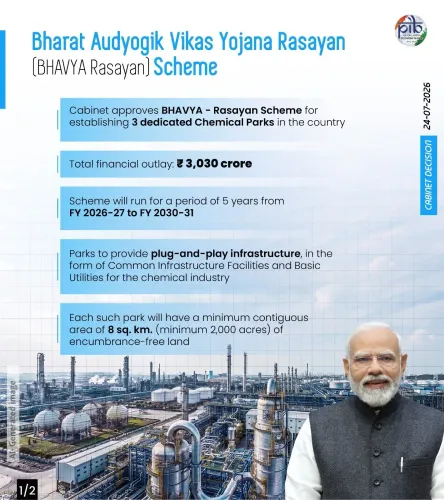
The Union Cabinet has approved the BHAVYA-Rasayan Scheme to develop Chemical Parks across India with plug-and-play infrastructure and environmental safeguards, Prime Minister Narendra Modi announced on 25 July 2026, marking a new push to strengthen the country's chemical and petrochemical manufacturing base.
Key Takeaways
The Union Cabinet approved the BHAVYA-Rasayan Scheme on 25 July 2026 to strengthen India's chemical and petrochemical sector.
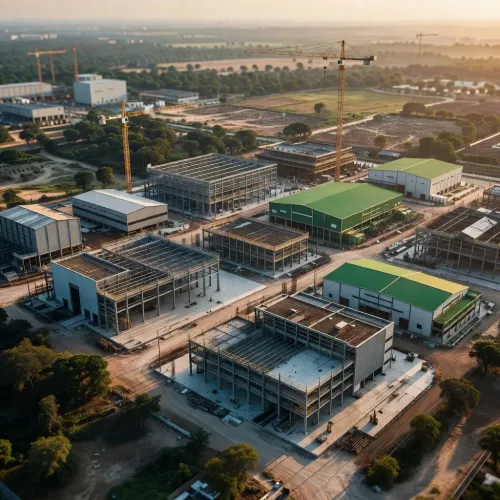
The scheme will develop dedicated Chemical Parks with modern plug-and-play infrastructure and shared utilities.
Robust environmental safeguards are built into the park design to address compliance concerns from the outset.
The Ministry of Chemicals and Fertilisers is the nodal ministry; location selection guidelines are awaited.
The scheme builds on earlier cluster policies including the PCPIR (2007) and Plastic Parks (2015) initiatives.
Key beneficiaries include domestic chemical manufacturers , petrochemical investors , and partnering state governments .
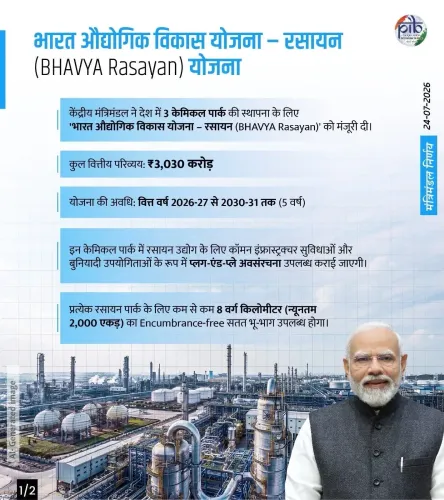
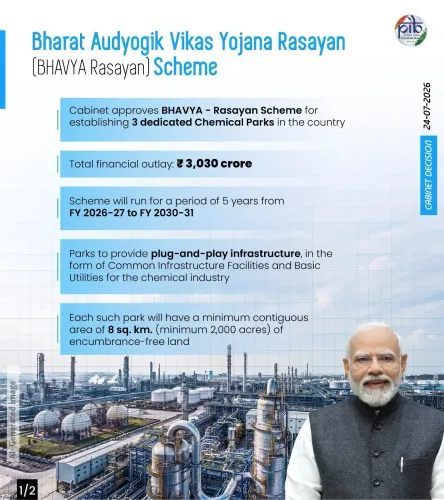
Prime Minister Narendra Modi on Friday, 25 July 2026 announced that the Union Cabinet has approved the BHAVYA-Rasayan Scheme, describing it as 'an important step towards strengthening India's chemical and petrochemical ecosystem.' The scheme envisages dedicated Chemical Parks equipped with modern plug-and-play infrastructure, shared utilities, and robust environmental safeguards.
Context
The Cabinet's green light to the BHAVYA-Rasayan Scheme extends a long-running policy effort to build integrated industrial clusters for the chemicals and petrochemicals sector. India has historically relied on imports for a significant share of specialty and bulk chemicals, and successive administrations have sought to reduce that dependence through dedicated manufacturing zones. The new scheme continues that trajectory with an explicit emphasis on investor-ready, plug-and-play facilities.
The Ministry of Chemicals and Fertilisers is the nodal body responsible for rolling out the scheme. Detailed guidelines, including the selection criteria for Chemical Park locations, are expected to follow the Cabinet decision.
Policy Backdrop
The BHAVYA-Rasayan Scheme builds on earlier cluster-based initiatives. The Petroleum, Chemicals and Petrochemicals Investment Regions (PCPIR) policy, notified in 2007, sought to create large-scale integrated complexes across states, while the Plastic Parks scheme, launched in 2015, provided shared infrastructure for downstream plastic-processing units. The new scheme appears to consolidate and advance these approaches under a single framework.
The plug-and-play model — where land, power, water, effluent treatment, and connectivity are pre-commissioned before investors arrive — has gained traction across several manufacturing sectors as a tool to cut project lead times and improve ease of doing business.
Stakeholders and Impact
Domestic chemical manufacturers and petrochemical investors stand to benefit from reduced upfront infrastructure costs and faster time-to-production within the new parks. State governments are key implementation partners, as land acquisition and utility provisioning typically fall within state jurisdiction.
The scheme's built-in environmental safeguards are significant for communities near proposed park sites, where concerns over effluent discharge and air quality have historically accompanied chemical industry expansion. Embedding compliance infrastructure at the design stage is intended to address those concerns proactively.
What's Next
Attention will now turn to the Ministry of Chemicals and Fertilisers releasing the operational guidelines, including the process for identifying and notifying Chemical Park locations across states. State governments are likely to compete to host the parks, given the investment and employment potential they carry.
If implemented at scale, the BHAVYA-Rasayan Scheme could meaningfully raise domestic value addition in chemicals and petrochemicals — a sector that feeds into pharmaceuticals, agrochemicals, textiles, and consumer goods — reinforcing India's broader manufacturing ambitions.
Point of View
A model that has shown mixed results depending on execution at the state level. By embedding environmental safeguards at the design stage rather than retrofitting them, the scheme signals an attempt to pre-empt the regulatory friction that stalled earlier parks. The plug-and-play framing also reflects a deliberate pivot toward investor experience, acknowledging that land and compliance uncertainty have historically deterred capital in this sector. Whether the scheme delivers on its promise will hinge on how quickly the Ministry of Chemicals and Fertilisers notifies park locations and how effectively state governments follow through on land and utility commitments.
NationPress
24 Jul 2026
Frequently Asked Questions
What is the BHAVYA-Rasayan Scheme?
The BHAVYA-Rasayan Scheme is a Union Cabinet-approved initiative to develop Chemical Parks across India with plug-and-play infrastructure, shared utilities, and environmental safeguards, aimed at strengthening the country's chemical and petrochemical manufacturing ecosystem.
When was the BHAVYA-Rasayan Scheme approved?
The Union Cabinet approved the BHAVYA-Rasayan Scheme on 25 July 2026 , with Prime Minister Narendra Modi announcing the decision the same day.
Which ministry is responsible for the BHAVYA-Rasayan Scheme?
The Ministry of Chemicals and Fertilisers is the nodal ministry responsible for implementing the BHAVYA-Rasayan Scheme, including releasing guidelines and selecting Chemical Park locations.
What is plug-and-play infrastructure in Chemical Parks?
Plug-and-play infrastructure means that land, power, water, effluent treatment, and connectivity are pre-commissioned by the government before investors arrive, reducing setup time and upfront costs for chemical manufacturers.
How is BHAVYA-Rasayan different from earlier chemical cluster schemes?
The BHAVYA-Rasayan Scheme advances earlier efforts like the PCPIR policy (2007) and the Plastic Parks scheme (2015) by combining investor-ready infrastructure with built-in environmental safeguards under a single, updated framework.