PM Modi Calls India-Indonesia Visit 'Comprehensive and Future-Oriented'

Synopsis
Prime Minister Narendra Modi, posting in Indonesian on 7 July 2026, called his Indonesia visit 'comprehensive, substantive, and future-oriented,' and pledged the bilateral friendship will scale new heights — marking a fresh milestone in India's Act East and Indo-Pacific engagement.
Key Takeaways
PM Modi posted in Indonesian on 7 July 2026 , describing his visit outcomes as 'comprehensive, substantive, and future-oriented.' He expressed confidence that India-Indonesia friendship will 'continue to reach higher levels in the years to come.' India and Indonesia have held a Comprehensive Strategic Partnership since 2018 , upgraded during Modi's visit to Jakarta .
The bilateral relationship is anchored in India's Act East Policy and Indo-Pacific strategy , with defence and trade as core pillars.
The next ASEAN-India Summit and follow-up agreements on defence or connectivity are the key milestones to watch.
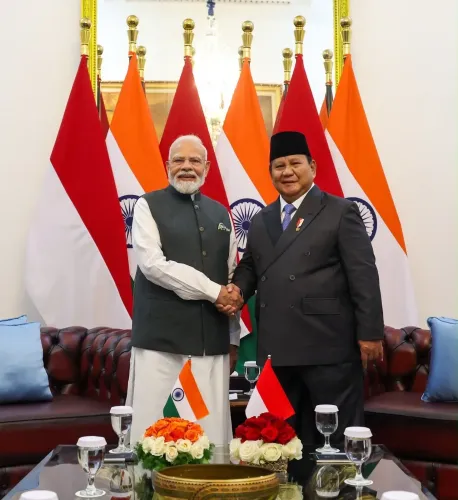
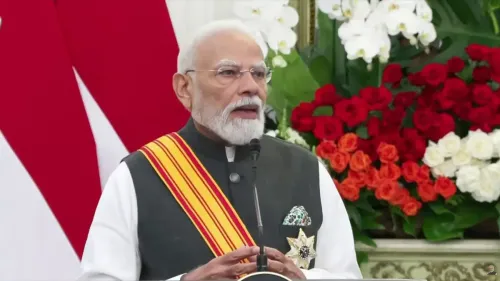
Prime Minister Narendra Modi on Tuesday, 7 July 2026 declared the outcomes of his visit to Indonesia as 'comprehensive, substantive, and future-oriented,' expressing confidence that the bilateral friendship will reach new heights in the years ahead. The remarks, posted on his official X account in Indonesian, signal a significant diplomatic moment in India's engagement with its key ASEAN partner.
Context
In his post, PM Modi wrote in Indonesian: 'Hasil dari kunjungan ini bersifat komprehensif, substantif, dan berorientasi ke masa depan' — 'The outcomes of this visit are comprehensive, substantive, and future-oriented.' He added that 'Persahabatan India-Indonesia akan terus mencapai tingkatan yang lebih tinggi di tahun-tahun mendatang' — 'India-Indonesia friendship will continue to reach higher levels in the years to come.' The choice to post in Indonesian is itself a diplomatic gesture, underscoring the personal investment Modi places in the relationship.
Policy Backdrop
India and Indonesia have shared a Comprehensive Strategic Partnership since 2018, when Modi visited Jakarta and elevated the bilateral framework. That upgrade opened structured channels for cooperation across defence, maritime security, trade, and connectivity. India's Act East Policy and its broader Indo-Pacific strategy have consistently identified Indonesia — the world's largest archipelagic nation and a leading ASEAN economy — as a pivotal partner. Regular summit-level engagements, joint naval exercises, and trade pact negotiations have been the building blocks of this deepening relationship.
The two nations share substantial maritime adjacency through the Indian Ocean and the Strait of Malacca, making cooperation on maritime security and blue economy a natural priority. Defence ministries and trade bodies on both sides have been active participants in this expanding framework.
Stakeholders and Impact
The visit's outcomes are expected to touch multiple sectors. Defence forces on both sides stand to benefit from any enhanced cooperation agreements, while trade ministries will be watching closely for movement on economic and investment frameworks. Indian businesses with interests in Southeast Asia and Indonesian firms seeking access to India's large consumer market are among the key commercial stakeholders.
For ASEAN as a bloc, a strengthened India-Indonesia axis reinforces the multilateral architecture of the Indo-Pacific. The diplomatic signal sent by Modi's Indonesian-language post also resonates with people-to-people ties, cultural diplomacy, and India's broader soft-power outreach in the region.
What's Next
Attention will now turn to the next ASEAN-India Summit and any formal follow-up agreements on defence, connectivity, or trade that may emerge from this visit. Modi's characterisation of the outcomes as 'future-oriented' suggests that implementation mechanisms and timelines are likely to be formalised in the near term. The trajectory of India-Indonesia ties — from a limited partnership to a Comprehensive Strategic Partnership over a decade — points to continued institutional deepening, with this visit adding fresh momentum to that arc.
Point of View
Indonesia is not merely a bilateral partner but a gateway to ASEAN credibility, and this visit reinforces that geometry. The upgrade of ties since 2018 has been incremental but deliberate, and this statement suggests the next phase will be more institutionally intensive.
NationPress
7 Jul 2026
Frequently Asked Questions
What did PM Modi say about his Indonesia visit?
PM Modi said the outcomes of his Indonesia visit are 'comprehensive, substantive, and future-oriented,' and expressed confidence that India-Indonesia friendship will reach new heights in the years ahead. He posted the message in Indonesian on his official X account on 7 July 2026.
What is the current status of India-Indonesia relations?
India and Indonesia share a Comprehensive Strategic Partnership, a status achieved in 2018 when PM Modi visited Jakarta. The relationship covers defence, maritime security, trade, and connectivity, underpinned by India's Act East Policy and Indo-Pacific strategy.
Why did PM Modi post in Indonesian language?
Posting in Indonesian is widely read as a diplomatic gesture of cultural respect and personal engagement. It signals India's seriousness about the bilateral relationship and resonates with people-to-people and soft-power dimensions of the partnership.
What areas does India-Indonesia cooperation cover?
Cooperation spans defence, maritime security, trade, investment, and connectivity. Defence forces and trade ministries are the primary institutional stakeholders, with naval exercises and trade pact negotiations forming key pillars of the partnership.
What should we watch after PM Modi's Indonesia visit?
The next ASEAN-India Summit and any formal follow-up agreements on defence cooperation, maritime security, or trade and connectivity are the key developments to track following this visit.