PM Modi Condoles Venezuela Earthquake Victims
Synopsis
Prime Minister Narendra Modi on June 25, 2026, expressed deep condolences to Venezuela following severe earthquakes, extending India's sympathies to affected families and signalling New Delhi's readiness for potential humanitarian engagement.
Key Takeaways
Prime Minister Narendra Modi issued a formal condolence message on June 25, 2026 over earthquakes in Venezuela .
The message was addressed to the Government and people of Venezuela , with special mention of bereaved families.
India and Venezuela maintain longstanding diplomatic ties, including cooperation in energy and multilateral forums.
India has a precedent of deploying NDRF teams and relief supplies after major international disasters, as seen after the Nepal earthquake of 2015 .
Any follow-up announcement of material or rescue assistance from New Delhi will be closely watched by diplomatic observers.
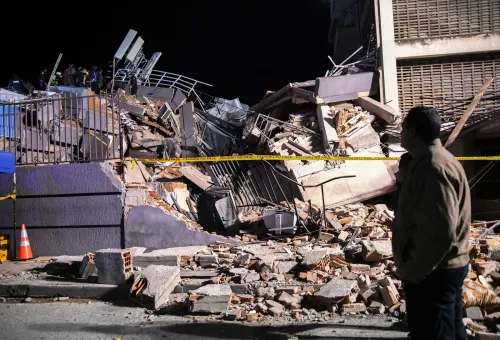
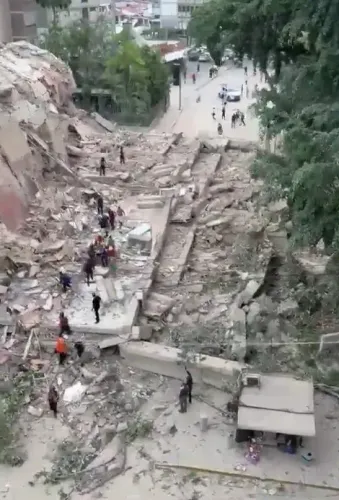
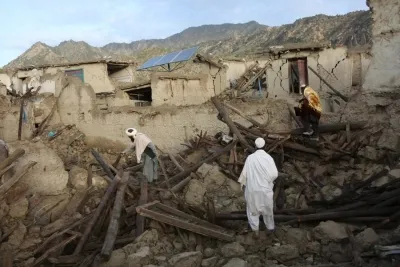
Prime Minister Narendra Modi on Thursday, June 25, 2026, expressed deep sorrow over the devastation caused by severe earthquakes in Venezuela, extending India's heartfelt condolences to the South American nation's government and people, particularly the families of those who lost their lives.
Context
In his post on X, Prime Minister Modi wrote: 'Deeply saddened by the devastation caused by the severe earthquakes in Venezuela. On behalf of the people of India, I extend our heartfelt condolences to the Government and people of Venezuela, especially to the families who have lost their loved ones. We pray for the speedy recovery of all those affected.' The message was issued in his official capacity as head of the Indian government, signalling New Delhi's acknowledgement of the disaster at the highest level.
Venezuela, located in northern South America, has maintained diplomatic ties with India across decades, with cooperation spanning energy, trade, and multilateral forums such as the United Nations. India's outreach reflects a standing practice of prompt humanitarian communication following major natural disasters in friendly nations.
Policy Backdrop
India has a consistent record of extending both diplomatic condolences and material assistance after major international disasters. Following the devastating Nepal earthquake of April 2015, New Delhi deployed National Disaster Response Force (NDRF) teams and dispatched relief supplies within hours, setting a benchmark for India's humanitarian response abroad.
This pattern of engagement — described by foreign policy observers as 'humanitarian diplomacy' — is applied regardless of the political character of the affected government. India's outreach to Venezuela follows that established template, prioritising the welfare of affected civilians over geopolitical considerations.
Stakeholders and Impact
The immediate stakeholders are the Venezuelan families who have suffered loss of life and property in the earthquakes. For the Venezuelan government, a condolence message from the leader of the world's most populous democracy carries diplomatic weight at a moment of national crisis.
For India, the statement reinforces its self-positioning as a responsible global actor and a 'Vishwabandhu' — friend of the world — a framing Prime Minister Modi has consistently employed in India's foreign policy outreach in recent years. The message also keeps open the channel for any subsequent offer of tangible assistance.
What's Next
Observers will watch whether New Delhi follows this expression of solidarity with concrete measures — such as the deployment of NDRF teams, medical supplies, or financial aid — as it has done in past international disaster responses. The Ministry of External Affairs is expected to remain in contact with the Venezuelan Embassy to assess India's capacity to assist. Any formal offer of aid would mark an escalation from diplomatic condolence to active humanitarian engagement.
Point of View
A nation with which India has historically complex but functional ties, underscores New Delhi's effort to project itself as a globally engaged power. The statement's language — 'on behalf of the people of India' — elevates it beyond a routine diplomatic courtesy to a statement of national solidarity. Whether it translates into material assistance will be the true test of the 'Vishwabandhu' framework Modi has championed.
NationPress
25 Jun 2026
Frequently Asked Questions
Why did PM Modi send condolences to Venezuela?
Prime Minister Modi sent condolences because severe earthquakes caused significant devastation in Venezuela, and India follows a consistent practice of issuing prompt condolence messages to affected nations as part of its humanitarian diplomacy.
Has India sent disaster relief to Venezuela before?
There is no widely documented precedent of India sending disaster relief specifically to Venezuela, though India has a strong record of deploying NDRF teams and supplies to other countries such as Nepal after the 2015 earthquake.
What is India's relationship with Venezuela?
India and Venezuela maintain diplomatic relations with historical cooperation in energy and multilateral forums such as the United Nations, though ties have been limited compared to India's engagement with other South American nations.
Will India send NDRF teams to Venezuela after the earthquake?
No official announcement of NDRF deployment or material aid to Venezuela has been made as of this report; observers are watching for any follow-up from the Ministry of External Affairs.
What does 'Vishwabandhu' mean in Indian foreign policy?
'Vishwabandhu' is a Sanskrit term meaning 'friend of the world,' a framing Prime Minister Modi has used to describe India's approach to global engagement, including humanitarian outreach during international crises.