PM Modi credits youth power for Aatmanirbhar Bharat, Make in India gains
Synopsis
Prime Minister Narendra Modi on 1 August 2026 credited India's youth as the engine behind Aatmanirbhar Bharat and Make in India, reaffirming the government's decade-long strategy of linking demographic strength to industrial self-reliance.
Key Takeaways
Prime Minister Narendra Modi posted on 1 August 2026 crediting India's youth as the driving force behind key economic initiatives.
Make in India was launched in September 2014 to boost manufacturing and attract foreign investment.
Aatmanirbhar Bharat Abhiyan was announced in May 2020 , adding production-linked incentives and supply-chain localisation to the earlier framework.
Modi has consistently linked India's large youth population to the country's economic self-reliance agenda since 2014.
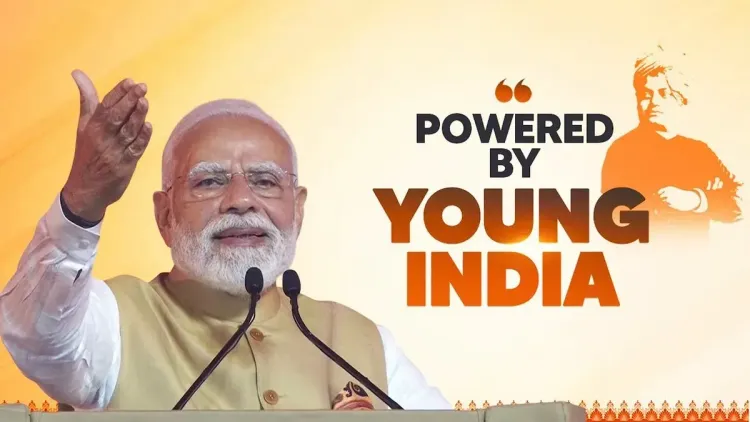
The post included a video, indicating it is part of a broader outreach effort rather than a standalone statement.
Upcoming Union Budget allocations for skill development and PLI scheme expansions are the near-term policy markers to watch.
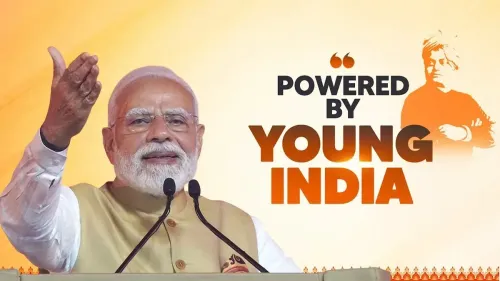
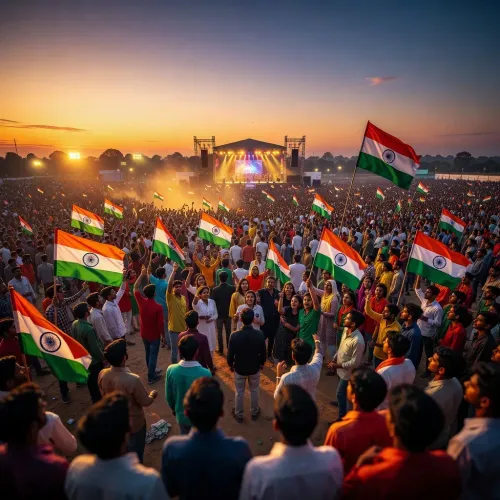
India's young workforce is not just a demographic fact — it is, in Prime Minister Narendra Modi's framing, the engine powering the country's most ambitious economic bets. On Saturday, 1 August 2026, the Prime Minister took to X to make that case directly, linking the energy of India's youth to the momentum behind two flagship programmes: Aatmanirbhar Bharat and Make in India.
Twelve years of manufacturing ambition, one demographic argument
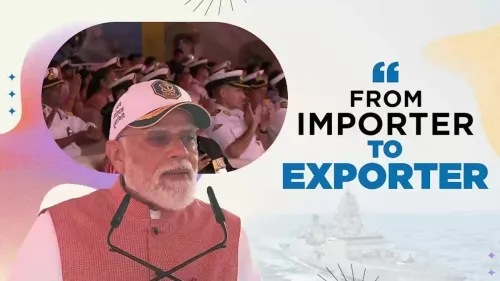
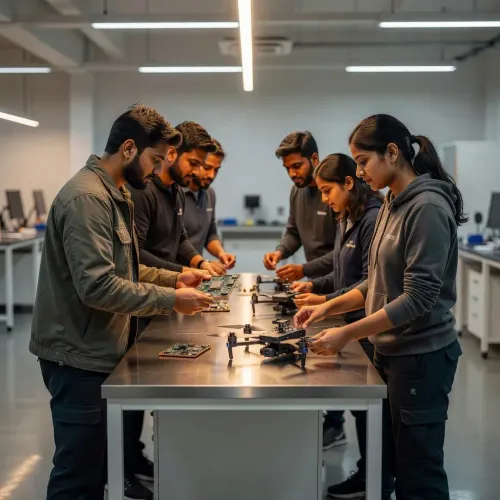
Make in India was launched in September 2014 with a clear headline goal: transform India into a global manufacturing hub and pull in foreign direct investment. The campaign rebranded the country's pitch to the world — factory floors, not just software parks. When the pandemic arrived in 2020, Aatmanirbhar Bharat Abhiyan layered on top of it, adding production-linked incentive schemes and a sharper push for supply-chain localisation. Together, the two initiatives form the spine of India's industrial policy over the past decade. Modi has consistently tied both programmes to India's demographic profile. With one of the world's largest youth populations, the argument runs that the country's economic dividend is only realised if young people are plugged into productive, high-value work — in manufacturing, in startups, in skilled trades. Saturday's post is a restatement of that thesis, not a departure from it.Youth as policy asset, not just statistic
The Prime Minister's message frames youth capability as the 'driving force' behind sectoral progress — a deliberate rhetorical move that positions young Indians as protagonists of economic reform rather than its beneficiaries. That distinction matters politically: it shifts the narrative from government-as-provider to citizen-as-builder, which is the ideological core of the self-reliance agenda. The post links to a video, suggesting the message is part of a broader outreach or campaign moment rather than a standalone statement. The government has routinely used such communications to reinforce the brand equity of its flagship schemes ahead of budget cycles and policy announcements. With the next Union Budget allocations for skill development and expansions of production-linked incentive schemes on the horizon, Modi's renewed emphasis on youth and manufacturing sends a clear signal about where the political and policy energy is headed.Point of View
Casting young Indians as agents of national self-reliance rather than passive recipients of policy. Coming over a decade into the Make in India project, the post signals that the government intends to keep youth-and-manufacturing at the centre of its economic identity heading into the next budget cycle. The inclusion of a video suggests this is coordinated messaging, not an off-the-cuff remark. Whether the rhetoric translates into measurable youth employment gains in the manufacturing sector remains the harder, unresolved question beneath the confident framing.
NationPress
1 Aug 2026
Frequently Asked Questions
What is Aatmanirbhar Bharat and when was it launched?
Aatmanirbhar Bharat Abhiyan is India's self-reliance initiative launched in May 2020 by Prime Minister Modi, combining economic stimulus packages with production-linked incentives to reduce import dependence and boost domestic manufacturing.
What is Make in India and what is its goal?
Make in India is a manufacturing promotion campaign launched in September 2014 to position India as a global manufacturing hub, attract foreign direct investment, and create employment across industrial sectors.
Why does PM Modi connect India's youth to economic growth?
Modi argues that India's large youth population is its primary economic asset — a demographic dividend that can only be realised by channelling young people into productive roles in manufacturing, entrepreneurship, and skilled industries.
What did PM Modi say about youth and India's economy on 1 August 2026?
PM Modi posted on X stating that India is 'making strides across various sectors' powered by its youth, calling young people the 'driving force' behind Aatmanirbhar Bharat and Make in India.
What is a production-linked incentive (PLI) scheme in India?
PLI schemes are government incentives that offer financial rewards to companies based on incremental sales from domestic manufacturing, introduced under Aatmanirbhar Bharat to boost local production across sectors such as electronics, pharmaceuticals, and textiles.