What did PM Modi say about Shivraj Chouhan's VB-G RAM G Bill?
Click to start listening
Synopsis
Prime Minister Narendra Modi endorses the VB-G RAM G Bill, which aims to enhance rural employment guarantees while addressing criticisms. This pivotal legislation replaces the MGNREGA and is seen as a renewal of social protection, promising significant changes in rural livelihoods and governance.
Key Takeaways
- VB-G RAM G Bill replaces MGNREGA.
- Increases employment guarantee to 125 days.
- Introduces unemployment allowance within 15 days.
- Focuses on sustainable asset creation.
- Plans remain local while integrating technology.
New Delhi, Dec 20 (NationPress) Prime Minister Narendra Modi has enthusiastically backed the newly enacted Viksit Bharat-Guarantee for Rozgar and Ajeevika Mission (Gramin) Bill, 2025 (VB-G RAM G), which succeeds the Mahatma Gandhi National Rural Employment Guarantee Act (MGNREGA).
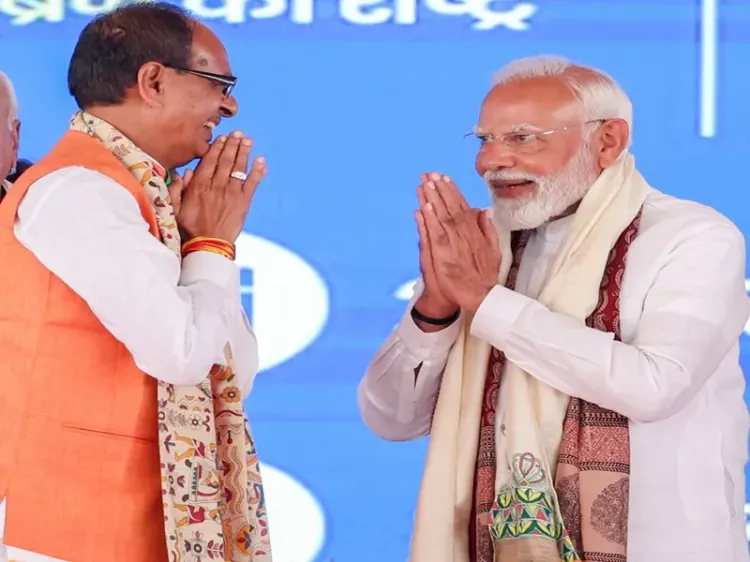
On his X account, PM Modi shared and supported an article authored by Union Agriculture and Rural Development Minister Shivraj Singh Chouhan, featured in a prominent newspaper under the title "New job law is not a retreat from social protection. It aims to reform".
The Prime Minister encouraged the public to read this article, stating: "In this essential read, Union Minister Shivraj Singh Chouhan elaborates on how the VB-G RAM G Bill is designed to enhance rural livelihoods by improving the employment guarantee, incorporating local planning, ensuring a balance between worker security and agricultural productivity, converging various schemes, boosting frontline capabilities, and modernizing governance. He emphasizes that this Bill is not a step back from social protection -- it is a renewal of it."
The VB-G RAM G Bill, which was approved by Parliament earlier this week amidst intense debates and opposition protests, raises the legal guarantee of wage employment from 100 to 125 days per rural household each year.
This legislation also introduces an unemployment allowance if work is not available within 15 days, removes certain disqualification clauses from the previous law, and emphasizes the creation of sustainable assets in areas like water security, rural infrastructure, and climate resilience.
In his article, Chouhan confronts major criticisms of the Bill, asserting that fears regarding the dilution of the demand-driven nature of the scheme are baseless, as the legislation explicitly requires the government to guarantee at least 125 days of work.
He further points out that generating employment and creating assets are not opposing goals, but rather, they can collectively promote long-term rural prosperity.
Addressing concerns over centralization, Chouhan clarifies that planning will remain rooted in village-level "Viksit Gram Panchayat" Plans approved by gram sabhas, while a national infrastructure framework is intended to facilitate coordination without overshadowing local priorities.
The Bill allows states to temporarily halt projects for up to 60 days during peak agricultural seasons to prevent labor shortages, with provisions for district-level adjustments.
Integration of technology, including biometric authentication and real-time monitoring, is positioned as a means for transparency rather than exclusion, backed by social audits and grievance resolution systems, according to the minister.
As the scheme gears up for implementation in April 2026, the government views the VB-G RAM G as a contemporary evolution aligned with the Viksit Bharat 2047 vision, aimed at ensuring enforceable rights, accountability, and sustainable development.
Nevertheless, critics continue to express worries about funding mechanisms and potential consequences for worker entitlements. PM Modi's endorsement represents the government's attempt to present the reform as an enhancement rather than a rollback of India's flagship rural welfare initiative.
Point of View
The endorsement by PM Modi signals a pivotal moment for rural employment in India. The VB-G RAM G Bill aims to innovate and rejuvenate the existing framework of rural welfare. While concerns persist regarding implementation and funding, the government's commitment to enhancing rural job guarantees is a crucial step towards sustainable development.
NationPress
21/12/2025
Frequently Asked Questions
What is the VB-G RAM G Bill?
The VB-G RAM G Bill is a new legislation aimed at enhancing rural employment guarantees by replacing the MGNREGA, providing up to 125 days of wage employment per household annually.
How does the VB-G RAM G Bill differ from MGNREGA?
The VB-G RAM G Bill increases the employment guarantee from 100 to 125 days, introduces an unemployment allowance, and focuses on creating durable assets while removing certain disqualification provisions.
When will the VB-G RAM G Bill be implemented?
The implementation of the VB-G RAM G Bill is scheduled for April 2026.
What are the benefits outlined in the VB-G RAM G Bill?
The Bill aims to enhance rural livelihoods, ensure worker security, and promote local planning while integrating technology for better transparency in employment schemes.
What concerns have critics raised about the VB-G RAM G Bill?
Critics have expressed concerns about funding patterns, potential impacts on worker entitlements, and the centralization of planning despite assurances from the government.