PM Modi gifts Mahabharata, Ladakhi blanket to Kyrgyz leaders in cultural push
Synopsis
Modi's gift choices for Kyrgyzstan's top two leaders weren't ceremonial afterthoughts — each artefact was a calculated cultural argument. A 10-volume Mahabharata echoing the Epic of Manas, a Ladakhi nomadic blanket mirroring Kyrgyz pastoral traditions, and a Dokra folk-music sculpture: together they frame India not just as a partner, but as a civilisational neighbour.
Key Takeaways
PM Narendra Modi gifted President Sadyr Japarov a 10-volume Mahabharata translated by Bibek Debroy and a traditional Ladakhi Tsug-dul blanket during his Kyrgyzstan visit.
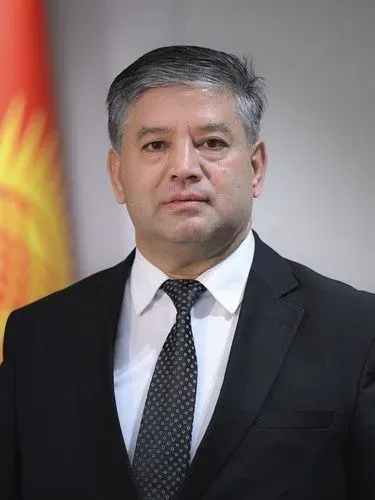
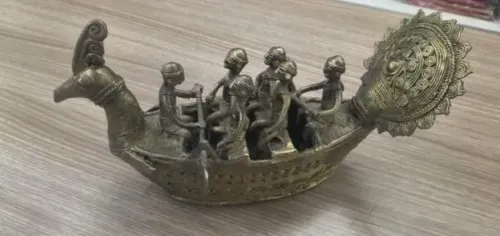
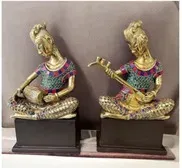
PM Adylbek Kasymaliev received a Dokra artwork depicting traditional musicians, crafted through the ancient lost-wax casting technique.
The Mahabharata was chosen for its cultural kinship with Kyrgyzstan's national Epic of Manas , both serving as repositories of collective memory and national identity.
The Tsug-dul blanket reflects shared mountain pastoral and nomadic traditions between Ladakh and Kyrgyzstan.
The gifts align with India's broader Connect Central Asia policy, using heritage-led diplomacy to deepen bilateral ties.
Prime Minister Narendra Modi presented a set of carefully selected Indian artefacts to President Sadyr Japarov and Prime Minister Adylbek Kasymaliev of Kyrgyzstan during his recent visit to the Central Asian nation, deepening cultural and civilisational ties between the two countries. The gifts — chosen for their resonance with Kyrgyz traditions — signal India's growing emphasis on heritage-led diplomacy in its Central Asia outreach.
What Modi Gifted President Japarov
President Sadyr Japarov received two distinct gifts. The first was the acclaimed 10-volume English translation of the Mahabharata by scholar Bibek Debroy — a complete, unabridged rendering of the epic traditionally attributed to Ved Vyasa. The translation covers the principal narrative of the Pandavas and Kauravas alongside philosophical dialogues, genealogies and subsidiary stories, making it one of the most comprehensive editions available in English.
The choice carries deliberate symbolic weight: the Mahabharata shares a cultural kinship with Kyrgyzstan's own national epic, the 'Epic of Manas'. Both works function as repositories of collective memory, moral philosophy and national identity, illustrating how epic storytelling traditions transcend geographic boundaries. Themes of dharma, duty, justice and statecraft in the Mahabharata find broad parallels in the values enshrined in the Manas tradition.
The second gift to President Japarov was a traditional Ladakhi Tsug-dul blanket — a distinctive woollen textile from the high-altitude region of Ladakh, woven from locally sourced wool and characterised by vibrant colours and intricate geometric, floral and stylised motifs. The blanket combines practical durability with skilled craftsmanship rooted in Ladakh's pastoral and nomadic way of life. Its resonance with Kyrgyzstan's own mountainous, herding-community traditions made it a pointed choice rather than a generic diplomatic token.
The Gift to Prime Minister Kasymaliev
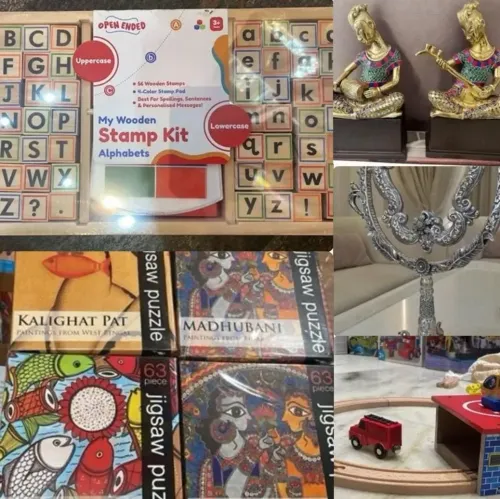
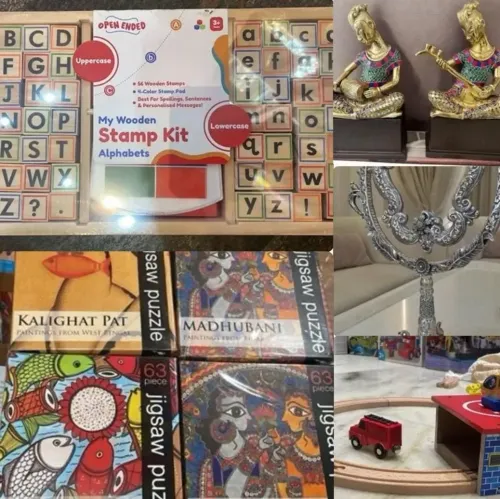
Prime Minister Adylbek Kasymaliev received a Dokra artwork depicting a pair of traditional musicians. Dokra is one of India's oldest metal-casting traditions, produced through the lost-wax casting technique in which each figure is individually handcrafted, lending every piece a unique character. The sculpture — showing musicians playing traditional instruments — celebrates the role of music in preserving cultural identity across generations.
The selection was deliberate: Kyrgyzstan has a rich folk-music heritage, and the Dokra piece underscores the shared importance of musical performance as a living expression of community and continuity in both societies.
The Diplomatic Logic Behind the Gifts
The exchange goes beyond ceremonial protocol. India has been systematically expanding its engagement with Central Asian nations, and cultural diplomacy has emerged as a key instrument alongside trade and security cooperation. By selecting objects that speak to shared experiences — epic narrative, mountain pastoralism and folk performance — the Modi government is making a deliberate argument: that India and Kyrgyzstan are not merely strategic partners but civilisational neighbours with overlapping histories.
This comes amid India's broader Connect Central Asia policy, which seeks to deepen ties with the five republics of the region through people-to-people links, cultural exchanges and economic connectivity. Notably, Kyrgyzstan is home to a sizeable community familiar with Indian culture through Bollywood and educational exchanges, providing a ready foundation for deeper engagement.
Significance of the Artefacts
Each of the three gifts was chosen to reflect a specific cultural parallel. The Mahabharata mirrors the Manas epic tradition; the Tsug-dul blanket echoes Kyrgyz nomadic textile practices; and the Dokra musicians speak to shared folk-performance heritage. Together, they form a coherent diplomatic narrative rather than an assortment of souvenirs. India's Ministry of External Affairs has increasingly used such curated gift diplomacy to reinforce soft-power messaging during high-level bilateral visits.
As India deepens its footprint in Central Asia, the Modi government's approach suggests that civilisational connections are being treated as a durable foundation for contemporary partnerships — one that complements, rather than substitutes, hard diplomatic and economic engagement.
Point of View
And Modi's Kyrgyzstan choices are a textbook case of soft power deployed with precision. The Mahabharata-Manas parallel is intellectually coherent, but the real test is whether these civilisational talking points translate into tangible outcomes — trade corridors, student exchanges, or security cooperation. India's Central Asia engagement has historically punched below its potential, constrained by geography and the absence of direct land access. Cultural resonance is a useful opening move; it cannot substitute for the infrastructure and institutional frameworks that durable partnerships require.
NationPress
1 Sept 2026
Frequently Asked Questions
What did PM Modi gift the President of Kyrgyzstan?
PM Modi gifted President Sadyr Japarov a 10-volume English translation of the Mahabharata by Bibek Debroy and a traditional Ladakhi Tsug-dul woollen blanket. The Mahabharata was chosen for its cultural parallels with Kyrgyzstan's own Epic of Manas, while the blanket reflects shared nomadic and pastoral traditions between Ladakh and Kyrgyzstan.
What was gifted to Kyrgyzstan's Prime Minister Adylbek Kasymaliev?
Prime Minister Kasymaliev received a Dokra artwork depicting a pair of traditional musicians, crafted using India's ancient lost-wax casting technique. The piece was selected to reflect shared folk-music and performing-arts traditions between India and Kyrgyzstan.
Why did Modi choose the Mahabharata as a gift for Kyrgyzstan's president?
The Mahabharata shares a cultural kinship with Kyrgyzstan's national Epic of Manas — both are monumental works that preserve collective memory, moral values and national identity across generations. The gift was intended to highlight civilisational parallels between the two nations.
What is a Ladakhi Tsug-dul blanket?
A Tsug-dul is a traditional woollen textile from Ladakh, woven from locally sourced wool and distinguished by vibrant colours and intricate geometric and floral motifs. It reflects Ladakh's pastoral and nomadic heritage, which resonates with Kyrgyzstan's own mountainous, herding-community traditions.
How do these gifts fit into India's broader foreign policy?
The gifts are part of India's heritage-led cultural diplomacy under its Connect Central Asia policy, which seeks to deepen ties with Central Asian republics through people-to-people links and civilisational connections. India views shared cultural heritage as a foundation for contemporary strategic and economic partnerships.