PM Modi Hails CG Semi Plant Launch in Sanand

Synopsis
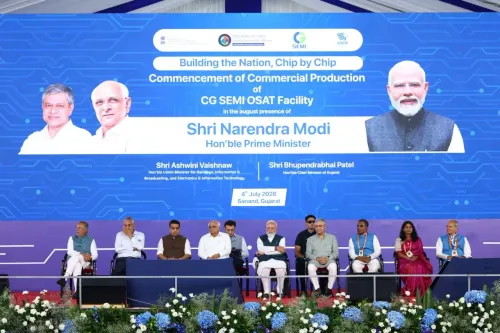
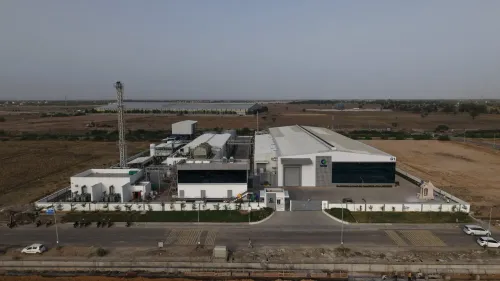
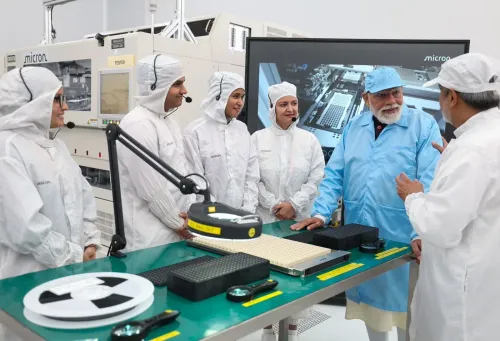
Prime Minister Narendra Modi on 4 July 2026 hailed the launch of CG Semi's semiconductor plant in Sanand, Gujarat, describing it as a model of technology, trust, and partnership. The facility advances India's Rs 76,000 crore semiconductor mission and signals growing momentum in the country's chip self-reliance drive.
Key Takeaways
Prime Minister Narendra Modi welcomed the inauguration of CG Semi's semiconductor plant in Sanand, Gujarat on 4 July 2026 .
Modi described the facility as 'a model of technology, trust, and partnership' that will give new momentum to India's semiconductor journey.
The plant is part of the India Semiconductor Mission , launched in December 2021 with an outlay of Rs 76,000 crore .
Cabinet approvals for semiconductor units in Gujarat were granted in February 2024 under the modified mission framework.
Sanand has been a major industrial hub since the 2010s and now adds chip assembly and testing to its manufacturing profile.
The commissioning signals growing investor confidence in India's semiconductor policy and advances Atmanirbhar Bharat goals.
Prime Minister Narendra Modi on Saturday, 4 July 2026, welcomed the inauguration of a semiconductor manufacturing plant by CG Semi in Sanand, Gujarat, calling it a landmark moment in India's chip self-reliance journey. Modi posted on X that the facility represents a model of technology, trust, and partnership that will accelerate India's semiconductor journey.
In his post, Modi wrote in Hindi: 'साणंद में शुरू हुआ CG Semi का प्लांट टेक्नोलॉजी, भरोसे और साझेदारी का एक ऐसा मॉडल है, जो भारत की सेमीकंडक्टर जर्नी को नई गति देने वाला है' — translated: 'The CG Semi plant launched in Sanand is a model of technology, trust, and partnership that will give new momentum to India's semiconductor journey.'
Context
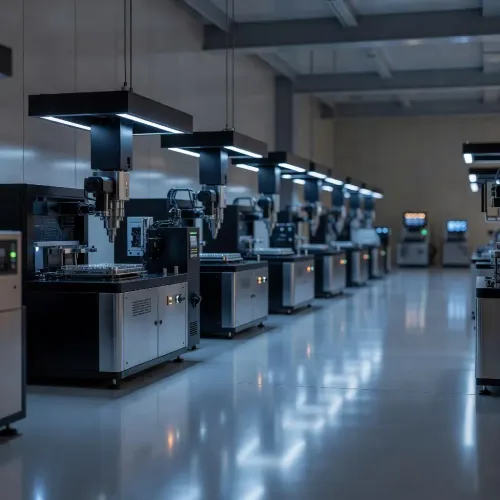
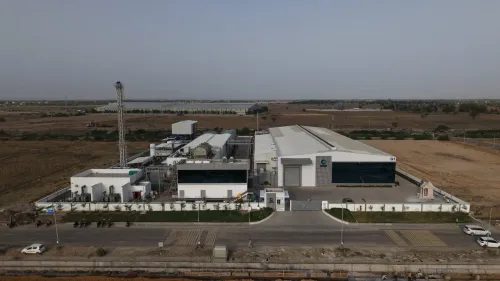
Sanand has emerged as one of India's most active industrial corridors, hosting major electronics and automotive manufacturers since the 2010s. The launch of CG Semi's assembly and testing facility adds a critical chip-manufacturing node to the region's industrial profile. The facility is part of a broader push to build domestic semiconductor capacity and reduce India's dependence on imported chips.
Policy Backdrop
The India Semiconductor Mission (ISM) was launched in December 2021 with an outlay of Rs 76,000 crore to develop a full-spectrum domestic chip ecosystem, covering fabrication, assembly, testing, and packaging. In February 2024, the Cabinet granted approvals for semiconductor units in Gujarat under a modified version of the scheme, offering capital subsidies to attract global and domestic investors. The CG Semi plant in Sanand is among the projects that have moved from approval to operational status under this framework.
Prime Minister Narendra Modi has consistently positioned semiconductor self-reliance as a pillar of the Atmanirbhar Bharat initiative. Since 2021, India has approved multiple assembly, testing, and packaging projects aimed at integrating the country into global semiconductor supply chains.
Stakeholders and Impact
The plant's commissioning is significant for Gujarat's industrial clusters, electronics manufacturers, and the broader domestic component supply chain. Domestic chip assembly capacity reduces lead times and import costs for Indian electronics producers, from consumer devices to industrial equipment. Workers and ancillary industries in the Sanand belt are expected to benefit from the new facility's operations.
For India's electronics sector, the availability of locally assembled and tested semiconductors can improve supply-chain resilience — a lesson reinforced by global chip shortages in recent years. The project also signals growing investor confidence in India's semiconductor policy architecture.
What's Next
Attention will now turn to commercial production timelines at the CG Semi plant and the pace of additional approvals under the India Semiconductor Mission. Policymakers are also expected to push for higher-complexity fabrication projects beyond assembly and testing, which would represent the next step in India's chip ambitions. The trajectory of Sanand as a semiconductor hub will be closely watched by both domestic industry and global supply-chain planners.
Point of View
000 crore commitment in 2021 — moving from subsidy announcements to operational facilities. Modi's framing of the plant as a 'model of technology, trust, and partnership' is deliberate, signalling to global chipmakers that India's semiconductor incentive architecture is now delivering results on the ground. Gujarat's role as the first state to host Cabinet-approved semiconductor units reinforces its position as the preferred destination for high-technology manufacturing under the current administration. The next credibility test will be whether India can attract higher-complexity fabrication projects beyond assembly and testing, which would represent a qualitative leap in the country's semiconductor ambitions.
NationPress
4 Jul 2026
Frequently Asked Questions
What is the CG Semi plant in Sanand?
The CG Semi plant in Sanand, Gujarat is a semiconductor assembly and testing facility that has been established as part of India's broader push for chip self-reliance under the India Semiconductor Mission.
What is the India Semiconductor Mission?
The India Semiconductor Mission is a central government programme launched in December 2021 with an outlay of Rs 76,000 crore to build a domestic semiconductor ecosystem covering fabrication, assembly, testing, and packaging.
Why did PM Modi comment on the CG Semi plant?
Prime Minister Narendra Modi posted on X welcoming the plant's launch, calling it a model of technology, trust, and partnership that will accelerate India's semiconductor journey, consistent with his Atmanirbhar Bharat policy goals.
Where is Sanand and why is it significant for semiconductors?
Sanand is an industrial area in Gujarat that has hosted major electronics and automotive manufacturers since the 2010s. It is now home to one of India's first operational semiconductor assembly and testing facilities.
What happens next for India's semiconductor mission?
Policymakers and industry will watch for commercial production timelines at the CG Semi plant and further approvals under the India Semiconductor Mission, with attention on whether India can attract more complex chip fabrication projects beyond assembly and testing.