PM Modi Hails Commissioning of Three Naval Vessels in Kolkata
Synopsis
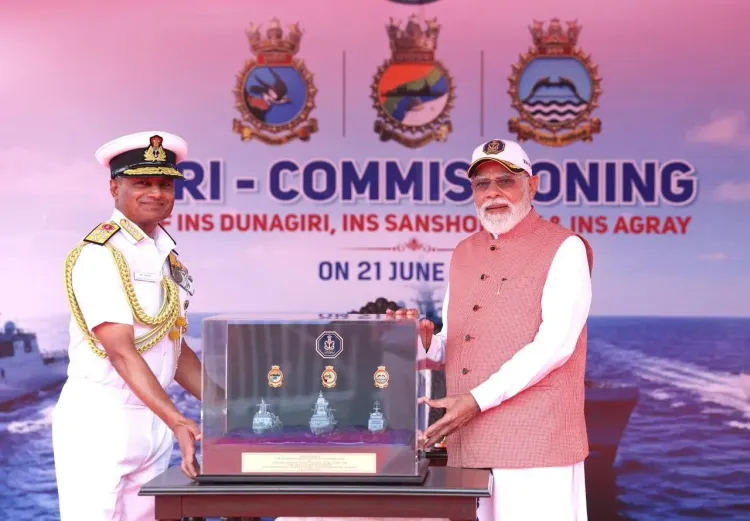
Prime Minister Narendra Modi on 21 June 2026 announced the commissioning of INS Dunagiri, INS Sanshodhak and INS Agray in Kolkata, highlighting India's maritime capability growth and the Atmanirbhar Bharat drive for self-reliance in defence shipbuilding.
Key Takeaways
Three vessels commissioned simultaneously : INS Dunagiri, INS Sanshodhak and INS Agray were inducted into the Indian Navy at Kolkata on 21 June 2026 .
Indigenisation milestone : The commissionings reflect the Atmanirbhar Bharat and Make in India frameworks that have prioritised domestic defence shipbuilding since 2014 .
Kolkata's strategic role : Garden Reach Shipbuilders and Engineers in Kolkata is a central node in India's public-sector naval production ecosystem.
Fleet modernisation : The inductions add both surface-combatant and hydrographic-survey capacity, reflecting the Navy's dual focus on combat power and maritime domain awareness.
Broader arc : These commissionings follow the historic induction of INS Vikrant in September 2022 and form part of the Navy's 30-year shipbuilding plan .
What to watch : Remaining Project 17A frigate deliveries and the defence capital budget for 2026-27 will determine the pace of further fleet expansion.
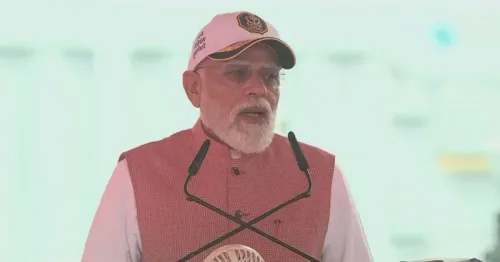
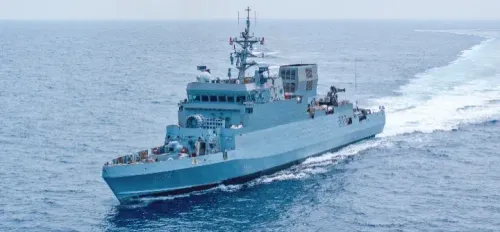
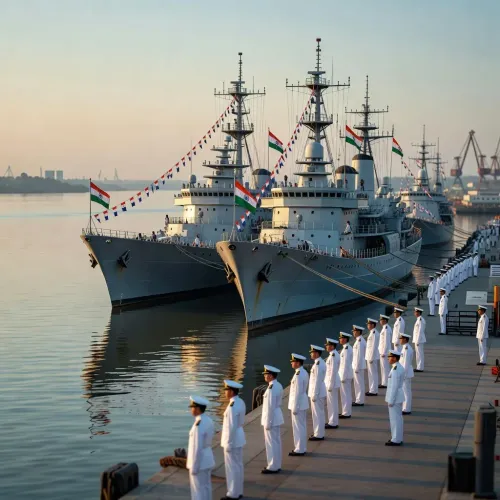
Prime Minister Narendra Modi on Sunday, 21 June 2026, marked the commissioning of three Indian Navy vessels — INS Dunagiri, INS Sanshodhak, and INS Agray — at Kolkata, calling the event a demonstration of India's expanding maritime power and its drive toward self-reliance in defence.
Context
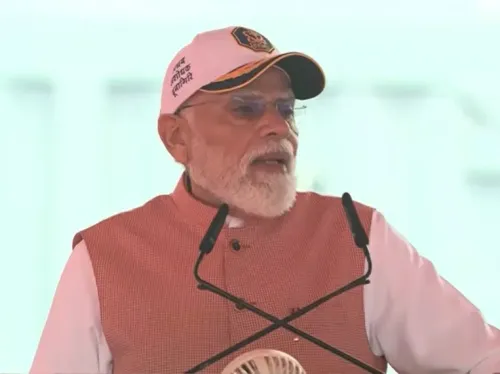
In his post on X, Prime Minister Modi stated: 'Today in Kolkata, INS Dunagiri, INS Sanshodhak and INS Agray were commissioned. They reflect India's growing maritime capabilities, our commitment to safeguarding national interests across the seas and the remarkable strides being made towards self-reliance in defence.' The simultaneous induction of three vessels in a single ceremony underscores the Indian Navy's accelerating fleet-expansion programme. Kolkata is home to Garden Reach Shipbuilders and Engineers (GRSE), a key public-sector shipyard that has built several frontline naval platforms.
Policy Backdrop
The commissionings sit squarely within the Atmanirbhar Bharat framework and the Make in India programme, both of which identified defence shipbuilding as a strategic priority. Since 2014, successive naval orders — including Nilgiri-class frigates and Sandhayak-class survey ships — have been routed through domestic yards to progressively raise indigenous content. The landmark commissioning of INS Vikrant, India's first indigenous aircraft carrier, in September 2022 at Cochin Shipyard, set the tone for this accelerated indigenisation push. The Navy's 30-year shipbuilding plan, initiated around 2015, provides the long-range framework under which vessels such as today's inductees are being delivered.
Stakeholders and Impact
The Indian Navy is the primary beneficiary, gaining additional surface-combatant and hydrographic-survey capability at a time when maritime competition in the Indo-Pacific is intensifying. Domestic shipyards — both public-sector undertakings and an expanding private-sector base — stand to gain from sustained order pipelines that come with indigenisation mandates. For the broader defence-industrial ecosystem, each commissioning validates the feasibility of building complex naval platforms within India, reducing dependence on foreign original equipment manufacturers. Strategic analysts note that simultaneous emphasis on survey vessels and frigates signals that New Delhi is balancing hydrographic intelligence needs with hard combat-power additions.
What's Next
Attention will now turn to the induction timelines for the remaining Project 17A stealth frigates, which are at various stages of construction across Indian shipyards. Parliamentary scrutiny of the defence capital budget for 2026-27 is expected to probe whether allocations are sufficient to sustain the Navy's ambitious acquisition schedule. With three vessels commissioned in a single day, the pace of fleet growth sends a signal to regional neighbours and partners alike about India's intent to be a credible maritime power across the Indian Ocean Region.
Point of View
' Prime Minister Modi ties a routine induction event directly to the Atmanirbhar Bharat narrative, reinforcing a consistent policy identity ahead of parliamentary budget discussions. The choice of Kolkata as the venue also spotlights eastern India's defence-industrial base, which has historically received less attention than western yards. Cumulatively, such commissionings are building the political and industrial case for sustaining — and potentially expanding — the Navy's capital budget in a competitive fiscal environment.
NationPress
21 Jun 2026
Frequently Asked Questions
What ships were commissioned in Kolkata on 21 June 2026?
INS Dunagiri , INS Sanshodhak and INS Agray were commissioned into the Indian Navy at Kolkata on 21 June 2026 , as announced by Prime Minister Narendra Modi.
Where are Indian Navy ships built in Kolkata?
Garden Reach Shipbuilders and Engineers (GRSE) , a public-sector undertaking located in Kolkata , is one of India's primary naval shipyards and has built a range of frontline vessels for the Indian Navy.
What is Atmanirbhar Bharat in defence?
Atmanirbhar Bharat is a policy framework promoting indigenous design, development and production across sectors including defence. In the naval context it aims to reduce India's dependence on imported warships and equipment by building platforms domestically.
What is Project 17A?
Project 17A is an Indian Navy programme for a class of stealth guided-missile frigates being constructed at domestic shipyards. The ships feature advanced stealth features and weapons systems and are a centrepiece of the Navy's surface-combatant modernisation plan.
How does today's commissioning fit into India's naval expansion?
The induction of three vessels in a single ceremony is part of the Indian Navy's 30-year shipbuilding plan initiated around 2015 , which seeks to expand fleet strength while maximising indigenous content. It follows the commissioning of India's first indigenous aircraft carrier, INS Vikrant , in September 2022 .