PM Modi Holds Bilateral Talks with President Prabowo in Jakarta
Synopsis
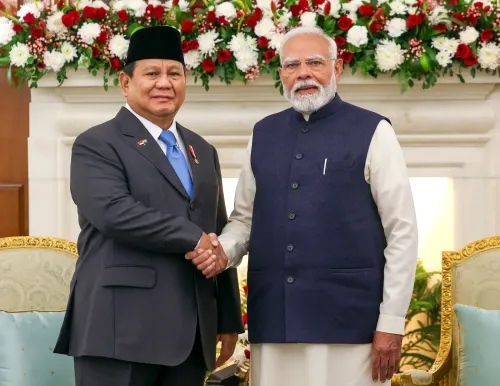
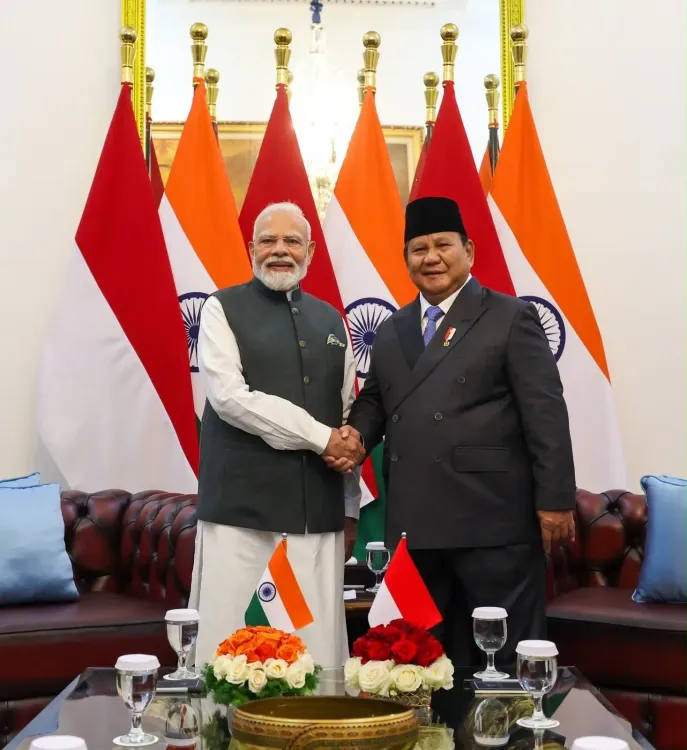
Prime Minister Narendra Modi held bilateral talks with Indonesian President Prabowo Subianto at Istana Merdeka in Jakarta on 7 July 2026, covering trade, food security, healthcare, and Indo-Pacific maritime and defence cooperation, building on the two nations' Comprehensive Strategic Partnership.
Key Takeaways
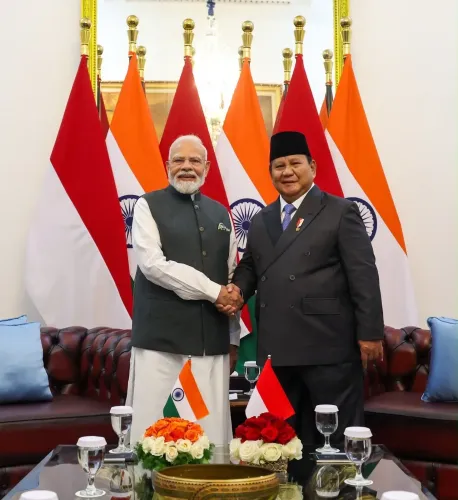
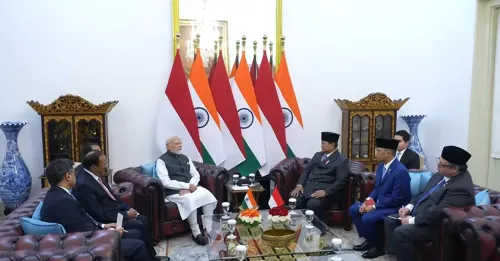
PM Modi met President Prabowo Subianto at Istana Merdeka, Jakarta on 7 July 2026 .
Talks covered trade, human development, agriculture, food security, and healthcare.
Defence, security, and maritime cooperation were discussed given both nations' status as major Indo-Pacific maritime powers.
Modi noted that India-Indonesia relations have 'acquired new momentum and greater depth' over recent years.
The bilateral relationship was elevated to a Comprehensive Strategic Partnership in 2018 , forming the institutional backbone of current ties.
Follow-up outcomes are expected at the next ASEAN-India Summit or bilateral Joint Commission meeting.
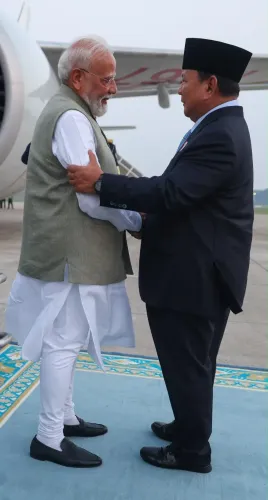
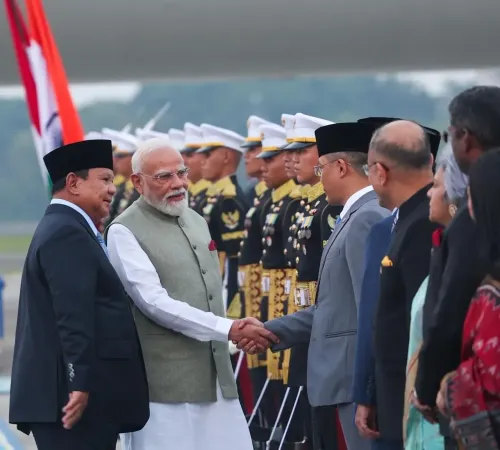
Prime Minister Narendra Modi met Indonesian President Prabowo Subianto at Istana Merdeka in Jakarta on Tuesday, 7 July 2026, holding what he described as 'productive discussions' spanning trade, agriculture, food security, healthcare, and defence cooperation.
Context
Modi posted on X that the two leaders covered 'various subjects such as trade, human development, agriculture, food security and healthcare,' adding that 'defence, security and maritime cooperation also featured in our talks' given that both nations are 'major maritime nations of the Indo-Pacific.' The meeting took place at the official presidential palace in Jakarta, a traditional venue for high-level India-Indonesia engagements.
Prabowo Subianto, who assumed the Indonesian presidency in 2024 after serving as defence minister, brings a strong security and military modernisation background to the bilateral relationship. His prior role means defence and maritime cooperation are likely to remain central pillars of the partnership under his leadership.
Policy Backdrop
India and Indonesia elevated their bilateral relationship to a Comprehensive Strategic Partnership in 2018 during Modi's earlier state visit, covering defence, maritime security, and economic cooperation. India's Act East Policy, launched in 2014, identified Indonesia as a priority partner within the ASEAN framework, and successive engagements have progressively deepened that linkage.
Modi noted that 'over the past few years, India-Indonesia relations have acquired new momentum and greater depth,' a characterisation consistent with the trajectory of the Comprehensive Strategic Partnership. Indonesia is the largest economy in ASEAN and an archipelagic state whose sea lanes are strategically vital to Indo-Pacific trade routes that India also depends on.
Stakeholders and Impact
The breadth of Tuesday's agenda signals potential movement across several sectors. Agricultural exporters and food-processing industries on both sides stand to benefit if food-security discussions translate into concrete trade facilitation measures. Healthcare providers and pharmaceutical companies — a segment where India already has a significant footprint in Southeast Asia — could see expanded market access.
Defence forces of both nations are among the key stakeholders, particularly given shared concerns about freedom of navigation in the Indo-Pacific. The inclusion of maritime cooperation in the talks aligns with New Delhi's broader strategy of securing sea lanes and promoting a free and open Indo-Pacific framework alongside like-minded partners.
What's Next
Concrete outcomes from the Jakarta talks — including any joint statements, memoranda of understanding, or defence agreements — are expected to be formalised through follow-up mechanisms such as the bilateral Joint Commission or at the next ASEAN-India Summit. Observers will watch whether the human development and agriculture discussions produce actionable frameworks or remain at the consultative stage.
With India deepening engagement across ASEAN capitals and Indonesia asserting a more active regional role under President Prabowo, Tuesday's meeting adds fresh momentum to a partnership that both sides have described as strategically significant for Indo-Pacific stability.
Point of View
Agriculture, healthcare — with defence and maritime cooperation in a single bilateral agenda, New Delhi is signalling a holistic approach to the partnership rather than a purely security-driven one. Prabowo's background as a former defence minister gives the security dimension added institutional weight on the Indonesian side. The visit fits a discernible pattern of Modi using direct leader-level diplomacy to lock in strategic partnerships ahead of multilateral forums, where outcomes can be diluted.
NationPress
7 Jul 2026
Frequently Asked Questions
Why did PM Modi visit Jakarta in July 2026?
PM Modi visited Jakarta on 7 July 2026 to hold bilateral talks with Indonesian President Prabowo Subianto at Istana Merdeka, covering trade, food security, healthcare, and Indo-Pacific maritime and defence cooperation.
What is the India-Indonesia Comprehensive Strategic Partnership?
The Comprehensive Strategic Partnership was established in 2018 during Modi's state visit to Indonesia. It elevated bilateral ties to cover defence, maritime security, and economic cooperation as a formal framework.
What is India's Act East Policy and how does Indonesia fit in?
India's Act East Policy, launched in 2014, prioritises economic and security engagement with ASEAN nations. Indonesia, as the bloc's largest economy and a key Indo-Pacific maritime state, is one of its central partner countries.
Who is Prabowo Subianto?
Prabowo Subianto is the President of Indonesia, elected in 2024. He previously served as Indonesia's defence minister and oversaw significant military modernisation efforts.
What topics were discussed at the Modi-Prabowo meeting?
According to PM Modi's post, the discussions covered trade, human development, agriculture, food security, healthcare, and defence, security and maritime cooperation in the Indo-Pacific context.