PM Modi Inaugurates HPCL Rajasthan Refinery at Pachpadra
Synopsis
Prime Minister Narendra Modi inaugurated the HPCL Rajasthan Refinery at Pachpadra on 4 July 2026. The 9 MMTPA integrated refinery-cum-petrochemical complex, a joint venture between HPCL and the Rajasthan government, is set to bolster India's energy security, create jobs, and advance the Aatmanirbhar Bharat agenda.
Key Takeaways
PM Modi inaugurated the HPCL Rajasthan Refinery at Pachpadra, Barmer on 4 July 2026 .
The complex has a capacity of 9 MMTPA and integrates refining with petrochemical production.
It is a joint venture between Hindustan Petroleum Corporation Limited (HPCL) and the Rajasthan government .
The Union Cabinet had originally approved the project in 2013 to expand western India's refining capacity.
The project is aligned with the Aatmanirbhar Bharat Abhiyan launched in May 2020 , which prioritises domestic energy infrastructure.
Key expected outcomes include employment generation, reduced import dependence, and acceleration of regional industrialisation in Rajasthan .
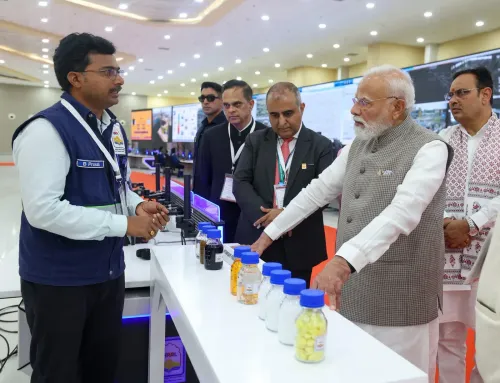
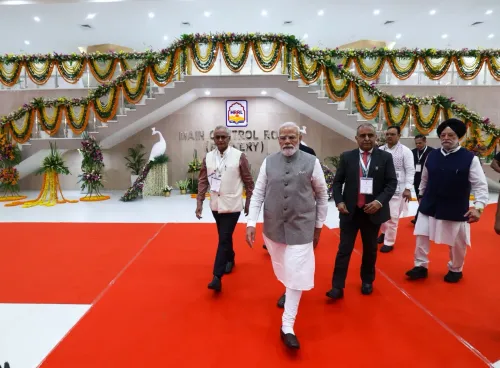
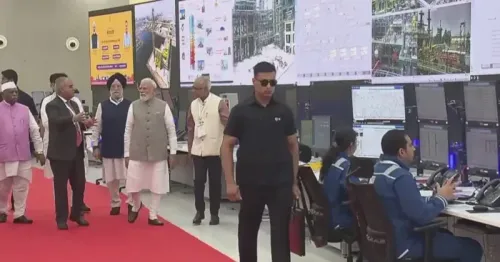
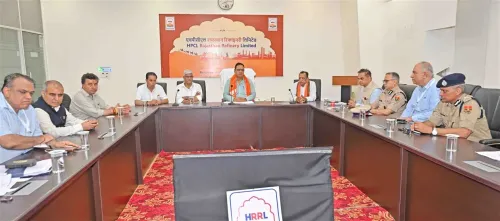
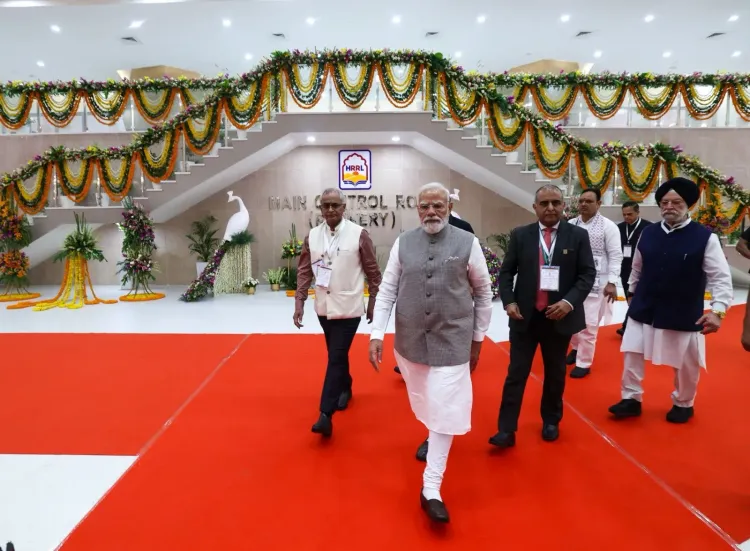
Prime Minister Narendra Modi on Saturday, 4 July 2026 inaugurated the integrated refinery-cum-petrochemical complex — the HPCL Rajasthan Refinery — at Pachpadra in Barmer district, Rajasthan, marking a significant addition to India's public-sector refining infrastructure. The project, developed as a joint venture between Hindustan Petroleum Corporation Limited (HPCL) and the Rajasthan government, is positioned as a cornerstone of India's energy security and domestic manufacturing push.
Context
In his post, the Prime Minister described the complex as a 'landmark project' that will 'strengthen India's energy security, boost domestic manufacturing, generate employment and accelerate economic transformation.' He framed the inauguration as 'another milestone in our journey towards an Aatmanirbhar Bharat' (self-reliant India). The refinery at Pachpadra was selected for its proximity to established oil fields and existing infrastructure links in western Rajasthan.
Policy Backdrop
The Union Cabinet had approved the establishment of the HPCL Rajasthan Refinery as far back as 2013, with the aim of augmenting India's refining capacity in the western region. The project gained fresh momentum under the Aatmanirbhar Bharat Abhiyan, announced in May 2020, which explicitly identified energy infrastructure as a priority sector for indigenisation and reduced import dependence. The 9 MMTPA (million metric tonnes per annum) integrated complex is among the larger greenfield refinery-petrochemical projects undertaken by a public-sector oil major in recent years.
India has pursued successive expansions of public-sector refining capacity since the 2010s to meet rising domestic fuel demand. Western and southern states have received priority for new integrated refinery-petrochemical complexes to enable value addition and regional industrialisation, a pattern this project firmly continues.
Stakeholders and Impact
The complex is expected to benefit Barmer district and the broader Rajasthan economy through direct and indirect employment in refining, petrochemicals, and ancillary industries. Oil-sector workers, petrochemical manufacturers, and downstream industries across the region stand to gain from the supply of domestically processed feedstock. The project also reduces the country's dependence on imported refined products and petrochemical intermediates, a recurring pressure point for India's trade balance.
HPCL, a public-sector oil major under the Ministry of Petroleum and Natural Gas, is the primary executing agency. The Rajasthan government's co-investment underscores the state's stake in leveraging its hydrocarbon resources for industrial development.
What's Next
Attention will now turn to phased commissioning milestones as the complex ramps toward full 9 MMTPA capacity, along with actual employment figures once operations stabilise. Any follow-up announcements regarding downstream petrochemical units, feedstock linkages, or pipeline connectivity will be closely watched by the energy sector. The inauguration reinforces the government's broader intent to position India as a self-sufficient hub for both fuel and petrochemical production, with western India playing an increasingly central role in that strategy.
Point of View
From Cabinet approval in 2013 through the Aatmanirbhar Bharat reframing of 2020 to commissioning in 2026 — a timeline that straddles multiple political cycles and underscores the continuity of India's public-sector energy expansion. By inaugurating it personally and tying it explicitly to Aatmanirbhar Bharat, PM Modi is staking a clear political claim to a project with deep institutional roots. The western-India focus also fits a visible pattern of directing large industrial anchors toward states like Rajasthan and Gujarat to stimulate regional value chains. The real test will be operational: how quickly the complex ramps to full capacity and whether the promised employment numbers materialise at scale.
NationPress
4 Jul 2026
Frequently Asked Questions
Where is the HPCL Rajasthan Refinery located?
The HPCL Rajasthan Refinery is located at Pachpadra in Barmer district, Rajasthan. The site was chosen for its proximity to oil fields and existing infrastructure links in western Rajasthan.
What is the capacity of the HPCL Rajasthan Refinery?
The refinery has a capacity of 9 MMTPA (million metric tonnes per annum) and is an integrated refinery-cum-petrochemical complex.
Who owns and operates the HPCL Rajasthan Refinery?
The refinery is a joint venture between Hindustan Petroleum Corporation Limited (HPCL), a public-sector oil major under the Ministry of Petroleum and Natural Gas, and the Rajasthan government.
What is Aatmanirbhar Bharat and how does the refinery relate to it?
Aatmanirbhar Bharat Abhiyan is a self-reliance policy framework launched by the central government in May 2020 to expand domestic manufacturing and reduce import dependence. The HPCL Rajasthan Refinery supports this goal by boosting domestic refining and petrochemical production, reducing India's reliance on imported refined products.
When was the HPCL Rajasthan Refinery project approved?
The Union Cabinet approved the establishment of the HPCL Rajasthan Refinery in 2013, with the aim of augmenting India's refining capacity in the western region. PM Modi inaugurated the completed complex on 4 July 2026.