Dr Jitendra Singh meets new DST Secretary Prof Waghmare
Synopsis
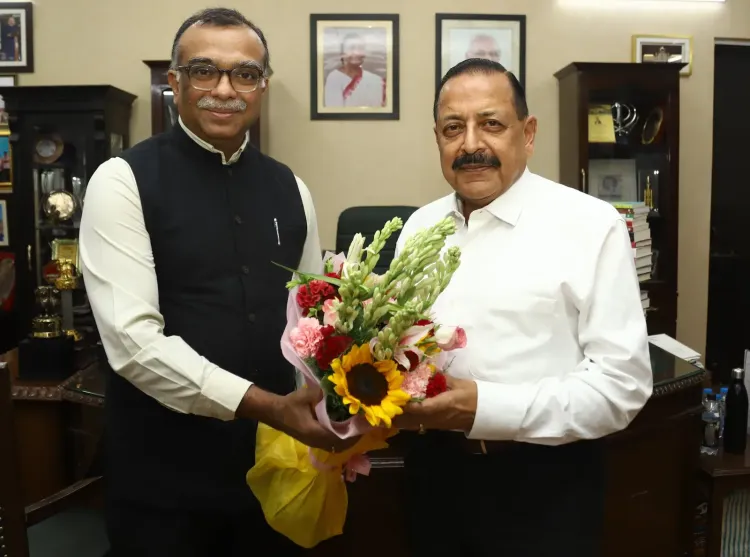
Union Science Minister Dr. Jitendra Singh received new DST Secretary Prof. Umesh V. Waghmare in a courtesy meeting on 4 July 2026. A computational physicist from JNCASR Bengaluru with a Yale PhD and IIT Bombay pedigree, Prof. Waghmare is expected to steer India's science funding and innovation policy at a pivotal moment for the country's R&D ambitions.
Key Takeaways
Waghmare has been appointed Secretary of the Department of Science and Technology (DST) , assuming charge in July 2026 .
He is an alumnus of IIT Bombay and holds a PhD from Yale University .
His most recent role was President and Professor at JNCASR, Bengaluru , an autonomous institute under DST itself.
His research expertise covers ferroelectrics, thermoelectrics, and 2D materials — areas central to next-generation technology development.
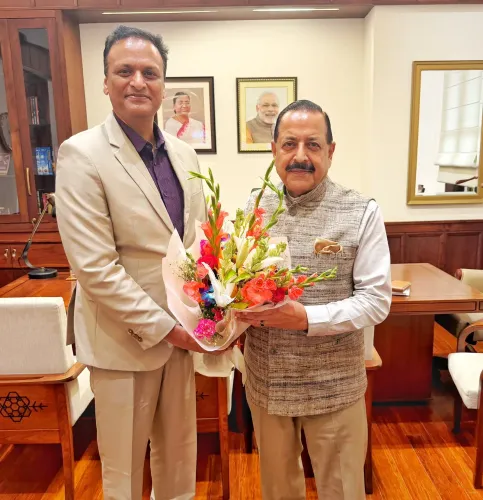
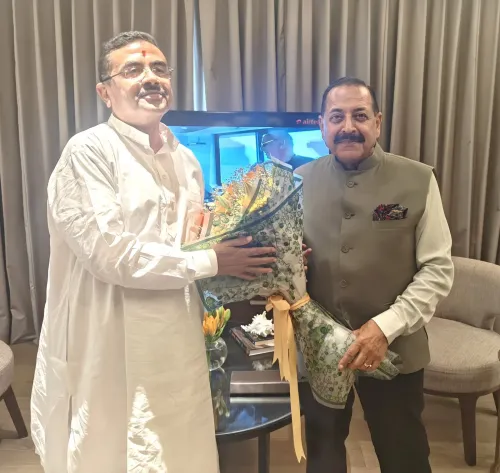
Jitendra Singh met Prof.
Waghmare in a courtesy call and expressed confidence in his contribution to India's technology and innovation ecosystem.
DST, established in 1971 , is India's nodal body for science policy formulation and extramural research funding.
Union Science and Technology Minister Dr. Jitendra Singh met newly appointed Secretary of the Department of Science and Technology (DST), Prof. Umesh V. Waghmare, on Saturday, 4 July 2026, in a courtesy call after Prof. Waghmare formally assumed charge of the country's nodal science policy body.
Context
In his post, Dr. Jitendra Singh described Prof. Waghmare as 'a distinguished alumnus of IIT Bombay with a PhD from Yale University' who brings 'rich and varied experience as a teacher, scientist and administrator.' The minister noted that Prof. Waghmare's most recent assignment was as President and Professor at the Jawaharlal Nehru Centre for Advanced Scientific Research (JNCASR), Bengaluru. Dr. Singh expressed that he looks forward to Prof. Waghmare's contribution in 'strengthening India's rapidly evolving technology and innovation ecosystem.'
Prof. Waghmare is a computational materials scientist and physicist whose research spans ferroelectrics, thermoelectrics, and two-dimensional materials — areas that carry direct implications for next-generation electronics, clean energy, and advanced manufacturing. His elevation to the DST Secretary's post places a frontier researcher at the helm of India's primary science funding and policy coordination body.
Policy Backdrop
DST was established in 1971 as the nodal department responsible for formulating science and technology policy, disbursing extramural research funds, and coordinating scientific agencies across the country. The department has consistently followed the practice of appointing senior academics from premier institutions as its Secretary, ensuring domain-expert stewardship of the country's research funding architecture.
The Science, Technology and Innovation Policy (STIP) 2020 outlined an ambitious roadmap to strengthen institutional leadership and revamp research-funding mechanisms under DST. India has also set a stated objective of raising its gross expenditure on R&D and improving its standing in global innovation indices — goals that hinge significantly on the quality of administrative leadership at DST.
JNCASR, where Prof. Waghmare most recently served as President, is itself an autonomous institute under DST, meaning he arrives at the department with direct institutional familiarity with its funding norms, research culture, and administrative processes.
Stakeholders and Impact
The appointment directly affects thousands of scientific researchers and research institutions that depend on DST for extramural grants, fellowships, and infrastructure support. Universities, national laboratories, and autonomous institutes that receive DST funding will look to Prof. Waghmare's leadership for signals on priority research areas and funding cycles.
Prof. Waghmare's background in computational and materials science could also influence DST's engagement with emerging technology verticals — including semiconductors, quantum materials, and clean energy — sectors that have received heightened policy attention in recent years. His academic credibility is expected to strengthen DST's interface with the global scientific community.
What's Next
Observers will watch for early signals from the new DST Secretary on revisions to extramural funding guidelines, new calls for research proposals, and the department's posture at upcoming scientific conclaves. The ministry's direction on key national science missions, including those tied to the National Research Foundation, will also be closely tracked under Prof. Waghmare's stewardship.
With a domain expert now leading DST, the ministry's ability to align administrative priorities with frontier research needs — and to accelerate India's climb in global innovation rankings — will be tested in the months ahead.
Point of View
Rather than career administrators, at the helm of science bodies. For the BJP-led government, showcasing a Yale-IIT Bombay profile reinforces its messaging around elite scientific talent being harnessed for national development. The early courtesy meeting between the minister and the new secretary also signals an intent to align political and administrative priorities quickly, especially as India pushes to raise its R&D expenditure-to-GDP ratio.
NationPress
3 Oct 2026
Frequently Asked Questions
Who is the new Secretary of the Department of Science and Technology?
Prof. Umesh V. Waghmare is the newly appointed Secretary of DST. He is a computational materials scientist, an alumnus of IIT Bombay , and holds a PhD from Yale University . He previously served as President and Professor at JNCASR, Bengaluru .
What is the Department of Science and Technology (DST)?
DST is India's nodal government department, established in 1971 , responsible for formulating science and technology policy, funding extramural research, and coordinating scientific agencies across the country.
What was Prof. Waghmare's previous role before becoming DST Secretary?
Prof. Waghmare served as President and Professor at the Jawaharlal Nehru Centre for Advanced Scientific Research (JNCASR) in Bengaluru , which is itself an autonomous institute under DST.
What did Union Minister Dr. Jitendra Singh say about the new DST Secretary?
Dr. Jitendra Singh described Prof. Waghmare as a 'distinguished alumnus of IIT Bombay with a PhD from Yale University' and said he looks forward to Prof. Waghmare's contribution in 'strengthening India's rapidly evolving technology and innovation ecosystem.'
What research areas does Prof. Umesh Waghmare specialise in?
Prof. Waghmare is a computational physicist specialising in ferroelectrics, thermoelectrics, and two-dimensional materials — fields with direct applications in next-generation electronics, clean energy, and advanced manufacturing.