Dr. Jitendra Singh Inaugurates Geo-Informatics Lab at NECTAR Shillong
Synopsis
Union Science and Technology Minister Dr. Jitendra Singh inaugurated a new Geo-Informatics Laboratory at NECTAR in Shillong on 14 July 2026, visiting STEM facilities and engaging with startups, Self Help Groups, and students to advance geospatial research and science outreach in India's Northeast.
Key Takeaways
Jitendra Singh inaugurated the Geo-Informatics Laboratory at NECTAR, Shillong on 14 July 2026 .
The Minister also visited the Vasundhara Laboratory and STEM Laboratory at the NECTAR campus.
NECTAR was established in 2012 under the Department of Science and Technology to deploy technology solutions in the North Eastern Region .
The visit included direct interaction with startups , Self Help Groups , and students , including school children.
The new lab supports geospatial applications in resource management, disaster preparedness, and regional planning across the ecologically sensitive Northeast.
Director General Dr.
Arun Kumar Sarma accompanied the Minister during the visit.
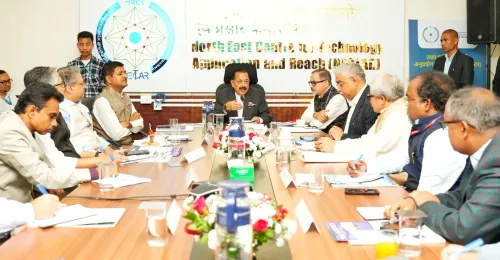
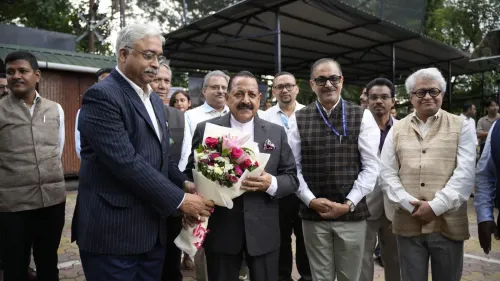
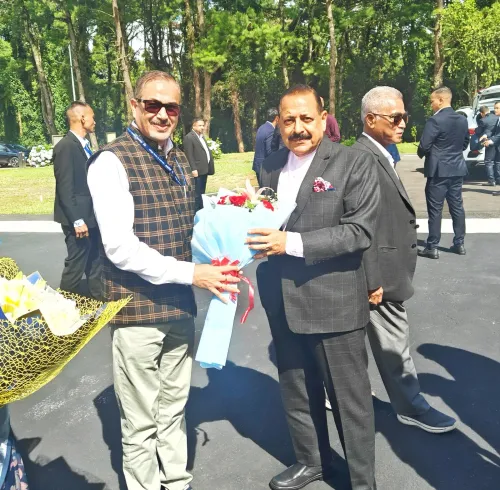
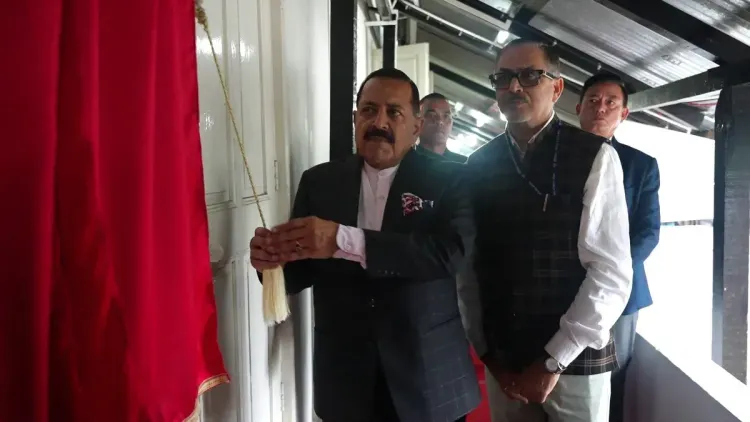
Union Science and Technology Minister Dr. Jitendra Singh on Tuesday, 14 July 2026 inaugurated the Geo-Informatics Laboratory at the North East Centre for Technology Application and Reach (NECTAR) in Shillong, Meghalaya, marking a significant step in expanding geospatial research infrastructure in India's northeastern region.
Context
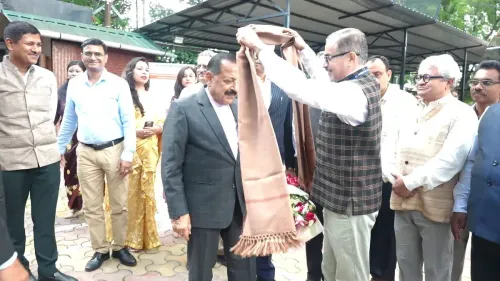
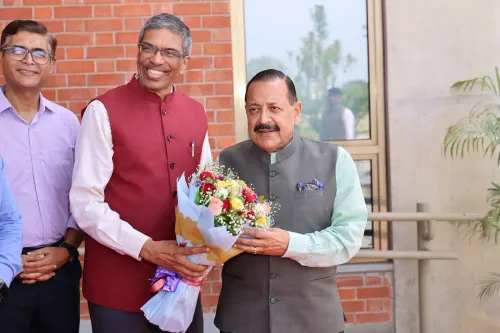
During the visit, the Minister also toured the Vasundhara Laboratory and the STEM Laboratory at the NECTAR campus, accompanied by Director General Dr. Arun Kumar Sarma and senior officers. He interacted with startups, Self Help Groups (SHGs), and students, engaging directly with the communities that stand to benefit from the centre's work.
Dr. Singh appreciated NECTAR's efforts in 'advancing geospatial research, promoting innovation and nurturing scientific temper among the youngsters including school children, through technology-driven learning,' as he noted in his post on X.
Policy Backdrop
NECTAR was established in 2012 under the Department of Science and Technology (DST) as an autonomous body with a specific mandate to deploy technology solutions across India's North Eastern Region. The organisation bridges the gap between frontier scientific research and practical, on-ground application in states that face unique geographical and developmental challenges.
The addition of a dedicated Geo-Informatics Laboratory aligns with the national push to leverage geospatial tools for resource management, disaster preparedness, and infrastructure planning — functions particularly critical in the ecologically sensitive and hilly terrain of the Northeast. The government has in recent years treated geospatial data as a strategic public asset, progressively liberalising its use for both public institutions and private innovators.
Stakeholders and Impact
The new laboratory is positioned to serve a wide spectrum of stakeholders. Geospatial startups in the region gain access to dedicated research infrastructure, while Self Help Groups can potentially use location-based data tools for livelihood planning and market access. School students and young learners are a stated priority, with STEM outreach forming a core pillar of NECTAR's approach in Meghalaya and neighbouring states.
The STEM Laboratory, visited alongside the Geo-Informatics facility, underscores an intent to build scientific temper from the grassroots level. Sustained engagement with school children through technology-driven learning modules is designed to create a pipeline of science-literate youth in a region historically underserved by elite research institutions.
What's Next
The inauguration is expected to accelerate the rollout of NECTAR-linked laboratory infrastructure across the Northeast, with geospatial data likely to be integrated into state-level planning exercises in Meghalaya and neighbouring states. As India scales its geospatial ecosystem, NECTAR's expanded capacity positions the Northeast as an active participant rather than a passive recipient of national science policy — a shift that could have lasting implications for regional governance and innovation.
Point of View
Dr. Jitendra Singh signals that geospatial technology is being positioned not merely as a research pursuit but as an instrument of local economic empowerment. The STEM outreach to school children reflects a longer-term human capital play — building scientific temper in a region where institutional science exposure has historically lagged. Taken together, the visit reinforces a pattern of high-visibility ministerial engagement with Northeast science bodies as both policy and political messaging.
NationPress
12 Oct 2026
Frequently Asked Questions
What is NECTAR and where is it located?
NECTAR, or the North East Centre for Technology Application and Reach, is an autonomous body under India's Department of Science and Technology, established in 2012 and headquartered in Shillong, Meghalaya. It is mandated to deploy technology solutions across India's northeastern states.
What is the Geo-Informatics Laboratory inaugurated by Dr. Jitendra Singh?
The Geo-Informatics Laboratory is a new research facility at NECTAR in Shillong focused on geospatial research, data applications, and technology-driven learning. It was inaugurated by Union Science and Technology Minister Dr. Jitendra Singh on 14 July 2026.
Who is the Director General of NECTAR?
Dr. Arun Kumar Sarma is the Director General of NECTAR, overseeing geospatial and technology application projects in the northeastern region. He accompanied Minister Dr. Jitendra Singh during the visit.
How does the Geo-Informatics Laboratory benefit the Northeast?
The laboratory provides geospatial research infrastructure that can support resource management, disaster preparedness, and infrastructure planning in the ecologically sensitive northeastern terrain. It also benefits local startups, Self Help Groups, and students through access to advanced technology tools.
What other facilities did Dr. Jitendra Singh visit at NECTAR?
Apart from inaugurating the Geo-Informatics Laboratory, Dr. Jitendra Singh visited the Vasundhara Laboratory and the STEM Laboratory at the NECTAR campus in Shillong, and interacted with startups, Self Help Groups, and students.