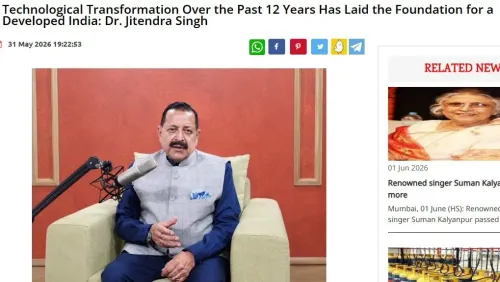
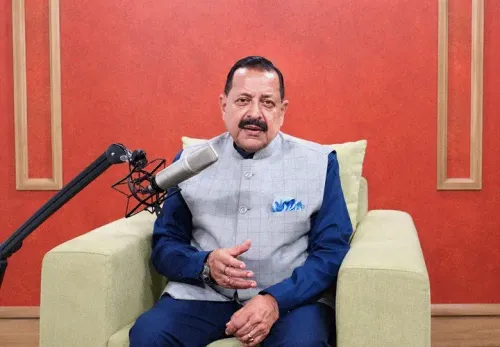
Jitendra Singh hails 12 years of India's science and technology rise
Synopsis
Union Science and Technology Minister Dr. Jitendra Singh marked 12 years of policy-led gains in India's S&T landscape, citing frontier technologies, AI, geospatial intelligence and high-performance computing. He credited DST initiatives with strengthening infrastructure, drawing industry participation and creating opportunities for youth, while linking the agenda to PM Narendra Modi's self-reliance vision.
Key Takeaways
Jitendra Singh marked 12 years of India's science and technology rise in a post on 3 June 2026.
He flagged four focus areas: frontier technologies, AI, geospatial intelligence and high-performance computing.
The minister credited Department of Science and Technology initiatives with enabling innovation-led growth and youth opportunities.
National Supercomputing Mission (2015), AI Strategy (2018) and National Geospatial Policy (2022) form the policy backbone.
The pitch is framed within the Atmanirbhar Bharat agenda for sovereign capabilities and self-reliance.
Watchpoints: next Budget DST allocation and potential quantum and semiconductor mission announcements.
Union Science and Technology Minister Dr. Jitendra Singh on 3 June 2026 credited the past 12 years with transforming India's science and technology landscape, citing advances across frontier technologies, artificial intelligence, geospatial intelligence and high-performance computing. In a post on X tagged #12YearsOfRiseInScience, the minister linked the gains to sustained policy investments and indigenous capability-building under Prime Minister Narendra Modi.
Context
Dr. Singh wrote that '12 Years saw India's Science & Technology receiving global attention… from frontier technologies and AI to geospatial intelligence and high-performance computing.' He said initiatives of the Department of Science and Technology (DST) were 'strengthening scientific infrastructure, enabling innovation-led growth, accelerating industry participation and creating new opportunities for India's youth.'
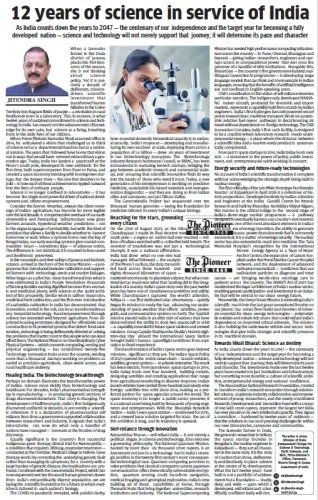
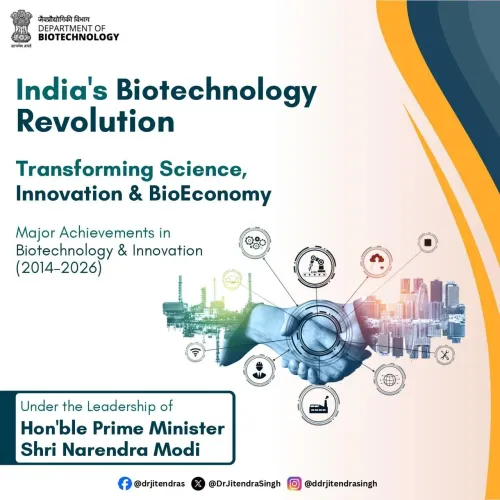
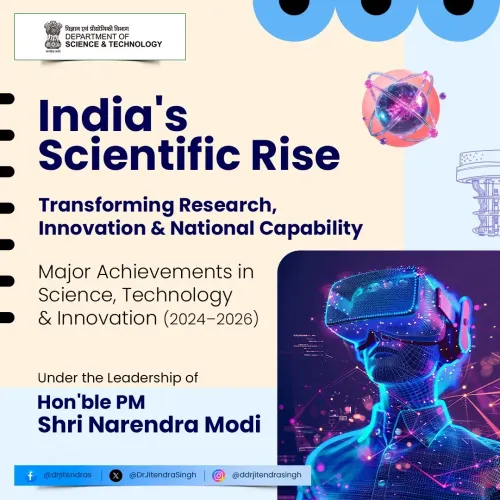
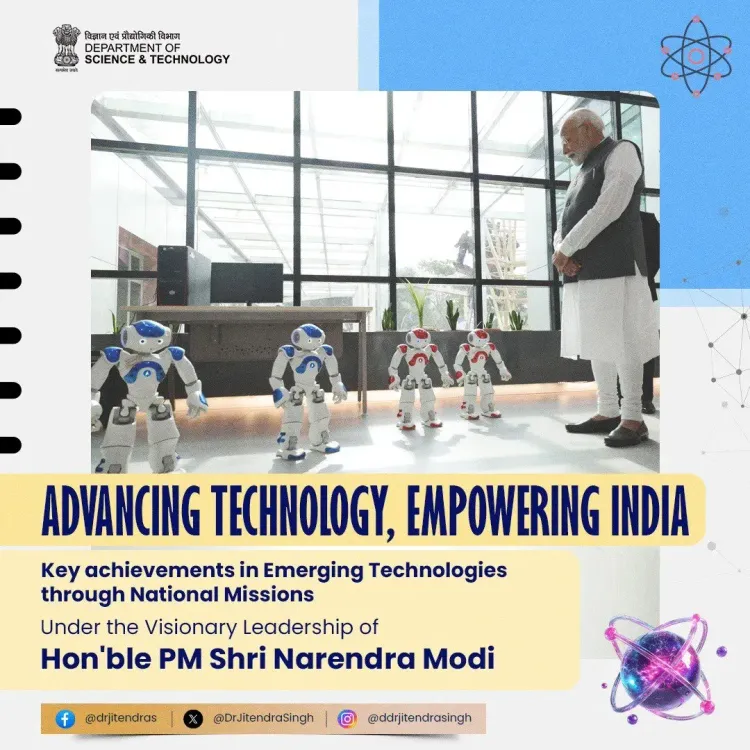
The minister framed the message around three slogans — 'Advancing sovereign capabilities. Accelerating self-reliance' — and described the agenda as 'translating the vision of PM Sh Narendra Modi into technology-driven future through sustained investments and indigenous capabilities.' The post was accompanied by four images.
Policy backdrop
The four domains the minister highlighted map directly to flagship missions rolled out over the past decade. The National Supercomputing Mission, approved in 2015, has anchored India's high-performance computing build-out, with a network of indigenously assembled systems deployed across academic and research institutions.
On artificial intelligence, the National Strategy for Artificial Intelligence released in 2018 under the banner #AIforAll set the framework for sectoral adoption, ethics and skilling. The National Geospatial Policy, notified in 2022, liberalised access to mapping data and opened the sector to private and academic players, a shift Dr. Singh has previously credited with seeding domestic geospatial startups.
These programmes sit within the broader Atmanirbhar Bharat Abhiyan launched in 2020, which positions strategic technology — semiconductors, quantum systems, space and computing — as core to economic self-reliance.
Stakeholders and impact
The minister's message is pitched at three audiences: the scientific research community that staffs DST-funded laboratories, the technology industry being courted for co-investment in mission-mode programmes, and the country's youth, whom the government has identified as the principal beneficiary of an expanded innovation pipeline.
The emphasis on 'sovereign capabilities' echoes a recurring theme in Dr. Singh's public communication, where domestic R&D in dual-use technologies — computing, geospatial mapping and AI — is presented as both an economic and a strategic asset. Industry bodies have sought clearer procurement preferences and tax incentives to convert mission outlays into commercial scale.
What's next
Attention now turns to forthcoming Union Budget allocations for the DST and to any fresh mission-mode announcements in quantum technology and semiconductors, both of which the government has signalled as priority areas. An updated Science, Technology and Innovation Policy, in the works for several budget cycles, remains pending before Parliament.
For Dr. Singh, the #12YearsOfRiseInScience framing also serves a political function — consolidating the science portfolio's record as part of the wider government narrative on continuity and capability-building, ahead of the next round of mission budgets.
Point of View
Designed to consolidate the science portfolio's narrative ahead of upcoming budget cycles. By bundling AI, HPC and geospatial intelligence under one banner, Dr. Singh is signalling continuity in mission-mode policymaking and pre-empting demands for a fresh strategic reset. The 'sovereign capabilities' framing also dovetails with the government's broader effort to position technology as a strategic, not merely economic, lever. What will be tested is whether the next Budget converts the rhetoric into deeper outlays for quantum, semiconductors and the long-pending Science, Technology and Innovation Policy.
NationPress
19 Sept 2026
Frequently Asked Questions
What did Dr. Jitendra Singh say about 12 years of science and technology?
He said the past 12 years saw India's S&T gain global attention across frontier technologies, AI, geospatial intelligence and high-performance computing, driven by DST initiatives and PM Modi's self-reliance vision.
What is the Department of Science and Technology (DST)?
The DST is the central nodal agency under the Union government responsible for science and technology policy, funding research infrastructure and running national innovation programmes.
What is the National Supercomputing Mission?
It is a 2015 initiative to build indigenous high-performance computing capacity by deploying a network of supercomputers across Indian research and academic institutions.
What is the National Geospatial Policy?
Notified in 2022, the policy liberalised access to geospatial data in India and opened the sector to private and academic players to build domestic mapping and intelligence capabilities.
What does #12YearsOfRiseInScience refer to?
It is a government messaging hashtag marking 12 years of science and technology policy initiatives since 2014, used by Union Minister Dr. Jitendra Singh to highlight gains under the Modi government.