Dr. Jitendra Singh launches SciQuest Summer Poster Contest for Students
Synopsis
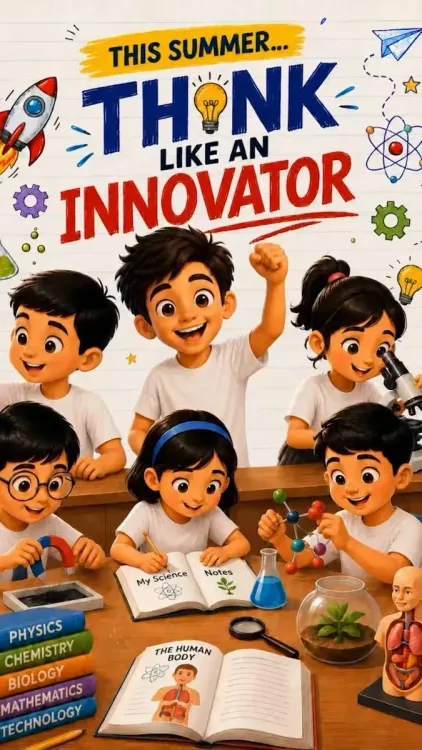
Union Science and Technology Minister Dr. Jitendra Singh has announced SciQuestSummerExploration2026, a DST-NIF online poster competition on MyGov for Classes 6-8 students to submit ideas on solving everyday problems through science, with prizes and innovation workshops on offer.
Key Takeaways
SciQuestSummerExploration2026 is a joint initiative of the Department of Science and Technology and the National Innovation Foundation , hosted on MyGov .
The competition is open exclusively to school students in Classes 6 to 8 across India.
Themes include plastic waste reduction, energy and water conservation, and everyday scientific inventions.
Winners will receive prizes and participate in workshops with top innovators and researchers.
The submission window is approximately one month from 27 May 2026 , closing around late June 2026.
The initiative aligns with the National Education Policy 2020 mandate for inquiry-driven, experiential learning at the middle-school level.
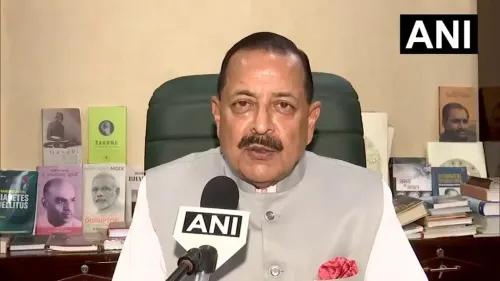
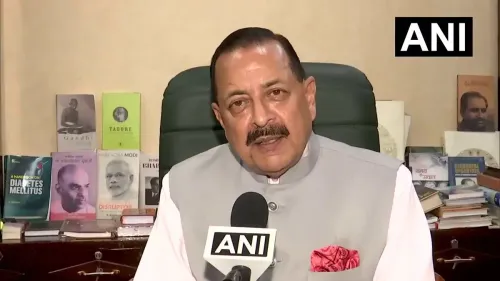
Union Science and Technology Minister Dr. Jitendra Singh on Wednesday, 27 May 2026 announced the launch of #SciQuestSummerExploration2026, an online poster competition for school students jointly organised by the Department of Science and Technology (DST) and the National Innovation Foundation (NIF) on the MyGov platform.
Context
The competition invites students of Classes 6 to 8 to design posters around 'New Ideas in Science to Solve Everyday Problems', with themes spanning plastic waste reduction, energy and water conservation, and everyday inventions. Participants must submit their entries through the official MyGov portal at the link shared by the Minister. The window for submission is approximately one month from the date of announcement.
Dr. Singh addressed the post directly to 'my dear future Scientists', framing the summer vacation as an opportunity for creative scientific thinking. Winners stand to receive prizes and an invitation to workshops featuring 'top innovators and researchers', though the precise prize structure has not been officially detailed in the announcement.
Policy Backdrop
The competition sits within a long lineage of DST-led student outreach. The INSPIRE programme, launched in 2008, remains the flagship effort to attract school and college students to basic sciences through scholarships, internships and idea competitions. The National Innovation Foundation, an autonomous body established under DST in 2000, has for over two decades documented and scaled grassroots innovations, including those originating from school students.
The National Education Policy 2020 explicitly mandated experiential and inquiry-driven learning for the Classes 6–8 cohort — the precise demographic targeted by #SciQuestSummerExploration2026. The Atal Tinkering Labs initiative, rolled out from 2016, further equipped secondary schools with problem-solving infrastructure that competitions like this one are designed to complement. Using MyGov as the hosting platform — a citizen engagement portal launched in 2014 — keeps participation costs near zero and extends reach to students in smaller towns and rural areas.
Stakeholders and Impact
The primary beneficiaries are middle-school students across India, a cohort that policy planners consider a critical window for building scientific temper before subject specialisation begins. Science teachers are secondary stakeholders, as competitions of this kind often serve as extracurricular anchors for classroom innovation projects.
The collaboration between DST and NIF is significant: NIF's mandate to validate and disseminate grassroots innovation means shortlisted student ideas could, in principle, be documented and supported beyond the competition itself. The workshop component — connecting winning students with researchers and innovators — mirrors the mentorship structure embedded in the INSPIRE programme and aligns with the broader Atmanirbhar Bharat objective of building domestic innovation capacity from an early age.
What's Next
The submission deadline falls approximately in late June 2026, after which DST and NIF are expected to announce selected posters and schedule follow-up workshops. Observers will watch whether the competition is integrated with existing Atal Tinkering Lab networks or scaled to state-level rounds, a pattern seen in earlier MyGov student competitions. A strong response could also inform future iterations of the INSPIRE programme's school-level component.
Point of View
Particularly during school breaks when institutional channels go quiet. By anchoring the competition in the NEP 2020 cohort of Classes 6-8, the government is targeting the age group that research on scientific career pathways identifies as most formative. The DST-NIF pairing is also notable: it signals an intent to treat student ideas not merely as competition entries but as potential grassroots innovations worth documenting. If the workshop component delivers on its promise of connecting students with working researchers, this could serve as a soft pipeline into the INSPIRE mentorship ecosystem.
NationPress
11 Oct 2026
Frequently Asked Questions
What is SciQuestSummerExploration2026?
SciQuestSummerExploration2026 is an online poster competition launched by the Department of Science and Technology and the National Innovation Foundation on the MyGov platform, inviting school students of Classes 6 to 8 to submit poster ideas on using science to solve everyday problems such as plastic waste, energy use and water conservation.
Who can participate in the SciQuest Summer Exploration 2026 competition?
Only school students currently enrolled in Classes 6, 7 or 8 are eligible to participate in the SciQuestSummerExploration2026 poster competition.
How do I submit my poster for SciQuest Summer Exploration 2026?
Participants must submit their poster entries through the official MyGov platform. The submission link shared by the Ministry directs students to the dedicated task page on mygov.in.
What are the prizes for the SciQuest Summer Exploration poster competition?
The Ministry has announced 'exciting prizes' and an invitation to workshops with top innovators and researchers for winners, though the precise prize structure has not been officially detailed in the public announcement.
What is the last date to submit for SciQuestSummerExploration2026?
The submission window is approximately one month from the announcement date of 27 May 2026, placing the deadline around late June 2026. Students should check the MyGov portal for the exact closing date.